

Note: Ingredients listed on restricted chemical lists
EC/CAS
9016-87-9
Name of the chemical
4,4'-Methylendiphenyldiisocyanat tech. (Polymeres) MDI, pMDI (in Form atembarer Aerosole, A-Fraktion)
Concentration
N/A
General Information
Revision date
2015-08-06
Product name
POWERFOAM
1.2.1 Relevant identified uses
Polyurethane foam hand held B2
1.2.2. Uses advised against
No further relevant information available
Emergency telephone
+1 703-741-5500, 800-424-9300
Icons in SDS


Company Information
company name
Powers Fasteners, Inc
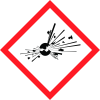
Hazard Codes
Hazard statements (CLP)
H240
Hazard statements
Code
Statements
H240
Heating may cause an explosion
Section 2
Classification system
NFPA Rating - NFPA ratings (scale 0 - 4) Health = 1 Fire = 0 Reactivity = 3
HMIS® ratings
(scale 0 - 4) HEALTH Health = *1 FIRE lo} Fire =0 Reactivity = 3
PBT Substances
Not applicable
vPvB Substances
Not applicable ‘Chemical characterization: Mixtures - Description: Mixture of the substances listed below with nonhazardous additions.
Hazardous Ingredients
9016-87-9 | diphenylmethanediisocyanate,isomeres and homologues 40-50% 13674-84-5 | tris(2-chlorisopropy|)-phosphate 1-10% 75-28-5 | isobutane 1-10% 85535-85-9 | alkanes, C14-17, chloro 1-10% 115-10-6 | dimethyl ether 1-10% (Contd. on page 3} us— (Contd. of page 2) 74-98-6 propane | <5% ‘Description of first aid measures - General information: Symptoms of poisoning may even occur after several hours; therefore medical observation for at least 48 hours after the accident. - After inhalation: Supply fresh air and to be sure call for a doctor. In case of unconsciousness place patient stably in side position for transportation. - After skin contact: If skin irritation continues, consult a doctor. Immediately wash with water and soap and rinse thoroughly. - After eye contact: Rinse opened eye for several minutes under running water. Then consult a doctor. After swallowing: Immediately call a doctor. - Information for doctor: - Most important symptoms and effects, both acute and delayed No further relevant information available. - Indication of any immediate medical attention and special treatment needed No further relevant information available. - Extinguishing media - Suitable extinguishing agents: Foam CO2, sand, extinguishing powder. Do not use water. - For safety reasons unsuitable extinguishing agents: Water with full jet ‘Special hazards arising from the substance or mixture In case of fire, the following can be released: Nitrogen oxides (NOx) Carbon monoxide (CO) Hydrogen cyanide (HCN) Advice for firefighters - Protective equipment: Mouth respiratory protective device.
Additional information
Cool endangered receptacles with water spray. Dispose of fire debris and contaminated fire fighting water in accordance with official regulations. ‘Personal precautions, protective equipment and emergency procedures Keep away from ignition sources Ensure adequate ventilation Wear protective equipment. Keep unprotected persons away. ‘Environmental precautions: Do not allow to enter sewers/ surface or ground water. Do not allow product to reach sewage system or any water course. Inform respective authorities in case of seepage into water course or sewage system. (Contd. on page 4) us 4 (Contd. of page 3) - Methods and material for containment and cleaning up: Dispose contaminated material as waste according to item 13. Ensure adequate ventilation. Absorb with liquid-binding material (sand, diatomite, acid binders, universal binders, sawdust). Do not flush with water or aqueous cleansing agents ‘Reference to other sections See Section 7 for information on safe handling. See Section 8 for information on personal protection equipment. See Section 13 for disposal information. - Handling: - Precautions for safe handling Ensure that suitable extractors are available on processing machines Ensure good ventilation/exhaustion at the workplace. - Information about protection against explosions and fires: Keep ignition sources away - Do not smoke. Protect against electrostatic charges. ‘Conditions for safe storage, including any incompatibilities about design of technical systems No further data; see item 7. ‘Control parameters - Components with limit values that require monitoring at the workplace: 9016-87-9 diphenylmethanediisocyanate,isomeres and homologues WEEL | Short-term value: 0.07 mg/m? Long-term value: 0.02 mg/m* 115-10-6 dimethyl ether WEEL |Long-term value: 1920 mg/m’, 1000 ppm The lists that were valid during the creation were used as basis ‘Exposure controls - Personal protective equipment: - General protective and hygienic measures: Immediately remove all soiled and contaminated clothing. (Contd. on page 5) Us — (Contd. of page 4) Wash hands before breaks and at the end of work. Avoid contact with the eyes and skin. - Breathing equipment: In case of brief exposure or low pollution use respiratory filter device. In case of intensive or longer exposure use respiratory protective device that is independent of circulating air. - Protection of hands: Protective gloves The glove material has to be impermeable and resistant to the product/ the substance/ the preparation. Due to missing tests no recommendation to the glove material can be given for the product/ the preparation/ the chemical mixture. Selection of the glove material on consideration of the penetration times, rates of diffusion and the degradation - Material of gloves The selection of the suitable gloves does not only depend on the material, but also on further marks of quality and varies from manufacturer to manufacturer. - Penetration time of glove material The exact break through time has to be found out by the manufacturer of the protective gloves and has to be observed. - Eye protection: Tightly sealed goggles ‘Information on basic physical and chemical properties - General Information - Appearance: Form: Aerosol Color: According to product specification - Odor: Characteristic - Change in condition Melting point/Melting range: Undetermined. Boiling point/Boiling range: Undetermined. - Flash point: -21 °C (-6 °F) - Ignition temperature: 199 °C (390 °F) - Auto igniting: Product is not selfigniting. - Danger of explosion: Heating may cause an explosion. - Explosion limits: Lower: 3.0 Vol % Upper: 18.6 Vol % - Density: Not determined. - Solubility in / Miscibility with Water: Insoluble. (Contd. on page 6) Us — (Contd. of page 5) - Solvent content: VOC content: 15.4%
Storage
- Requirements to be met by storerooms and receptacles: Observe official regulations on storing packagings with pressurized containers. - Information about storage in one common storage facility: Store away from water. Do not store together with acids. Do not store together with alkalis (caustic solutions).
Further information
about storage conditions Store in a cool place. Heat will increase pressure and may lead to the receptacle bursting. Protect from humidity and water. Keep receptacle tightly sealed. Store in cool, dry conditions in well sealed receptacles. Protect from heat and direct sunlight. Specific end use(s) No further relevant information available. No further relevant information available. ‘Reactivity - Chemical stability - Thermal decomposition / conditions to be avoided: No decomposition if used according to specifications. ‘Possibility of hazardous reactions Contact with water releases flammable gases. ‘Conditions to avoid No further relevant information available. ‘Incompatible materials: No further relevant information available. ‘Hazardous decomposition products: Hydrogen cyanide (prussic acid) Carbon monoxide Nitrogen oxides (NOx) ‘Information on toxicological effects - Acute toxicity: - LD/LC50 values that are relevant for classification: 115-10-6 dimethyl ether Inhalative | LC50/4 h| 308 mg/l (rat) - Primary irritant effect: - on the skin: Irritant to skin and mucous membranes. on the eye: Irritating effect. ’ Sensitization: Sensitization possible through inhalation. Sensitization possible through skin contact. - Additional toxicological information: The product shows the following dangers according to internally approved calculation methods for preparations: Harmful Irritant - Carcinogenic categories - IARC (International Agency for Research on Cancer) 9016-87-9 | diphenylmethanediisocyanate,isomeres and homologues 3 - NTP (National Toxicology Program) None of the ingredients is listed. - OSHA-Ca (Occupational Safety & Health Administration) None of the ingredients is listed. Toxicity - Aquatic toxicity: No further relevant information available. (Contd. on page 7} Us — (Contd. of page 6) ‘Persistence and degradability No further relevant information available. - Behavior in environmental systems: - Bioaccumulative potential No further relevant information available. - Mobility in soil No further relevant information available. ‘Additional ecological information: - General notes: Water hazard class 1 (Self-assessment): slightly hazardous for water Do not allow undiluted product or large quantities of it to reach ground water, water course or sewage system. ‘Results of PBT and vPvB assessment - PBT: Not applicable. - vPvB: Not applicable. ‘Other adverse effects No further relevant information available. ‘Waste treatment methods - Recommendation: Must not be disposed of together with household garbage. Do not allow product to reach sewage system. ‘Uncleaned packagings: - Recommendation: Disposal must be made according to official regulations. - UN-Number - DOT UN1950 - ADR, IMDG, IATA 1950 -UN proper shipping name - ADR 1950 AEROSOLS - IMDG AEROSOLS “IATA AEROSOLS, flammable ‘Transport hazard class(es) - DOT, IMDG, IATA - Class 2.1 - Label 2.1 - ADR - Class 2 5F Gases - Label 2.1 ‘Packing group - DOT, ADR, IMDG, IATA Void - Environmental hazards: - Marine pollutant: No ‘ Special precautions for user Warning: Gases - EMS Number: F-D,S-U (Contd. on page 8) us + (Contd. of page 7) - Transport in bulk according to Annex ll of MARPOL73/78 and the IBC Code Not applicable. ‘ Transport/Additional information: - Remarks: LQ: 1] ~UN "Model Regulation”: UN1950, Aerosols, 2.1 ‘Safety, health and environmental regulations/legislation specific for the substance or mixture - Sara - Section 355 (extremely hazardous substances): None of the ingredient is listed. ’ Section 313 (Specific toxic chemical listings): 9016-87-9 diphenylmethanediisocyanate,isomeres and homologues - TSCA (Toxic Substances Control Act): All ingredients are listed. - Proposition 65 - Chemicals known to cause cancer: None of the ingredients is listed. - Chemicals known to cause reproductive toxicity for females: None of the ingredients is listed. - Chemicals known to cause reproductive toxicity for males: None of the ingredients is listed. - Chemicals known to cause developmental toxicity: None of the ingredients is listed. - Carcinogenic categories - EPA (Environmental Protection Agency) 9016-87-9 | diphenylmethanediisocyanate,isomeres and homologues D;CBD - TLV (Threshold Limit Value established by ACGIH) None of the ingredients is listed. - NIOSH-Ca (National Institute for Occupational Safety and Health) None of the ingredients is listed. - GHS label elements The product is classified and labeled according to the Globally Harmonized System (GHS). - Hazard pictograms GHS02 GHS07 GHS08 - Signal word Danger (Contd. on page 9) us — (Contd. of page 8) - Hazard-determining components of labeling: diphenylmethanediisocyanate,isomeres and homologues ‘ Hazard statements Extremely flammable aerosol. Pressurized container: May burst if heated. Harmful if inhaled. Causes skin irritation. Causes serious eye irritation. May cause allergy or asthma symptoms or breathing difficulties if inhaled. May cause an allergic skin reaction. Suspected of causing cancer. May cause harm to breast-fed children. May cause respiratory irritation. May cause damage to organs through prolonged or repeated exposure. May cause long lasting harmful effects to aquatic life. - Precautionary statements Obtain special instructions before use. Keep out of reach of children. Keep away from heat, hot surfaces, sparks, open flames and other ignition sources. No smoking. Do not spray on an open flame or other ignition source. Do not pierce or burn, even after use. In case of inadequate ventilation wear respiratory protection (a protective mask with an appropriate gas filter - i.e. type A1 according to standard EN 14387). Wear protective gloves/protective clothing/eye protection. Do not breathe vapours/spray. If on skin: Wash with plenty of water/ soap. If in eyes: Rinse cautiously with water for several minutes. Remove contact lenses, if present and easy to do. Continue rinsing. IF exposed or concerned: Get medical advice/attention. IF INHALED: Remove person to fresh air and keep comfortable for breathing. Protect from sunlight. Do not expose to temperatures exceeding 50°C/122°F. Dispose of container to in accordance with local/regional/national/international regulation.



