


Note: Ingredients listed on restricted chemical lists
EC/CAS
14808-60-7
Name of the chemical
Silica, crystalline
Concentration
30-60
EC/CAS
68609-97-2
Name of the chemical
Oxirane, mono[(C12-14-alkyloxy)methyl] derivs
Concentration
5-25 3-10 1346-67-
EC/CAS
2855-13-2
Name of the chemical
3-aminomethyl-3,5,5-trimethylcyclohexylamine
Concentration
35-55
EC/CAS
100-51-6
Name of the chemical
Benzyl Alcohol
Concentration
10-30
EC/CAS
25068-38-6
Name of the chemical
4,4'-Isopropylidenediphenol, oligomeric reaction products with 1-chloro-2,3-epoxypropane
Concentration
N/A
EC/CAS
69-72-7
Name of the chemical
Salicylic acid
Concentration
1-5
General Information
Version
11-10-23
Revision date
2023-10-11
Product name
SHIELD-TEC 803
1.2.1 Relevant identified uses
PART (A)
supplier name
POLYMÈRES Technologies
Icons in SDS


Company Information
company name
POLYMÈRES Technologies
GHS Information
Signal word
PART (A) PART (B
Hazard Codes
Hazard statements (CLP)
H312, H314, H315, H317, H319, H401, H411, H412
Hazard statements
Code
Statements
H312
Harmful in contact with skin
Section 2
SECTION 2: Hazards identification
2.1 Classification of the substance or mixture
PART (A) SKIN CORROSION/SKIN IRRITATION – Category 2 SERIOUS EYE DAMAGE/EYE IRRITATION – Category 2A SKIN SENSITIZATION – Category 1 (LONG-TERM) DANGER FOR AQUATIC ENVIRONMENTS – Category 2 PART (B) ACUTE TOXICITY (cutaneous) – Category 4 SKIN CORROSION/IRRITATION – Category 1B SERIOUS EYE DAMAGE/EYE IRRITATION – Category 1 SKIN SENSITIZATION – Category 1 (ACUTE) DANGER FOR AQUATIC ENVIRONMENTS – Category 2 (LONG-TERM) DANGER FOR AQUATIC ENVIRONMENTS – Category 3
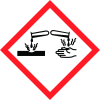
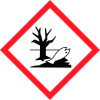
Hazard pictograms
PART (A) PART (B)
Signal word
PART (A) PART (B) Warning Danger
Hazard statements
PART (A) H319 – Causes serious eye irritation. H315 – Causes skin irritation. H317 – Can cause cutaneous allergy. H411 – Toxic to aquatic organisms, causes long-term adverse effects. PART (B) H312 - Harmful in contact with skin. H314 - Causes severe skin burns and eye damage. H317 - Can cause cutaneous allergy. H401 - Toxic to aquatic organisms. H412 - Harmful to aquatic organisms, causes long-term adverse effects. Precautionary advice
Prevention
PART (A) P280 – Wear safety gloves. Wear eye or face protection. P273 – Avoid release into the environment. P261 – Do not breathe vapors. P264 – Wash hands thoroughly after handling. P272 - Contaminated work clothing should not be taken out of the workplace. PART (B) P280 - Wear safety gloves. Wear eye or face protection. P273 – Avoid release into the environment. P261 - Do not breathe vapors. P264 - Wash hands thoroughly after handling. P272 – Contaminated work clothing should not be taken out of the workplace.
Response
PART (A) P391 – Collect spilled material. P302 + P352 + P362 + P364 – IF ON SKIN: Wash with plenty of soap and water. Remove contaminated clothing and wash before reuse. P305 + P351 + P338 – IF IN EYES: Rinse cautiously with water for several minutes. Remove contact lenses if the victim wears them and they can be easily removed. Continue rinsing. P337 + P313 – IF EYE IRRITATION PERSISTS: Get medical attention. PART (B) P304 + P340 + P312 – IF INHALED: Remove person to fresh air and keep in a position where they can breathe comfortably. Call a poison control center or doctor if you feel unwell. P301 + P310 + P330 + P331 – IF SWALLOWED: Call a poison control center or doctor immediately. Rinse your mouth. Do not induce vomiting. P303 + P361 + P353 + P363 + P310 – IF ON SKIN (or hair): Immediately remove all contaminated clothing. Rinse skin with water. Wash contaminated clothing before reuse. Call a poison control center or doctor immediately. P302 + P352 + P312 + P362 + P364 – IF ON SKIN: Wash with plenty of soap and water. Remove contaminated clothing and wash before reuse. P333 + P313 – IF SKIN IRRITATION OR RASH IS EVENTED: Get medical attention. P305 + P351 + P338 – IF IN EYES: Rinse cautiously with water for several minutes. Remove contact lenses if the victim wears them and they can be easily removed. Continue rinsing. Call a poison control center or doctor
Storage
PART (A) PART (B) N/A P405 – Keep in a locked area.
Disposal
PART (A) P501 – Dispose of contents and containers in accordance with all local, regional, national, and international regulations. PART (B) P501 – Dispose of contents and container in accordance with all local, regional, national, and international regulations. Other hazards not giving rise to classification None known



