

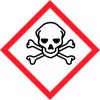
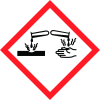

General Information
Revision date
2024-02-06
Product name
DEEP CLEAN
CAS No.
85536-14-7
1.2.1 Relevant identified uses
Acid Scaling Detergent Protelim Indústria Química de Produtos de Higiene e Limpeza Ltda - ME Avenida Henry Ford, n° 962, Mooca, São Paulo – SP. ZIP CODE: 03109-000
Icons in SDS


Company Information
company name
Phone/ Fax
e-mail address of the competent person responsible for the Safety Data Sheet
rio@protelim.com.br, info@protelim.com.br
GHS Information
Signal word
Warning
Hazard Codes
Hazard statements (CLP)
H290, H302, H311, H314, H317, H318, H341, H370, H372
Hazard statements
Code
Statements
H290
May be corrosive to metals
Section 2
SECTION 2: Hazards identification
Corrosive to metals - Category 1 Acute toxicity - dermal - Category 3 Acute toxicity - oral - Category 4 Skin corrosion and irritation - Category 1B Product hazard classification Serious eye damage/eye irritation - Category 1 Respiratory sensitization - Category 1 Skin sensitization - Category 1 Mutagenicity in germ cells - Category 2 Toxicity to specific organs - single exposure - Category 1 Toxicity to specific organs - repeated exposure - Category 1 Other hazards not resulting in The product poses no other hazards classification Classification system used ABNT-NBR 14725: 2023 Standard Globally Harmonized System for the Classification and Labelling of Chemicals, UN.
Signal word
Warning.
Hazard statements
H290 May be corrosive to metals. H302 Harmful if swallowed. H311 Toxic in contact with skin. H314 Causes severe skin burns and eye damage. H317 May cause an allergic skin reaction. H318 Causes serious eye damage. H341 Suspected of causing genetic defects. H370 Causes damage to organs (respiratory system and pancreas) through single exposure. H372 Causes damage to organs (central nervous system, bones, teeth, thyroid, kidneys, liver, testicles, bronchi, and pituitary) through repeated exposure.
Precautionary statements
General: P101 If medical advice is needed, have product container or label at hand. P102 Keep out of reach of children. P103 Read label before use.
Prevention
P202 Do not handle the product until you have read and understood all safety precautions. P260 Do not breathe dusts/fumes/gases/mist/vapours/spray. P264 Wash skin thoroughly after handling. P270 Do not eat, drink, or smoke while using this product. P280 Wear protective gloves/protective clothing/eye protection/face protection. P302+P352 IF ON SKIN: Wash with plenty of soap and water. Emergency Response: P301+P312 IN CASE OF INGESTION: If you feel unwell, contact a POISON CENTER or a doctor. P301+P330+P331 IN CASE OF INGESTION: Rinse mouth. DO NOT induce vomiting. P303+P361+P353 IN CASE OF CONTACT WITH SKIN (or hair): Immediately remove all contaminated clothing. Rinse skin with water/shower. P304+P340 IN CASE OF INHALATION: Remove person to fresh air and keep at rest in a position comfortable for breathing. P305+P351+P338 IN CASE OF CONTACT WITH EYES: Rinse cautiously with water for several minutes. Remove contact lenses, if present and easy to do. Continue rinsing. P302+P352 IN CASE OF CONTACT WITH SKIN: Wash with plenty of soap and water. P314 If you feel unwell, seek medical advice. P308 + P313 IN CASE OF exposure or suspected exposure: Get medical advice. P333+P313 In case of skin irritation: Get medical advice. P363 Wash contaminated clothing before reuse.
Storage
P402 Store in a dry place.
Disposal
P501 Dispose of contents/container in accordance with local regulations.
2.1 Classification of the substance or mixture
ABNT-NBR 14725: 2023 Standard Globally Harmonized System for the Classification and Labelling of Chemicals, UN. Hazard Pictograms: Signal word: Warning. Hazard statements: H290 May be corrosive to metals. H302 Harmful if swallowed. H311 Toxic in contact with skin. H314 Causes severe skin burns and eye damage. H317 May cause an allergic skin reaction. H318 Causes serious eye damage. H341 Suspected of causing genetic defects. H370 Causes damage to organs (respiratory system and pancreas) through single exposure. H372 Causes damage to organs (central nervous system, bones, teeth, thyroid, kidneys, liver, testicles, bronchi, and pituitary) through repeated exposure.



