


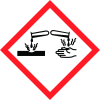
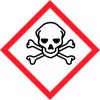

General Information
Revision date
2022-08-23
Product name
FORMALDEHYDE
Product Synonyms
Formaldehyde Solution with not less than 25% Formaldehyde; Formalin; Methylene
1.2.1 Relevant identified uses
Used as Disinfectant, Biocide and in the manufacture of Phenolic Resins and adhesives
supplier name
PharmAust Manufacturing
Emergency telephone
+61 8 9311 0700, +61 8 9311 0799
Icons in SDS


Company Information
company name
PharmAust Manufacturing
GHS Information
Signal word
DANGER
Hazard Codes
Hazard statements (CLP)
H302, H311, H314, H317, H331, H341, H350, H370
Hazard statements
Code
Statements
H302
Harmful if swallowed
Section 2
SECTION 2: Hazards identification
Poisons Schedule (Aust): 6. Globally Harmonised System Hazard Classification: Hazardous: According to the criteria of the “Globally Harmonised System of Classification and Labelling of Chemicals” (GHS)
Hazard categories
Carcinogenicity – Category 1A Serious Eye Damage/Irritation – Category 1 Germ Cell Mutagenicity – Category 2 Acute Toxicity, Oral - Category 4 Acute Toxicity, Inhalation - Category 3 Acute Toxicity, Dermal - Category 3 Skin Corrosion/Irritation - Category 1B Skin Sensitisation - Category 1 Respiratory Sensitisation - Category 1 Pictograms
Signal word
DANGER Hazard Statements H302 Harmful if Swallowed H311 Toxic in Contact with Skin H314 Causes Severe Skin Burns and Eye Damage H317 May cause an Allergic Skin Reaction H331 Toxic if Inhaled H341 Suspected of causing Genetic Defects (state route of exposure if it is conclusively proven That no other routes of exposure cause the hazard) H350 May cause Cancer (state route of exposure if it is conclusively proven That no other routes of exposure cause the hazard) H370 Causes Damage to Organs or state all Organs affected, if Known (state route of exposure if it is conclusively proven that no other routes of exposure cause the hazard)
Precautionary statements
General ▪ P101 If medical advice is needed, have product container or label at hand. ▪ P102 Keep out of reach of children. ▪ P103 Read label before use.
Prevention
▪ P201 Obtain Special instructions before use. ▪ P202 Do NOT handle until ALL Safety Precautions have been read and understood. ▪ P260 Do NOT breathe Dust/Fume/Gas/Mist/Vapours/Spray. ▪ P264 Wash contacted areas thoroughly after handling. ▪ P270 Do NOT Eat, Drink or Smoke when using this product. ▪ P271 Use ONLY outdoors or in a well-ventilated area. ▪ P272 Contaminated Work Clothing should NOT be allowed out of the work place. ▪ P280 Wear Protective Gloves/Protective Clothing/ Eye Protection/Face Protection.
Response
▪ P301 + P310 + P330 + P331, IF SWALLOWED: Immediately call a Poison Centre or Doctor/Physician. Rinse Mouth. DO NOT induce Vomiting. ▪ P303 + P361 + P353 + P363, IF ON SKIN (or hair) Remove/Take off immediately all contaminated clothing. Rinse skin with water/shower. Wash contaminated clothing before reuse. ▪ P304 + P340, IF INHALED: Remove person to fresh air and keep comfortable for breathing. Immediately Call a POISON CENTER or Doctor/Physician. ▪ P305 + P338 + P351, IF IN EYES: Rinse cautiously with water for several minutes. Remove Contact lenses, if present and easy to do. Continue rinsing. ▪ P307 + P311, IF EXPOSED: Immediately Call a POISON CENTER, Doctor/Physician (131 126).
Storage
▪ P403 + P233: Store in a well-ventilated place. Keep container tightly closed. ▪ P405 Store Locked Up.
Disposal
▪ P501 Dispose of contents/container in accordance with local / regional / national /international regulations. National Transport Commission (Australia) (Australian Code for the Transport of Dangerous Goods By Road & Rail - ADG Code)
Classifications
Dangerous Goods: According to the criteria of the “Australian Code for the transport of Dangerous Goods by Road & Rail”.
2.1 Classification of the substance or mixture
System of Classification and Labelling of Chemicals” (GHS) Hazard Categories: Carcinogenicity – Category 1A. Serious Eye Damage/Irritation – Category 1. Germ Cell Mutagenicity – Category 2. Acute Toxicity, Oral - Category 4. Acute Toxicity, Inhalation - Category 3. Acute Toxicity, Dermal - Category 3. Skin Corrosion/Irritation - Category 1B. Skin Sensitisation - Category 1. Respiratory Sensitisation - Category 1. Pictograms: Signal Word: DANGER Hazard Statements: ▪ H302 Harmful if Swallowed ▪ H311 Toxic in Contact with Skin. ▪ H314 Causes Severe Skin Burns and Eye Damage. ▪ H317 May cause an Allergic Skin Reaction. ▪ H331 Toxic if Inhaled. ▪ H341 Suspected of causing Genetic Defects (state route of exposure if it is conclusively proven That no other routes of exposure cause the hazard). ▪ H350 May cause Cancer (state route of exposure if it is conclusively proven That no other routes of exposure cause the hazard) ▪ H370 Causes Damage to Organs or state all Organs affected, if Known (state route of exposure if it is conclusively proven that no other routes of exposure cause the hazard).



