

Note: Ingredients listed on restricted chemical lists
EC/CAS
231-668-3/7681-52-9
Name of the chemical
Sodium hypochlorite
Concentration
10.5 (m/m as avail Cl2)
EC/CAS
215-185-5/1310-73-2
Name of the chemical
sodium hydroxide
Concentration
0.7 - 2.0
EC/CAS
231-791-2/7732-18-5
Name of the chemical
Water, distilled, conductivity or of similar purity H2O
Concentration
Balance
General Information
Version
4
Revision date
2024-08-06
Product name
(ADG)
Product Synonyms
or synonyms
Chemical name
Sodium Hypochlorite solution
CAS No.
7681-52-9
supplier name
PERTH
Emergency telephone
+61 407 994 198
Icons in SDS


Company Information
company name
PERTH
e-mail address of the competent person responsible for the Safety Data Sheet
sales@environex.net.au
GHS Information
Signal word
DANGER
Hazard Codes
Hazard statements (CLP)
H314, H335, H410
Hazard statements
Code
Statements
H314
Causes severe skin burns and eye damage
Section 2
SECTION 2: Hazards identification
Emergency overview: Harmful if inhaled. Corrosive. Toxic. Oxidizer. Light sensitive. May cause methemoglobinemia. Causes eye and skin burns. Causes digestive and respiratory tract burns Classification of the hazardous chemical Classification by the ADG Code: A dangerous good Classification by Hazardous Chemical Information System (HCIS) (Australia) H314 Causes severe skin burns and eye damage H410 Very toxic to aquatic life with long-lasting effects H335 Specific target organ toxicity (single exposure) – category 3 AUH031 Contact with acids liberates toxic gas Label elements according to the National model Code of Practice for the Labelling of Workplace Hazardous Chemicals (2015)
Hazard pictograms
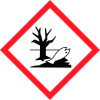
Exclamation Mark (GHS07) Corrosion (GHS05) Environment (GHS09)
Signal word
DANGER
Hazard statements
H314: Causes severe skin burns and eye damage H410: Very toxic to aquatic life with long-lasting effects H335 May cause respiratory irritation AUH031: Contact with acids liberates toxic gas
Precautionary statements
P260 Do not breathe dusts or mists. P264 Wash skin thoroughly after handling. P280 Wear protective gloves/ protective clothing/ eye protection/face protection. P301 + P330 + P331 IF SWALLOWED: Rinse mouth. Do NOT induce vomiting. P303 + P361 + P353 IF ON SKIN (or hair): Remove/ Take off immediately all contaminated clothing. Rinse skin with water/shower. P363 Wash contaminated clothing before reuse. P304 + P340 IF INHALED: Remove victim to fresh air and keep at rest in a position comfortable for breathing. P310 Immediately call a POISON CENTER or doctor/physician. P321 Specific treatment (see ... on this label) (cleansing agent if appropriate) P305 + P351 + P338 IF IN EYES: Rinse cautiously with water for several minutes. Remove contact lenses, if present and easy to do. Continue rinsing. P405 Store locked up. P501 Dispose of contents/ container in accordance with local/regional/ national/international Regulations
Other hazards which do not result in classification
Corrosive to metals; H290: May be corrosive to metals Oxidising Gas 1; H270
2.1 Classification of the substance or mixture
Classification by Hazardous Chemical Information System (HCIS) (Australia): H314 Causes severe skin burns and eye damage H410 Very toxic to aquatic life with long-lasting effects H335 Specific target organ toxicity (single exposure) – category 3 AUH031 Contact with acids liberates toxic gas Label elements according to the National model Code of Practice for the Labelling of Workplace



