




Note: Ingredients listed on restricted chemical lists
EC/CAS
100-51-6
Name of the chemical
Benzyl Alcohol
Concentration
N/A
EC/CAS
100-52-7
Name of the chemical
benzaldehyde
Concentration
N/A
EC/CAS
120-51-4
Name of the chemical
Benzyl benzoate
Concentration
N/A
EC/CAS
98-55-5
Name of the chemical
2-(4-methylcyclohex-3-en-1-yl)propan-2-ol; p-Menth-1-en-8-ol (alpha-Terpineol); 1-methyl-4-(1-methylvinyl)cyclohexan-1-ol (beta-Terpineol); 1-methyl-4-(1-methylethylidene)cyclohexan-1-ol (gamma-Terpineol) (40)
Concentration
N/A
EC/CAS
202-859-9
Name of the chemical
Benzyl alcohol (38)
Concentration
N/A
EC/CAS
202-860-4
Name of the chemical
Benzaldehyde (40)
Concentration
N/A
EC/CAS
204-402-9
Name of the chemical
Benzyl benzoate
Concentration
N/A
EC/CAS
216-074-4
Name of the chemical
Menthol; dl-menthol; l-menthol; d-menthol (40)
Concentration
N/A
EC/CAS
202-680-6
Name of the chemical
2-(4-methylcyclohex-3-en-1-yl)propan-2-ol; p-Menth-1-en-8-ol (alpha-Terpineol); 1-methyl-4-(1-methylvinyl)cyclohexan-1-ol (beta-Terpineol); 1-methyl-4-(1-methylethylidene)cyclohexan-1-ol (gamma-Terpineol) (40)
Concentration
N/A
General Information
Revision date
2014-03-28
Product name
Cranberry Flavor
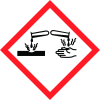
Icons in SDS


Company Information
company name
Perfumer"s Apprentice
GHS Information
Signal word
Danger
Hazard Codes
Hazard statements (CLP)
H226, H302, H312, H314, H318, H332, H335, H411
Hazard statements
Code
Statements
H226
Flammable liquid and vapour
Section 2
CLP CLASSIFICATION
2.1.1 Classification according to Regulation (EC) No 1272/2008 [CLP]:]] Acute Toxicity: Oral, Category 4 Acute Toxicity: Inhalation, Category 4 Aquatic Toxicity (Chronic), Category 2 Skin Corrosion/Irritation, Category 1A Serious Eye Damage/Eye Irritation, Category 1 Target Organ Systemic Toxicity (single exposure), Category 3 Acute Toxicity: Skin, Category 4 Flammable Liquids, Category 3
EU Classification
Directive 1999/45/EC Xn: Harmful Ha rm fu l C: Corrosive
Hazard statements
R10, R20/21/22, R36/37/38, R34, R35 For full text of R- phrases: see SECTION 15. H302 - Harmful if swallowed. H332 - Harmful if inhaled. H411 - Toxic to aquatic life with long lasting effects. H314 - Causes severe skin burns and eye damage. H318 - Causes serious eye damage. H335 - May cause respiratory irritation. H312 - Harmful in contact with skin. H226 - Flammable liquid and vapor.
2.2 Label elements
2.2.1 Labeling according to Regulation (EC) No 1272/2008 [CLP]:
Signal word
Danger
Precautionary statements
P264 - Wash hands thoroughly after handling. P270 - Do not eat, drink or smoke when using this product. P271 - Use only outdoors or in a well-ventilated area. P261 - Avoid breathing dust/fume/gas/mist/vapours/spray. P273 - Avoid release to the environment. P260 - Do not breathe dust/fume/gas/mist/vapours/spray. P280 - Wear protective gloves/protective clothing/eye protection/face protection. P233 - Keep container tightly closed. P210 - Keep away from heat/sparks/open flames/hot surfaces. - No smoking. P240 - Ground/bond container and receiving equipment. P241 - Use explosion-proof electrical/ventilating/lighting/.../ equipment. P243 - Take precautionary measures against static discharge. P242 - Use only non-sparking tools.
Response
P301+312 - IF SWALLOWED: Call a POISON CENTER or doctor/physician if you feel unwell. P330 - Rinse mouth. P304+340 - IF INHALED: Remove victim to fresh air and keep at rest in a position comfortable for breathing. P312 - Call a POISON CENTER/doctor/... if you feel unwell. P391 - Collect spillage. P303+361+353 - IF ON SKIN (or hair): Remove/take off immediately all contaminated clothing. Rinse skin with water/shower. P363 - Wash contaminated clothing before reuse. P305+351+338 - IF IN EYES: Rinse cautiously with water for several minutes. Remove contact lenses, if present and easy to do. Continue rinsing. P301+330+331 - IF SWALLOWED: Rinse mouth. Do NOT induce vomiting. P310 - Immediately call a POISON CENTER/doctor/.... P321 - Specific treatment see ... on this label. P302+352 - IF ON SKIN: Wash with plenty of soap and water. P322 - Specific measures see ... on this label. P370+378 - In case of fire, use ... to extinguish.
Storage
P501 - Dispose of contents/container to .... P405 - Store locked up. P403+233 - Store container tightly closed in well-ventilated place - if product is as volatile as to generate hazardous atmosphere. P403+235 - Store in cool/well-ventilated place. 2.2.2 Labeling according to Directive 1999/45/EC: Xn Ha rm fu l C
Potential health effects
Chronic exposure to acetic acid may cause erosion of dental enamel, bronchitis, eye irritation, darkening of the skin, and chronic inflammation of the respiratory tract. Prolonged or repeated skin contact may cause dermatitis. Skin sensitization to acetic acid is rare, but has occurred. Chronic: Acetic acid can cause occupational asthma. One case of a delayed asthmatic response to glacial acetic acid has been reported in a person with bronchial asthma. 2.3.1 Inhalation: The toxicological properties of this substance have not been fully investigated. Aspiration may lead to pulmonary edema. Vapors may cause dizziness or suffocation. May cause burning sensation in the chest. Causes respiratory tract irritation. Material has a very low vapor pressure at room temperature, so inhalation exposures are not expected unless material is heated or misted. May be harmful if inhaled. Skin: May be harmful if absorbed through skin. May cause skin irritation. Material is irritating to mucous membranes and upper respiratory tract. Material is extremely destructive to the tissue of the mucous membranes and upper respiratory tract. Effects may be delayed. Causes chemical burns to the respiratory tract. Exposure may lead to bronchitis, pharyngitis, and dental erosion. May be absorbed through the lungs. 2.3.2 Skin Contact: May cause cyanosis of the extremities. Prolonged and/or repeated contact may cause defatting of the skin and dermatitis. Causes redness and pain. Contact with the skin may cause a local anesthetic effect. Material is a weak skin sensitizer. In an acute dermal irritation study in rats, two of six animals exhibited liver damage. Prolonged and/or repeated contact may cause irritation and/or dermatitis. Causes skin irritation. May cause skin irritation. The toxicological properties of this material have not been fully investigated. Skin Absorption: May be harmful if absorbed through the skin. Causes burns. Skin Absorption: Skin absorption may occur. Harmful if absorbed through the skin. Causes skin burns. Contact with the skin may cause blackening and hyperkeratosis of the skin of the hands. 2.3.3 Eye Contact: May cause chemical conjunctivitis and corneal damage. Causes severe eye irritation. Causes redness and pain. The toxicological properties of this material have not been fully investigated. Causes burns. Contact with liquid or vapor causes severe burns and possible irreversible eye damage. 2.3.4 Ingestion: The toxicological properties of this substance have not been fully investigated. Ingestion of large amounts may cause central nervous system depression. May cause severe gastrointestinal tract irritation with nausea, vomiting and possible burns. Harmful if swallowed. May cause severe and permanent damage to the digestive tract. Causes severe pain, nausea, vomiting, diarrhea, and shock. May cause polyuria, oliguria (excretion of a diminished amount of urine in relation to the fluid intake) and anuria (complete suppression of urination). Rapidly absorbed from the gastrointestinal tract.



