



Note: Ingredients listed on restricted chemical lists
EC/CAS
227-534-9/5873-54-1
Name of the chemical
2,4’-Methylenediphenyl diisocyanate
Concentration
1 - 25
EC/CAS
202-966-0/101-68-8
Name of the chemical
4,4’-Methylenediphenyl diisocyanate
Concentration
1 - 25
General Information
Version
4.0
Revision date
2023-03-23
Product name
Polycraft Duroflex Part B
1.2.1 Relevant identified uses
Professional use,Industrial use
Icons in SDS


Company Information
company name
Park
e-mail address of the competent person responsible for the Safety Data Sheet
sales@mbfg.co.ukd
GHS Information
Signal word
Danger
Hazard Codes
Hazard statements (CLP)
H304, H315, H317, H319, H334, H335, H351, H373, H400, H410
Hazard statements
Code
Statements
H304
May be fatal if swallowed and enters airways
Section 2
SECTION 2: Hazards identification
According to Regulation (EC) No. 1272/2008 (CLP) Classification of the substance or mixture
Adverse physicochemical, human health and environmental effects
Suspected of causing cancer. May cause damage to organs through prolonged or repeated exposure. May cause respiratory irritation. Causes skin irritation. May cause an allergic skin reaction. Causes serious eye irritation. May cause allergy or asthma symptoms or breathing difficulties if inhaled. May be fatal if swallowed and enters airways. Very toxic to aquatic life with long lasting effects
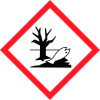
Hazard pictograms
GHS07 GHS08 GHS09
Signal word
Danger
Contains
Prepolymer based on aromatic isocyanate; o-(p-isocyanatobenzyl)phenyl isocyanate; diphenylmethane-2,4'-diisocyanate; 4,4'-methylenediphenyl diisocyanate; diphenylmethane- 4,4'-diisocyanate; Bis(isopropyl)naphthalene [mixture of isomers]
Hazard statements
H304 - May be fatal if swallowed and enters airways. H315 - Causes skin irritation. H317 - May cause an allergic skin reaction. H319 - Causes serious eye irritation. H334 - May cause allergy or asthma symptoms or breathing difficulties if inhaled. H335 - May cause respiratory irritation. H351 - Suspected of causing cancer. H373 - May cause damage to organs through prolonged or repeated exposure. H410 - Very toxic to aquatic life with long lasting effects.
Precautionary statements
P261 - Avoid breathing dust/fume/gas/mist/vapours/spray. P280 - Wear protective gloves, protective clothing, eye protection. P301+P310+P331 - IF SWALLOWED: Immediately call a POISON CENTER or doctor. Do NOT induce vomiting. P304+P340 - IF INHALED: Remove person to fresh air and keep comfortable for breathing. P321 - Specific treatment (see supplemental first aid instruction on this label). P342+P311 - If experiencing respiratory symptoms: Call a POISON CENTER or doctor.
Additional information
As from 24 August 2023 adequate training is required before industrial or professional use.
2.3 Other hazards
Contains no PBT/vPvB substances ≥ 0.1% assessed in accordance with REACH Annex XIII The mixture does not contain substance(s) included in the list established in accordance with Article 59(1) of REACH for having endocrine disrupting properties, or is not identified as having endocrine disrupting properties in accordance with the criteria set out in Commission Delegated Regulation (EU) 2017/2100 or Commission Regulation (EU) 2018/605 at a concentration equal to or greater than 0,1 %
2.1 Classification of the substance or mixture
Classification according to Regulation (EC) No. 1272/2008 [CLP] Skin corrosion/irritation, Category 2 H315 Serious eye damage/eye irritation, Category 2 H319 Respiratory sensitisation, Category 1 H334 Skin sensitisation, Category 1 H317 Carcinogenicity, Category 2 H351 Specific target organ toxicity – Single exposure, Category 3, Respiratory H335 tract irritation Specific target organ toxicity – Repeated exposure, Category 2 H373 Aspiration hazard, Category 1 H304 Hazardous to the aquatic environment – Acute Hazard, Category 1 H400 Hazardous to the aquatic environment – Chronic Hazard, Category 1 H410 Full text of H- and EUH-statements: see section 16 Adverse physicochemical, human health and environmental effects Suspected of causing cancer. May cause damage to organs through prolonged or repeated exposure. May cause respiratory irritation. Causes skin irritation. May cause an allergic skin reaction. Causes serious eye irritation. May cause allergy or asthma symptoms or breathing difficulties if inhaled. May be fatal if swallowed and enters airways. Very toxic to aquatic life with long lasting effects.



