

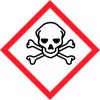

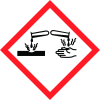
Note: Ingredients listed on restricted chemical lists
EC/CAS
7664-39-3
Name of the chemical
Hydrofluoric acid, its normal salts, its complexes and hydrofluorides with the exception of those given in Annex III
Concentration
5-7%
EC/CAS
7732-18-5
Name of the chemical
Water, distilled, conductivity or of similar purity H2O
Concentration
80-82%
General Information
Revision date
2025-12-20
Product name
ASTM 151 Etchant
Chemical name
Corrosive Liquid, Acidic, Inorganic, N.O.S. (HCl, HF solution)
Manufacturer Name
PACE Technologies
Emergency telephone
800-424-9300
Icons in SDS


Company Information
company name
PACE Technologies
e-mail address of the competent person responsible for the Safety Data Sheet
pace@metallographic.com
GHS Information
Signal word
Danger
Hazard Codes
Hazard statements (CLP)
H272, H300, H310, H314, H318, H330
Hazard statements
Code
Statements
H272
May intensify fire; oxidiser
Section 2
SECTION 2: Hazards identification
Signal word
Danger
Hazard statements
Hazard Statement(s): H272- May intensify fire; oxidizer H300- Fatal if swallowed H310- Fatal in contact with skin H314- Causes severe skin burns and eye damage H318 - Causes serious eye damage H330- Fatal if inhaled
Precautionary statements
Precautionary Statement(s)
Prevention
P210- Keep away from heat/sparks/open flames/hot surfaces. — No smoking. P220- Keep/Store away from clothing combustible materials. P221- Take any precaution to avoid mixing with combustibles. P260- Do not breathe dust/fume/gas/mist/vapors/spray. P262- Do not get in eyes, on skin, or on clothing. P264- Wash skin thoroughly after handling. P270- Do not eat, drink or smoke when using this product. P271-Use only outdoors or in a well-ventilated area. P280- Wear protective gloves/protective clothing/eye protection/face protection. P284- P403+P233-Store in a well-ventilated place. Keep container tightly closed.
Response
P301+310- IF SWALLOWED: Immediately call a POISON CENTER or doctor/physician. P302+P350- IF ON SKIN: Gently wash with plenty of soap and water. P305+P351+P338- IF IN EYES: Rinse cautiously with water for several minutes. Remove contact lenses, if present and easy to do. Continue rinsing. P310- Immediately call a POISON CENTER or doctor/physician. P320- Specific treatment is urgent (see Section 4 SDS). P321- Specific treatment urgent (see Section 4 SDS). P330- Rinse mouth. P322- Specific measures (see Section 4 SDS). P361- Remove/Take off immediately all contaminated clothing. P363- Wash contaminated clothing before reuse. P370+P378- In case of fire: Use dry sand, dry chemical or alcohol-resistant foam for extinction.
Storage
P403+P233-Store in a well-ventilated place. Keep container tightly closed. P405- Store locked up. Color Code White (Corrosive) Potential Health Effects Exposure to hydrofluoric acid can produce harmful health effects that may not be immediately apparent. Concentrated nitric acid is extremely hazardous; it is corrosive, reactive, an oxidizer, and a poison. The following hazards are for concentrated solutions. Hazards of less concentrated solutions may be reduced. Degree of hazard for reduced concentrations is not currently addressed in the available literature. Inhalation: Severely corrosive to the respiratory tract. May cause sore throat, coughing, labored breathing and lung congestion/inflammation, where symptoms may include severe burns of the mouth, throat, and stomach, leading to death. Ingestion Corrosive. May cause sore throat, abdominal pain, diarrhea, vomiting, severe burns of the digestive tract, and kidney dysfunction. Skin Contact Corrosive to the skin. Skin contact causes serious skin burns which may not be immediately apparent or painful. Symptoms may be delayed 8 hours or longer. The fluoride ion readily penetrates the skin causing destruction of deep tissue layers and even bone. Eye Contact Corrosive to the eyes. Symptoms of redness, pain, blurred vision, and permanent eye damage may occur. Chronic Exposure Intake of more than 6 mg of fluorine per day may result in fluorosis, bone and joint damage. Hypocalcemia and hypomagnesemia can occur from absorption of fluoride ion into blood stream. Aggravation of Pre-existing Conditions Persons with pre-existing skin disorders, eye problems, or impaired kidney or respiratory function may be more susceptible to the effects of this substance.
Disposal
P501- Dispose of contents/container to Federal, State and Local Regulations. Emergency Overview POISON! DANGER! CORROSIVE. EXTREMELY HAZARDOUS LIQUID AND VAPOR. CAUSES SEVERE BURNS WHICH MAY NOT BE IMMEDIATELY PAINFUL OR VISIBLE. MAY BE FATAL IF SWALLOWED OR INHALED. LIQUID AND VAPOR CAN BURN SKIN, EYES AND RESPIRATORY TRACT. CAUSES BONE DAMAGE. REACTION WITH CERTAIN METALS GENERATES FLAMMABLE AND POTENTIALLY EXPLOSIVE HYDROGEN GAS. Health Rating 4 - Extreme (Poison) Flammability Rating 0 - None Reactivity Rating 2 - Moderate Contact Rating: 4 - Extreme (Corrosive) Lab Protective Equip: GOGGLES & SHIELD; LAB COAT & APRON; VENT HOOD; PROPER GLOVES
2.1 Classification of the substance or mixture
Oxidizing liquids (Category 3), H272 in accordance with Acute toxicity, Oral (Category 2), H300 29 CFR 1910 Acute toxicity, Dermal (Category 1), H310 (OSHA HCS) Skin corrosion (Category 1A), H314 Serious eye damage (Category 1), H318 Acute toxicity, Inhalation (Category 2), H330 PICTOGRAM(s): SIGNAL WORD: Danger HAZARD Hazard Statement(s): STATEMENTS: H272- May intensify fire; oxidizer H300- Fatal if swallowed H310- Fatal in contact with skin H314- Causes severe skin burns and eye damage H318 - Causes serious eye damage H330- Fatal if inhaled PRECAUTIONARY



