


Note: Ingredients listed on restricted chemical lists
EC/CAS
229-347-8/6484-52-2
Name of the chemical
Ammonium Nitrate (AN)
Concentration
50-60%
General Information
Version
31/10/2025
Revision date
2024-07-04
Product name
Fordyn
Emergency telephone
0800 147 111
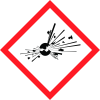
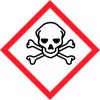
Icons in SDS


Company Information
company name
OY FORCIT AB
GHS Information
Signal word
Danger
Hazard Codes
Hazard statements (CLP)
H201, H300, H300+H310+H330, H310, H319, H330, H373
Hazard statements
Code
Statements
H201
Explosive; mass explosion hazard
Section 2
SECTION 2: Hazards identification
Signal word
Danger
Hazard statements
Explosive; mass explosion hazard. (H201) Fatal if swallowed, in contact with skin or if inhaled. (H300+H310+H330) Causes serious eye irritation. (H319) May cause damage to organs through prolonged or repeated exposure. (H373)
Precautionary statements
Not applicable.
Prevention
Keep away from heat, hot surfaces, sparks, open flames and other ignition sources. No smoking. (P210) Do not subject to grinding/shock/friction. (P250) Do not breathe dust/fume/gas/mist/vapour/spray. (P260) Do not eat, drink or smoke when using this product. (P270) Wear eye protection/face protection/protective gloves/protective clothing. (P280)
Response
In case of fire: Explosion risk. Evacuate area. DO NOT fight fire when fire reaches explosives. (P370+P372+P380+P373)
Storage
Not applicable.
Disposal
Not applicable.
Hazardous Ingredients
-
Additional information
Explosives are labeled and packaged in accordance with the requirements for explosives only.
Other hazards
Exposure to Ethylene dinitrate vapour via inhalation may be fatal. However, the hazardous mixture is in solid form and sealed in plastic cartridges. Formation of fatal concentrations of vapour is highly unlikely but cannot be entirely ruled out. No hazardous properties to health appropriate care. are to be expected when handled and used with Contact with the hazardous ingredients is highly unlikely. Risk of explosion. An uncontrolled explosion may cause great physical damage. Explosion risk in case of fire. Evacuate area. During explosion/in case of fire, toxic gases may be formed. e.g. oxides of nitrogen (NO, NO2), carbon (CO, CO2) and ammonia(NH3). Do not breathe fumes after detonation. No ethylene dinitrate remains after explosion as it is completely converted into carbon dioxide, nitric oxides and water vapour. ▼Additional warnings This mixture/product does not contain any substances known to fulfil the criteria for PBT and vPvB classification. This product does not contain any substances considered to be endocrine disruptors in accordance with the criteria set out in Commission Delegated Regulation (EU) 2017/2100 or Commission Regulation (EU) 2023/707.
2.1 Classification of the substance or mixture
Expl. 1.1; H201, Explosive; mass explosion hazard. Acute Tox. 2; H300, Fatal if swallowed. Acute Tox. 1; H310, Fatal in contact with skin. Eye Irrit. 2; H319, Causes serious eye irritation. Acute Tox. 2; H330, Fatal if inhaled. STOT RE 2; H373, May cause damage to organs through prolonged or repeated exposure.



