



Note: Ingredients listed on restricted chemical lists
EC/CAS
7439-92-1
Name of the chemical
Blei, massiv: [Partikeldurchmesser ≥ 1 mm]
Concentration
2-16
EC/CAS
1314-41-6
Name of the chemical
Orange lead (lead tetroxide)
Concentration
0.01-0.8
EC/CAS
13424-46-9
Name of the chemical
Bleiazid
Concentration
0.3-0.7
EC/CAS
7429-90-5
Name of the chemical
Aluminium
Concentration
0.01-0.02
General Information
Version
1.0
Revision date
2015-04-24
Product name
ExelTM ConnectadetTM - 1.4S
Substance name
which under normal conditions of use are not in contact with the user unless the assembly is damaged or intentionally
Emergency telephone
1-877-561-3636, 1-800-424-9300, 1-800-800-3855, 1-877- 561-3636
Icons in SDS


Company Information
company name
Orica Canada Inc
e-mail address of the competent person responsible for the Safety Data Sheet
sds.na@orica.com
GHS Information
Signal word
Danger
Hazard Codes
Hazard statements (CLP)
H204, H350, H360, H372
Hazard statements
Code
Statements
H204
Fire or projection hazard
Section 2
SECTION 2: Hazards identification
Classification (GHS-US) Classification of the Substance or Mixture Classification (GHS-US) Expl. 1.4 H204 Carc. 1B H350 Repr. 1A H360 STOT RE 1 H372 Full text of H-phrases: see section 16
2.2 Label elements
GHS-US Labeling
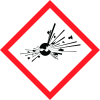
Hazard pictograms
GHS01 GHS08
Signal word
Danger
Hazard statements
H204 - Fire or projection hazard. H350 - May cause cancer. H360 - May damage fertility or the unborn child. H372 - Causes damage to organs through prolonged or repeated exposure.
Precautionary statements
P201 - Obtain special instructions before use. P202 - Do not handle until all safety precautions have been read and understood. P210 - Keep away from heat, hot surfaces, open flames, sparks. - No smoking. P240 - Ground/bond container and receiving equipment. P250 - Do not subject to friction, grinding, shock. P260 - Do not breathe dust, fume. P264 - Wash hands, forearms, and exposed areas thoroughly after handling. P270 - Do not eat, drink or smoke when using this product. P280 - Wear eye protection, protective gloves, protective clothing. P308+P313 - If exposed or concerned: Get medical advice/attention. P314 - Get medical advice/attention if you feel unwell. P370+P380 - In case of fire: Evacuate area. P372 - Explosion risk in case of fire. P373 - DO NOT fight fire when fire reaches explosives. P374 - Fight fire with normal precautions from a reasonable distance. P391 - Collect spillage. P401 - Store in accordance with as defined in the Explosives Act of Canada and the provisions of the Bureau of Alcohol, Tobacco and Firearms regulations contained in 27 CFR P405 - Store locked up. P501 - Dispose of contents/container in accordance with local, regional, national, territorial, provincial, and international regulations.
Other hazards
Aquatic Acute 1 H400 Aquatic Chronic 1 H410 GHS09 Very toxic to aquatic life with long lasting effects P273 - Avoid release to the environment Contains lead. Lead passes through the lungs into the blood where it can harm many of the body's organ systems. While inorganic lead does not readily enter the body through the skin, it can enter the body through accidental ingestion (eating, drinking, and smoking) via contaminated hands, clothing, and surfaces. Workers may develop a variety of ailments, such as neurological effects, gastrointestinal effects, anemia, and kidney disease.
Ingredient(s) with unknown acute toxicity
Not available
2.1 Classification of the substance or mixture
Classification (GHS-US) Expl. 1.4 H204 Carc. 1B H350 Repr. 1A H360 STOT RE 1 H372 Full text of H-phrases: see section 16


