


Note: Ingredients listed on restricted chemical lists
EC/CAS
232-674-9/9004-34-6
Name of the chemical
cellulose
Concentration
>=20-<30
EC/CAS
238-877-9/14807-96-6
Name of the chemical
Talc
Concentration
>=1-<10
EC/CAS
236-675-5/13463-67-7
Name of the chemical
Reaction mass of titanium dioxide and silver chloride
Concentration
>=1-<10
General Information
Version
4.2
Revision date
2023-09-30
Product name
Desloratadine Solid Formulation
1.2.1 Relevant identified uses
Pharmaceutical
Emergency telephone
+44 1 670 59 32 05, +1-215-631-6999
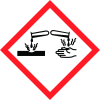
Icons in SDS


Company Information
company name
Organon & Co
e-mail address of the competent person responsible for the Safety Data Sheet
EHSSTEWARD@organon.com
GHS Information
Signal word
Danger
Hazard Codes
Hazard statements (CLP)
H318, H361fd, H412
Hazard statements
Code
Statements
H318
Causes serious eye damage
Section 2
SECTION 2: Hazards identification
Regulation (EC) No. 1272/2008 Classification of the substance or mixture
Signal word
Danger
Hazard statements
H318 Causes serious eye damage. H361fd Suspected of damaging fertility. Suspected of damaging the unborn child. H412 Harmful to aquatic life with long lasting effects.
Prevention
P201 Obtain special instructions before use. P273 Avoid release to the environment. P280 Wear protective gloves/ protective clothing/ eye protection/ face protection.
Response
P305 + P351 + P338 + P310 IF IN EYES: Rinse cautiously with water for several minutes. Remove contact lenses, if present and easy to do. Continue rins- ing. Immediately call a POISON CENTER/ doctor. P308 + P313 IF exposed or concerned: Get medical advice/ attention.
Storage
P405 Store locked up.
Hazardous Ingredients
Desloratadine EUH212 Warning! Hazardous respirable dust may be formed when used. Do not breathe dust.
2.3 Other hazards
This substance/mixture contains no components considered to be either persistent, bioaccumula- tive and toxic (PBT), or very persistent and very bioaccumulative (vPvB) at levels of 0.1% or higher. Contact with dust can cause mechanical irritation or drying of the skin. May form explosive dust-air mixture during processing, handling or other means.
2.1 Classification of the substance or mixture
Classification (REGULATION (EC) No 1272/2008) as amended by GB-CLP Regulation, UK SI 2019/720, and UK SI 2020/1567) Serious eye damage, Category 1 H318: Causes serious eye damage. Reproductive toxicity, Category 2 H361fd: Suspected of damaging fertility. Suspected of damaging the unborn child. Long-term (chronic) aquatic hazard, Cat- H412: Harmful to aquatic life with long lasting ef- egory 3 fects.



