









General Information
Revision date
2016-05-05
Product name
9. Physical and chemical properties
Manufacturer Name
or importer. They must be available for every hazardous
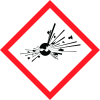
Icons in SDS


Company Information
company name
or importer. They must be available for every hazardous
Section 2
SECTION 2: Hazards identification
OSHA 10. Stability and reactivity 3. Composition/ information on
TOXICOLOGICAL INFORMATION
ingredients 4. First aid measures
ECOLOGICAL INFORMATION
5. Fire-fighting measures 13. Disposal considerations 6. Accidental release measures 14. Transport information 7. Handling and storage 15. Regulatory information 8. Exposure controls and
Further information
including date personal protection of preparation or last revision 6.2.5 Obtaining SDS Sheets SDS sheets can be obtained from: • Internet access through 3E website established for NCDOT • Call 3E Company for SDS (800-451-8346) • Send Fax Request to 3E using Fax form. See Appendix D for Fax form. • Some Units may maintain hard copies of SDS For Internet access to NCDOT SDS use 3E website set up for NCDOT contact your supervisor or Safety & Risk Management for assistance. The advantage of this method is that worksites and work locations do not necessarily have to maintain paper copies of SDSs. Rather, the availability and accessibility of SDSs is determined by need. SDS requests fall into two categories: • Routine • Emergency For routine requests, employees should request SDS from their immediate supervisor. For emergency requests, any employee can call 3E Co. (800-451-8346) to request SDS. If problems are encountered while obtaining a SDS, contact Safety & Risk Management or your unit Safety staff. New chemical product purchases should result in the SDS being added to the electronic 3E NCDOT database by the location making the purchase. 6.2.6 Training Employees will be trained to work safely with chemicals. Training will include: • The Hazard Communication standard and its requirements • Operations in the work area where hazardous chemicals are present • The location and availability of the written hazard communication program • The physical, health, simple asphyxiation, combustible dust and pyrophoric gas as well as hazards not otherwise classified, of the chemicals in the work area • Measures employees can take to protect themselves including NCDOT’s specific procedures to provide engineering controls, work practices, and Personal Protective Equipment (PPE) • Methods and observations to detect the presence of a hazardous chemical • How to read and interpret information on labels and SDS Employees will be trained at the time of initial employment or assignment and whenever a new chemical hazard is introduced into their workplace. Refresher training shall be provided annually. All training will be documented. See Appendix E for the training documentation form. A copy of the training documentation shall be placed in the employee’s personnel record file. Training may also be documented electronically through LMS. 6.3 Specific Responsibilities 6.3.1 Managers/Unit Heads Managers/Unit Heads are responsible for ensuring that adequate funds are available and budgeted for the purchase of equipment and supplies for successful implementation and maintenance of NCDOT’s Hazard Communication Program in their work areas. They will be also responsible for appointing a Hazard Communication Coordinator for their work area(s) and for identifying the employees affected by this safety policy and procedure. Managers/Unit Heads will obtain and coordinate the required training for the affected employees. Managers/Unit Heads will also ensure compliance with this safety policy and procedure through their auditing process. 6.3.2 Supervisors Supervisors will ensure that labels on hazardous chemicals are legible. They shall also ensure refresher training is provided to employees on NCDOT’s Written Hazard Communication Program. Supervisors will ensure that employees are provided with and instructed on the use of any PPE when working with hazardous chemicals. 6.3.3 Employees Employees will be trained before working with any hazardous chemicals. They are responsible for reviewing chemical labels for procedures and hazards before using any hazardous chemicals. Employees shall wear the necessary PPE before working with any hazardous chemical. Also, employees shall report any unlabeled or defaced hazardous chemical containers to their immediate supervisor. 6.3.4 Safety and Risk Management Safety and Risk Management will provide prompt assistance to managers/unit heads, supervisors, or others as necessary on any matter concerning this safety policy and procedure. Safety and Risk Management will assist in developing or securing the required training. Safety Engineers will provide consultative and audit assistance to ensure effective implementation of this safety policy and procedure. APPENDIX A: NCDOT Hazard Communication Program NCDOT Hazard Communication Program Facility/Worksite: Program Coordinator: To ensure that information about the dangers of all hazardous chemicals used by NCDOT personnel at this location is known by all affected employees, the following Hazard Communication Program has been established. Under this program, employees will be informed of the contents of the OSHA Hazard Communications standard, the hazardous properties of chemicals with which you work, safe handling procedures, and measures to protect yourself from these chemicals. The requirements of this program are intended to be consistent with the provisions of the United Nations Globally Harmonized System of Classification and Labeling of Chemicals (GHS). This program applies to all work operations where employees may be exposed to hazardous chemicals under normal working conditions or during an emergency situation. All work units will participate in the Hazard Communication Program. A copy of this Hazard Communication Program, Chemical List, and Safety Data Sheets shall be made available for review by any interested employee in your work unit. Facility/Worksite Info The Hazard Communication Program shall list the facility or worksite and identify the title of program coordinator for your location. The program coordinator is responsible for reviewing and updating this plan and the Chemical List of hazardous chemicals used. Chemical List All facilities or worksites shall compile and maintain a Chemical List of hazardous chemicals being used. This list will contain the product name used on the SDS and container label. The Chemical List may be compiled for the workplace as a whole or for individual work areas. It shall be updated as new chemicals are added or existing chemicals are deleted by the designated SDS administrator for the location. Labels and Labeling System Manufacturer container labels are sufficient to meet labeling requirements of the Hazard Communication Program. If contents are transferred from the original manufacture container to another container, a labeling system must be used to label the unmarked container with product identity and appropriate hazard information. SDS information shall be made available for all hazardous chemicals used at a facility or worksite through on-line access or by phone/fax request to NCDOT SDS system provider. Employees who are working with a hazardous chemical may request copy of the SDS from their immediate supervisor. The supervisor can obtain SDS by: • Internet access through 3E website established for NCDOT • Call 3E Co. for SDS; 800-451-8346 • Send Fax Request to 3E using Fax form. See Appendix D for Fax form. • Access to hard copies of SDS if available in unit. For Internet access to NCDOT SDS use the following hyperlink to 3E website set up for NCDOT; 3E Online NCDOT Access It is recommended that users create a short cut on computer desk top page for quick access. The advantage of this method is that worksites and work locations do not necessarily have to maintain paper copies of SDSs. Rather, the availability and accessibility of SDSs is determined by need. If problems are encountered while obtaining a SDS, contact Safety & Risk Management or your unit Safety staff. Hazards of Non-Routine Tasks Supervisors will inform employees of any special non-routine tasks that may involve possible exposure to hazardous chemicals. Safe work practices, use of required PPE, and standard operating procedures (SOPs) shall be reviewed prior to the start of such tasks. Contractor Communication All onsite contractors (and subcontractors) are responsible for adhering to NCDOT’s Hazard Communication Program while they are on NCDOT worksites. Information on hazardous chemicals known to be used on the worksite will be exchanged with contractors. Contractors are required to exchange SDS information with NCDOT personnel as requested. Additionally, all onsite contractors shall be provided a copy of NCDOT’s Hazard Communication Program. Contractors will be responsible for providing necessary information to their employees and subcontractors. APPENDIX C: Safety Data Sheets (SDS) A safety data sheet (SDS) shall include the information specified in Table below under the section number and heading indicated for sections 1-16. If no relevant information is found for any given section, the SDS shall clearly indicate that no applicable information is available. Section Heading Information Provided 1. Identification
Product definition
used on the label; (b) Other means of identification; (c) Recommended use of the chemical and restrictions on use; (d) Name, address, and telephone number of the chemical manufacturer, importer, or other responsible party; (e) Emergency phone number. 2. (a) Classification of the chemical in accordance with paragraph (d) of §1910.1200; (b) Signal word, hazard statement(s), symbol(s) and precautionary statement(s) in accordance with paragraph (f) of §1910.1200. (Hazard symbols may be provided as graphical reproductions in black and white or the name of the symbol, e.g., flame, skull and crossbones); (c) Describe any hazards not otherwise classified that have been identified during the classification process; (d) Where an ingredient with unknown acute toxicity is used in a mixture at a concentration = 1% and the mixture is not classified based on testing of the mixture as a whole, a statement that X% of the mixture consists of ingredient(s) of unknown acute toxicity is required.


