


Note: Ingredients listed on restricted chemical lists
EC/CAS
7440-50-8
Name of the chemical
Copper
Concentration
N/A
EC/CAS
15245-44-0
Name of the chemical
Blei-2,4,6-trinitroresorcinat
Concentration
N/A
EC/CAS
10022-31-8
Name of the chemical
Barium-nitrate
Concentration
N/A
EC/CAS
231-159-6
Name of the chemical
Copper (nano) [INCI] (11), Colloidal Copper (nano) [INCI] (11)
Concentration
N/A
EC/CAS
239-290-0
Name of the chemical
Blei-2,4,6-trinitroresorcinat
Concentration
N/A
General Information
Revision date
2019-02-28
Product name
PRIMERS - MUZZLELOADING
Product Synonyms
Triple 7 (777) Muzzle Loading Primer
CAS No.
Mixture
1.2.1 Relevant identified uses
Small Arms Ammunition Primer
Manufacturer Name
Olin Winchester, LLC
Emergency telephone
US/Canada: 1-800-424-9300
Icons in SDS


Company Information
company name
Olin Winchester, LLC
GHS Information
Signal word
Danger
Hazard Codes
Hazard statements (CLP)
H204, H350, H360, H372, H411
Hazard statements
Code
Statements
H204
Fire or projection hazard
Section 2
SECTION 2: Hazards identification
GHS Classification EMERGENCY OVERVIEW: EXPLOSIVE. KEEP AWAY FROM HEAT. DO NOT SUBJECT TO MECHANICAL SHOCK. PARTICLES FROM FIRING MAY BE HARMFUL IF INHALED. DO NOT TAKE INTERNALLY. US DOT SYMBOLS CANADA (WHMIS) SYMBOLS
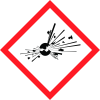
Hazard pictograms
This Product is not subject to WHMIS Class 6 Explosive Explosive; Pictogram: exploding bomb Specific Target Organ Toxicity; Pictogram Code: GHS08 E, T, N
2.1 Classification of the substance or mixture
Explosive Division 1.4 STOT RE Category 1 Carcinogenicity Category 1A Reproductive Toxicity Category 1A Aquatic Environment, Chronic II
Signal word
Danger
Hazard statements
H204: Fire or projection hazard H350: May cause cancer H360: May damage fertility or the unborn child H372: Causes damage to nervous system, kidney, and hematopoietic system through prolonged or repeated exposure H411: Toxic to aquatic life with long lasting effects Target organs: Nervous, renal and hematopoietic systems R2: Risk of explosion by shock, friction, fire or other sources of ignition R45 (Category 1): May cause cancer R48: Danger of serious damage to health by prolonged exposure R60: May impair fertility R63: Possible risk of harm to the unborn child R51/53: Toxic to aquatic organisms and many cause long-term adverse effects in the aquatic
Precautionary statements
P102: Keep out of reach of children P210: Keep away from heat/sparks/open flame/hot surfaces P250: Do not subject to shock/friction P260: Do not breathe dust/fume/gas/mist/vapors/spray P264: Wash hands thoroughly after handling P270: Do not eat, drink or smoke when using this product P271: Use only outdoors or in a well-ventilated area P273: Avoid release to the environment P280: Wear protective gloves/protective clothing/eye protection/face protection S2: Keep out of reach of children S15: Keep away from heat S20/21: When using do not eat, drink or smoke S22: Do not breathe dust S39: Wear eye/face protection S51: Use only in well-ventilated areas S61: Avoid release to the environment Health Hazards or Risks From Exposure This product is composed of a metal capsule which contains the various components completely sealed within. Therefore, under normal handling of this product, no exposure to any harmful materials will occur. When the product is fired, a small amount of particles may be generated which may be slightly irritating to the eyes and the respiratory tract. The particles may contain trace amounts of these harmful substances: Lead: Ingestion of large amounts of lead can cause abdominal pain, constipation, cramps, nausea and/or vomiting. Chronic exposure to lead can cause kidney damage, anemia, reproductive effects, developmental effects and permanent nervous system damage in humans including changes in cognitive function. Occupational exposure to lead is associated with lung and stomach cancer. Lead is classified as a probable human carcinogen. Copper: Inhalation of high concentrations of metallic copper dusts or fumes may cause nasal irritation and/or nausea, vomiting and stomach pain. Antimony sulfide: Inhalation of high concentrations may cause dizziness, headache, and nausea. Workers chronically exposed to high concentrations of antimony sulfide have developed heart and blood effects. Barium nitrate: Ingestion of large doses of soluble barium compounds can cause cyanosis, skeletal muscle paralysis, respiratory arrest, irregular heartbeat and hypertension. It is unlikely that the amount of particles that someone would be exposed to from firing would be sufficient to cause any of these effects.
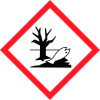
Environmental hazards
Pictogram Code GHS09



