



Note: Ingredients listed on restricted chemical lists
EC/CAS
1310-73-2
Name of the chemical
sodium hydroxide
Concentration
N/A
EC/CAS
215-185-5
Name of the chemical
Potassium or sodium hydroxide (20)
Concentration
N/A
General Information
Revision date
2015-11-30
Product name
Buffer A1, Buffer A2, Buffer A3, Buffer AY
1.2.1 Relevant identified uses
use as laboratory reagent; industrial (for professional use only)
1.2.2. Uses advised against
no additional information available
Icons in SDS
Company Information
company name
NZYTech, Lda
e-mail address of the competent person responsible for the Safety Data Sheet
info@nzytech.com
GHS Information
Signal word
Danger
Hazard Codes
Hazard statements (CLP)
H226, H290, H302, H315, H317, H319, H334, H336
Hazard statements
Code
Statements
H226
Flammable liquid and vapour
Section 2
SECTION 2: Hazards identification
1999/45/EC Classification of the complete product
CLP CLASSIFICATION
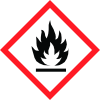
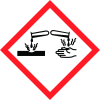
H226: Flammable Liquid (Category 3) H290: Metal Corrosion (Category 1) H302: Acute toxicity, Oral (Category 4) H315: Skin Irritation (Category 2) H317: Skin Sensitisation (Category 1A/1B) H319: Eye Irritation (Category 2) H334: Respiratory Sensitisation (Category 1A/1B) H336: STOT SE (Category 3) GHS02 GHS05 GHS07 GHS08 ] Buffer A2
Signal word
Danger Danger - do not need labelling as hazardous Buffer A3 Buffer AY RNase A (lyophilized) Danger H317: May cause an allergic skin reaction H334: May cause allergy or asthma symptoms or breathing difficults if inhaled. P261S Avoid breathing dust; P280sh Wear protective gloves/eye protection; P302+352 IF ON SKIN Wash with plenty of water; P304+340 IF INHALED Remove person to fresh air and keep comfortable for breathing; P333+313 If skin irritation or rash occurs Get medical advice/attention; P342+311 If experiencing respiratory symptoms Call a POISON CENTER/doctor/…; P363 Wash contaminated clothing before reuse. Other components - do not need labelling as hazardous
EU Classification
Directive 67/548/EEC or 1999/45/EC Xi; R36/38 Directive 67/548/EEC or 1999/45/EC Buffer A2 Xi, R 36/38 Buffer A3 Xi, R 36 Buffer AY Xi, R 36 RNase A (lyophilized) Xn, R 42/43 Other components Do not need labelling as hazardous
Hazard statements
see section 16 H290: Metal Corrosion (Category 1) H315: Skin Irritation (Category 2) H319: Eye Irritation (Category 2) Buffer A3 H302: Acute toxicity, Oral (Category 4) H319: Eye Irritation (Category 2) Buffer AY H226: Flammable Liquid (Category 3) H302: Acute toxicity, Oral (Category 4) H319: Eye Irritation (Category 2) H336: STOT SE (Category 3) RNase A (lyophilized) H317: Skin Sensitisation (Category 1A/1B) H334: Respiratory Sensitisation (Category 1A/1B) Other components - no hazard statements - no hazard statements 2.2.2 Labelling according to Directive 67/548/EEC or 1999/45/EC Buffer A2 Xi, R 36/38 Irritating to eyes and skin R 36 Irritating to eyes R 36 Irritating to eyes R42/43 May cause sensitization by inhalation and skin contact
Hazard pictograms
GHS05 GHS07 GHS07 GHS02 GHS07 GHS07 GHS08 - do not need labelling as hazardous GHS05 GHS07 GHS07 GHS02 GHS07 GHS07 GHS08 - do not need labelling as hazardous
Adverse physicochemical, human health and environmental effects
No additional information available
2.2 Label elements
According 1999/45/EC small amounts of harmful and highly flammable preparations/mixtures have partly/completely exemption from labelling (no symbols F, O, Xn, Xi, N and no R and S phrases are necessary) until 25-125 mL|g. This labelling exemption is not valid for sensibilizing mixtures. According CLP (GHS) inner packages must be only labelled with symbol(s) and product identificator. Harmful chemicals/mixtures with signal word: WARNING and highly flammable chemicals/mixtures must not be labelled with H and P phrases until 125 mL or 125 g. This labelling exemption is NOT valid for sensibilizing substances. 2.2.1. Labelling according to Regulation (EC) No. 1272/2008 [CLP] Buffer A2
Precautionary statements
S26-37/39-45 In case of contact with eyes, rinse immediately with plenty of water and seek medical advice. Wear suitable gloves and eye/face protection. In case of accident or if you feel unwell, seek medical advice immediately. Buffer A3 Xi, S26-39 In case of contact with eyes, rinse immediately with plenty of water and seek medical advice. Wear eye/face protection. Buffer AY Xi, S 16-26-39 Keep away from sources of ignition – No smoking. In case of contact with eyes, rinse immediately with plenty of water and seek medical advice. Wear eye/face protection. RNase A (lyophilized) Xn, S22 Do not breathe dust Other components Do not need labelling as hazardous
2.3 Other hazards
Possible Hazards from physicochemical Properties Generally in the case of pH values are less than 2 or higher than 11.5 then it is corrosive. In the case of pH values are less than 5 or higher than 9 then it is irritant. Information pertaining to particular Risks to Human and possible Symptoms Causes varying degrees of acid burns on the skin, to the eyes and to the mucous membranes and wounds which do not heal quickly depending on the concentration, temperature and the exposure time. Cause after skin contact, impairments of health when ingested in small quantities. May cause sensitization by skin contact, also in repeated contact of small amounts. May cause allergy or asthma symptoms or breathing difficulties if inhaled.
Supplemental label elements
Hazard H290 "May be corrosive to metals" has only relevance for longer transportation time of larger amounts.



