




Note: Ingredients listed on restricted chemical lists
EC/CAS
7440-50-8
Name of the chemical
Copper
Concentration
N/A
EC/CAS
7439-92-1
Name of the chemical
Blei, massiv: [Partikeldurchmesser ≥ 1 mm]
Concentration
N/A
EC/CAS
7440-36-0
Name of the chemical
Antimony
Concentration
N/A
EC/CAS
1314-13-2
Name of the chemical
Zinc oxide; C.I. 77947
Concentration
N/A
EC/CAS
9004-70-0
Name of the chemical
Nitrocellulose
Concentration
N/A
EC/CAS
55-63-0
Name of the chemical
Nitroglycerin; Propane-1,2,3-triyl trinitrate
Concentration
N/A
EC/CAS
12403-82-6
Name of the chemical
Lead, dihydroxy[2,4,6-trinitro-1,3-benzenediolato(2-)]di
Concentration
N/A
EC/CAS
7440-02-0
Name of the chemical
Nickel
Concentration
N/A
General Information
Revision date
2018-03-02
Product name
Nosler Ammunition That Contains Lead
Manufacturer Name
Nosler, Inc
Icons in SDS
Company Information
company name
Nosler, Inc
GHS Information
Signal word
Danger
Hazard Codes
Hazard statements (CLP)
H204, H317, H335, H360, H372, H411
Hazard statements
Code
Statements
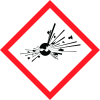
H204
Fire or projection hazard
Section 2
SECTION 2: Hazards identification
OSHA US DOT Symbols
Hazard statements
H204: Fire or projection hazard H360: May damage fertility or the unborn child H372: Causes damage to central nervous system, kidneys, liver, through prolonged or repeated exposure H411: Toxic to aquatic life with long lasting effects H317: May cause an allergic skin reaction H335: May cause respiratory irritation
Signal word
Danger Routes of Entry: Inhalation Skin Ingestion When processing, Dust, vapor, and/or fume Dust, vapor and/or Dust, vapor, fume, and/or shooting, or handling generated while firing fume is not readily reside may be absorbed by product ammunition may be absorbed through the the digestive system and can irritating to the skin result in acute and chronic respiratory system and overexposure from poor can results in both acute personal hygiene and chronic overexposure
Health hazards
Acute and Chronic ) Acute Overexposure If left untreated headache, chills, nausea, weakness, vomiting, loss of appetite, uncoordinated body movements, convulsions, stupor, and coma. If the metal fume is inhaled, mild irritation may result to the throat, upper respiratory tract, and lungs. The metal fume may also produce influenza – like symptoms, known as metal fume fever. Symptoms of this reaction may include metallic taste, runny nose, nausea, fever and chills. These effects usually disappear within 24 hours. Chronic Overexposure If left untreated weakness, insomnia, hypertension, slight irritation to skin and eyes, metallic taste in mouth, anemia, constipation, headache, muscle, and joint pains, metal fume fever, ulceration of the nasal septum, neuromuscular dysfunction, paralysis, and encephalopathy. Lead exposure can pose a risk to developing fetuses and may impair the reproductive systems in men and women. Damage to kidneys, red blood cell forming, and central nervous system may occur. Inhalation of large amounts of the dust and/or fume of this product may cause lung inflammation, which may progress to bronchitis and permanent lung damage. Carcinogencity: Copper, Tin, Antimony, Barium Nitrate, Acetal Polymer Resin, Nitrocellulose, Nitroglycerine, Graphite, Lead Styphnate, and Zinc are not known or reported to be carcinogenic by any reference source including IARC, OSHA, NTP, or EPA. Nickel compounds are known to be a cancer causing agent based on evidence of carcinogenicity from studies on humans. Metallic nickel is reasonably expected to be a cancer causing agent based on experiments of experimental animals. NIOSH considers nickel compounds to be potential occupational carcinogens as defined by the OSHA carcinogen policy [29 CFR 1990]. Lead is classified as a possible carcinogen by IARC (group 2B), reasonably anticipated to be a human carcinogen by NTP, and a probable human carcinogen by EPA.
Medical Conditions Generally Aggravated by Exposure
Asthma and emphysema may be aggravated by exposure to the dust or fume.


