

Note: Ingredients listed on restricted chemical lists
EC/CAS
124-38-9
Name of the chemical
Carbon dioxide CO2
Concentration
1.0-25.0%
EC/CAS
7440-37-1
Name of the chemical
Argon Ar
Concentration
75.0- 99.0%
General Information
Version
3
Revision date
2022-09-21
Product name
Norgas
Product Synonyms
Welding Shielding gas, Carbon Dioxide in Argon Mixtures
Chemical name
Carbon Dioxide 1.0% to 25.0%, in Argon
1.2.1 Relevant identified uses
Welding Shielding Gas,
supplier name
Norco, Inc
Icons in SDS


Company Information
company name
Norco, Inc
GHS Information
Signal word
WARNING
Section 2
SECTION 2: Hazards identification
Classification of Substance
Signal word
WARNING
Hazard statements
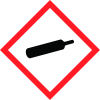
H280 - Contains gas under pressure; may explode if heated OSHA-H01 - MAY DISPLACE OXYGEN AND CAUSE RAPID SUFFOCATION CGA-HG03 - MAY INCREASE RESPIRATION AND HEART RATE.
Precautionary statements
P202 - Do not handle until all safety precautions have been read and understood. P271 - Use and store only outdoors or in a well-ventilated area. P304+340 - IF INHALED: Remove victim to fresh air and keep at rest in a position comfortable for breathing. P313 - Get medical advice/attention. CGA-PG05 - Use a back flow preventive device in the piping. CGA-PG10 - Use only with equipment rated for cylinder pressure. CGA-PG06 - Close valve after each use and when empty. CGA-PG02 - Protect from sunlight when ambient temperature exceeds 52 °C (125 °F).
Principle Routes of Exposure
Target Organs Inhalation Eyes; Inhalation; Skin; Respiratory system; Depending on concentration and duration of exposure, carbon dioxide may cause increased respiration, headache, mild narcotic effects, increased blood pressure and pulse, and asphyxiation. Symptoms of overexposure to carbon dioxide become more apparent when atmospheric oxygen is decreased to 15% to 17%. Chronic harmful effects are not known from repeated inhalation of concentrations below the PEL/TLV. Product is a simple asphyxiant. This product may displace oxygen if released in a confined space. Maintain oxygen levels above 19.5% at sea level to prevent asphyxiation. Effects of oxygen deficiency resulting from simple asphyxiants may include: rapid breathing, diminished mental alertness, impaired muscular coordination, faulty judgment, depression of all sensations, emotional instability and fatigue. As asphyxiation progresses, nausea, vomiting, prostration and loss of consciousness may result, eventually leading to convulsions, coma and death. Oxygen deficiency during pregnancy has produced developmental abnormalities in humans and experimental animals. Skin Contact: Eye Contact Non-irritating. Contact with rapidly expanding gas near the point of release may cause frostbite with redness, skin color change to gray or white, and blistering. Non-irritating. None anticipated. Contact with rapidly expanding gas near the point of release may cause frostbite. Ingestion Not anticipated. Product is a gas at normal conditions.
2.1 Classification of the substance or mixture
GHS Classification in Accordance with 29 CFR 1910 (OSHA HCS)



