


Note: Ingredients listed on restricted chemical lists
EC/CAS
6484-52-2
Name of the chemical
Ammonium Nitrate (AN)
Concentration
N/A
EC/CAS
118-96-7
Name of the chemical
2,4,6-Trinitrotoluol (und Isomeren in technischen Gemischen)
Concentration
N/A
EC/CAS
62-56-6
Name of the chemical
Thiourea; thiocarbamide
Concentration
N/A
General Information
Revision date
2021-04-02
Product name
PYTHON MAXISPLIT EDGE
1.2.1 Relevant identified uses
Perimeter blasting explosive (pre-splitting)
supplier name
NITRO SIBIR AUSTRALIA
Emergency telephone
1800 884 289
Icons in SDS
Company Information
company name
NITRO SIBIR AUSTRALIA
GHS Information
Signal word
Danger
Hazard Codes
Hazard statements (CLP)
H201, H301, H311, H331, H373, H411
Hazard statements
Code
Statements
H201
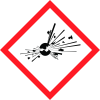
Explosive; mass explosion hazard
Section 2
SECTION 2: Hazards identification
Classified as hazardous according to Safe Work Australia: HAZARDOUS CHEMICAL. Classified as Dangerous Goods according to the criteria of the Australian Code for the Transport of Explosives by Road and Rail: DANGEROUS GOODS.
2.1 Classification of the substance or mixture
Explosive – Division 1.1 Acute Toxicity (Oral) – Category 3 Acute Toxicity (Dermal) – Category 3 Acute Toxicity (Inhalation) – Category 3 Specific Target Organ Toxicity (repeated exposure) – Category 2 Hazardous to the Aquatic Environment (chronic) – Category 2
Signal word
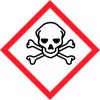
Danger Exploding Bomb Skull and Crossbones
Hazard statements
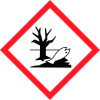
H201: Explosive; mass explosion hazard H301: Toxic if swallowed H311: Toxic in contact with skin H331: Toxic if inhaled H373: May cause damage to organs through prolonged or repeated exposure H411: Toxic to aquatic life with long-lasting effects
Prevention
P210: Keep away from heat/sparks/open flames/surfaces - No Smoking P234: Keep only in original packaging P250: Do not subject to grinding/shock/heat/friction/impact or electrical energy from external sources P260: Do not breathe dust/fume/gas/vapours P261 Avoid breathing dust/fume/gas/vapours P264 Wash hands thoroughly after handling P270: Do not eat, drink or smoke when using this product P271: Use only outdoors or in a well-ventilated area P280: Wear protective gloves, protective clothing, eye protection P273: Avoid release to the environment
Response
P301+P310 IF SWALLOWED Immediately call a POISON CENTER or doctor/physician P302+P352 IF ON SKIN Wash with plenty of soap and water P304+P340 IF INHALED Remove victim to fresh air and keep at rest in a position comfortable for breathing P311: Call a POISON CENTER or doctor/physician P314: Get medical advice/attention if you feel unwell P330: Rinse mouth P361: Remove/Take off immediately all contaminated clothing P363: Wash contaminated clothing before reuse P370+380 In case of fire evacuate area P372: Explosion risk in case of fire P373: DO NOT fight fire when fire reaches explosives P391: Collect spillage
Storage
P401: Store in a well-ventilated magazine licensed for Class 1.1D Explosives in accordance with Australian Standard AS2187.1 P405: Store locked up
Disposal
P501: Dispose of contents in accordance with local regulations.
2.3 Other hazards
AUH044: Risk of explosion if heated under confinement. POISONS SCHEDULE (SUSMP): None allocated.



