



Note: Ingredients listed on restricted chemical lists
EC/CAS
6484-52-2
Name of the chemical
Ammonium Nitrate (AN)
Concentration
>90%
EC/CAS
68476-34-6
Name of the chemical
Fuels, diesel, no. 2
Concentration
<10%
General Information
Revision date
2025-05-01
Product name
ANFO
Product name
ANFO
Identification on the label/Trade name
Explosive, Blasting, Type B
Product Synonyms
Ammonium Nitrate / Fuel Oil
1.2.1 Relevant identified uses
Mining, quarrying and general blasting explosive
1.2.2. Uses advised against
Not for use in reactive ground
supplier name
Nitro Sibir Australia
Icons in SDS


Company Information
company name
Nitro Sibir Australia
GHS Information
Signal word
Danger
Hazard Codes
Hazard statements (CLP)
H201, H319, H351
Hazard statements
Code
Statements
H201
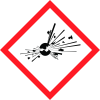
Explosive; mass explosion hazard
Section 2
SECTION 2: Hazards identification
Classification of the Substance or Mixture Classified as hazardous according to Safe Work Australia: HAZARDOUS CHEMICAL Classified as Dangerous Goods according to the criteria of the Australian Code for the Transport of Explosives by Road and Rail: DANGEROUS GOODS
2.2 Label elements
Explosives – Division 1.1 Serious Eye Damage / Irritation – Category 2A Carcinogenicity – Category 2
Signal word
Danger Exploding Bomb Exclamation Mark
Hazard statements
H201: Explosive; mass explosion hazard H319: Causes serious eye irritation H351: Suspected of causing cancer
Prevention
P201: Obtain special instructions before use. P202: Do not handle until all safety precautions have been read and understood. P281: Use personal protective equipment as required. P210: Keep away from heat/sparks/open flames/surfaces – No Smoking. P250: Do not subject to grinding/shock/friction. P264: Wash hands thoroughly after handling. P280: Wear face protection/protective clothing/eye protection.
Response
P308+P313 IF exposed or concerned Get medical advice/attention P370+P380 In case of fire evacuate area P372: Explosion risk in case of fire. P373: DO NOT fight fire when fire reaches explosives. P305+P351+P338 IF IN EYES Rinse cautiously with water for several minutes. Remove contact lenses, if present and easy to do. Continue rinsing. P378+P313 If eye irritation persists Get medical advice/attention
Storage
P405: Store locked up. P401: Store in a well-ventilated magazine licensed for Class 1.1D Explosives in accordance with Australian Standard AS2187.1.
Disposal
P501: Dispose of contents/container in accordance with national/regional/local regulations. POISONS SCHEDULE (SUSMP): None allocated.
Other hazards which do not result in classification
AUH031: Contact with acids liberates toxic gas. AUH044: Risk of explosion if heated under confinement.
2.1 Classification of the substance or mixture
Classified as hazardous according to Safe Work Australia: HAZARDOUS CHEMICAL. Classified as Dangerous Goods according to the criteria of the Australian Code for the Transport of Explosives by Road and Rail: DANGEROUS GOODS.



