


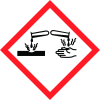
Note: Ingredients listed on restricted chemical lists
General Information
Revision date
2014-07-27
Product name
Centaur
Emergency telephone
800 424 9300
Icons in SDS


Company Information
company name
Nexgen
GHS Information
Signal word
Danger
Hazard Codes
Hazard statements (CLP)
H314, H335
Hazard statements
Code
Statements
H314
Causes severe skin burns and eye damage
Section 2
SECTION 2: Hazards identification
Skin Corrosion/Irritation, Category 1B Target Organ Systemic Toxicity (single exposure), Category 3
Signal word
Danger
Hazard statements
H314 - Causes severe skin burns and eye damage. H335 - May cause respiratory irritation.
Precautionary statements
P260 - Do not breathe dust/fume/gas/mist/vapors/spray. P264 - Wash hands thoroughly after handling. P280 - Wear protective gloves/protective clothing/eye protection/face protection. P261 - Avoid breathing dust/fume/gas/mist/vapors/spray. P271 - Use only outdoors or in a well-ventilated area.
Response
P303+361+353 - IF ON SKIN (or hair): Remove/take off immediately all contaminated clothing. Rinse skin with water/shower. P363 - Wash contaminated clothing before reuse. P305+351+338 - IF IN EYES: Rinse cautiously with water for several minutes. Remove contact lenses, if present and easy to do. Continue rinsing. P301+330+331 - IF SWALLOWED: Rinse mouth. Do NOT induce vomiting. P310 - Immediately call a POISON CENTER or doctor/physician. P304+340 - IF INHALED: Remove victim to fresh air and keep at rest in a position comfortable for breathing. P312 - Call a POISON CENTER or doctor/physician if you feel unwell. P321 - Specific treatment see Section 4 reference to supplemental first aid instruction - if immediate measures are required.
Storage
P501 - Dispose of contents/containers in accordance with local/regional/national/international regulations. P403+233 - Store container tightly closed in well-ventilated place - if product is as volatile as to generate hazardous atmosphere. Hazard Rating System Flammability Instability 0 3 1 Health NFPA: Special Hazard
Potential health effects
(Acute and Chronic) Inhalation May cause irritation to the nose, mouth, throat, mucous membranes, and lungs. High concentrations can result in permanent lung damage Skin Contact: May cause severe irritation and possible burns. May cause redness and swelling to skin. Repeated or prolonged skin exposure may cause tissue destruction due to the corrosive nature of the product. Eye Contact: May cause severe irritation and possible burns. May cause impairment of vision and corneal damage. Ingestion: Ingestion may cause irritation and/or burns to the gastrointestinal tract, followed by nausea, vomiting, abdominal pain, and tissue ulceration.



