


Note: Ingredients listed on restricted chemical lists
EC/CAS
229-347-8/6484-52-2
Name of the chemical
Ammonium Nitrate (AN)
Concentration
70-80%
EC/CAS
231-791-2/7732-18-5
Name of the chemical
Water, distilled, conductivity or of similar purity H2O
Concentration
20%
EC/CAS
265-156-6/64742-53-6
Name of the chemical
Distillates (petroleum), hydrotreated light naphthenic
Concentration
10% 9044-27- 1-2%
General Information
Revision date
2024-05-24
Product name
POWERNEL 2500 UG
Chemical name
Explosive Ammonium Nitrate Mixture
Emergency telephone
1-800-424-9300, 1-205-414-2900
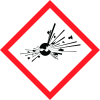
Icons in SDS


Company Information
company name
Nelson Brothers, LLC
GHS Information
Signal word
Danger!
Hazard Codes
Hazard statements (CLP)
H302, H315, H334, H335
Hazard statements
Code
Statements
H302
Harmful if swallowed
Section 2
SECTION 2: Hazards identification
Classification: Directive 1999/45/EC EMERGENCY OVERVIEW
Product definition
This product is a white, creamy pastes that are explosive with no to a slight odor
Health hazards
May cause skin, eye or contaminated tissue irritation. Ingestion may result in adverse effects on the the blood system (methemoglobinemia and cyanosis). May cause allergic respiratory reaction in sensitive individuals. Flammability Hazards: This product is not flammable, but can act to initiate or sustain the combustion of combustible materials. Do not fight fire involving these products or other explosive materials. Reactivity Hazards: These products may explode when exposed to extreme heat or other explosives (Class 1.1).
Environmental hazards
Negligible Emergency Considerations: Emergency responders must wear the proper personal protective equipment (and have appropriate fire-suppression equipment) suitable for the situation to which they are responding. US DOT SYMBOLS CANADA (WHMIS) SYMBOLS EUROPEAN and (GHS) Hazard Symbols Excluded From WHIMIS
Signal word
Danger! EU LABELING AND CLASSIFICATION
Precautionary statements
H302: Harmful if swallowed P260: Do not breath dust/fume/gas/mist/vapors/spray H315: Causes skin irritation P264: Wash hands thoroughly after handling H334: May cause allergy or asthma symptoms or breathing P270: Do not eat, drink or smoke when using this difficulties if inhaled product H335: May cause respiratory irritation difficulties if inhaled P271: Use only in well ventilated area. P280: Wear protective gloves/protective clothing/eye protection/face protection EU HAZARD CLASSIFICATION PER DIRECTIVE 1999/45/EC: [O] Oxidizer, [Xn] Harmful R8: Contact with combustible material may cause fire S1/2: Keep locked up and out of the reach of children R37/38: Irritating to respiratory system and skin S3/9/14/49: Keep only in original container in a cool, R42: May cause sensitization by inhalation well ventilated place away from incompatible materials R40/22 Harmful possible risk of irreversible effects if S20/21: When using do not eat, drink or smoke swallowed. S23: Do not breath gas/fumes/vapor/spray R66: Repeated exposure can cause skin dryness or S35: This material and its container must be disposed cracking. of in a safe way. S36/37/39: Wear suitable protective clothing, gloves and eye/face protection HEALTH HAZARDS OR RISKS FROM EXPOSURE: ACUTE: These products may irritate or burn contaminated eyes, skin, mouth, throat, and other contaminated tissues. Ingestion, skin absorption, and injection of these products may cause nausea, vomiting, headache, flushing, weakness, cyanosis and faintness. Severe ingestion overexposure may be fatal. CHRONIC: Prolonged or repeated skin overexposure may cause dermatitis (dry, red skin). Due to the presence of Ammonium Nitrate in these products, sensitization and allergic respiratory reaction may occur in susceptible individuals. TARGET ORGANS: ACUTE: Eye, respiratory System, Skin CHRONIC: Skin
2.1 Classification of the substance or mixture
Acute Oral Toxicity Category 4 Skin Irritant Category 2 STOT RE Category 3


