



Note: Ingredients listed on restricted chemical lists
EC/CAS
64742-48-9
Name of the chemical
Naphtha (petroleum), hydrotreated heavy
Concentration
≥90
EC/CAS
8052-41-3
Name of the chemical
Stoddard Solvent; Naphtha (petroleum), hydrodesulfurized heavy
Concentration
1-<5
General Information
Version
GHS 3.0
Revision date
2015-05-26
Product name
Fabric Guard
1.2.1 Relevant identified uses
stain and spill resisting treatment
Emergency telephone
1.800.535.5053, 1.352.323.3500
Icons in SDS


Company Information
company name
MVP Distributing
GHS Information
Signal word
danger
Hazard Codes
Hazard statements (CLP)
H226, H304, H315, H336, H340, H350, H373
Hazard statements
Code
Statements
H226
Flammable liquid and vapour
Section 2
SECTION 2: Hazards identification
(29 CFR 1910.1200) Classification of the substance or mixture
Hazard categories
Hazard statement code(s) B.6 flammable liquids Cat. 3 Flam. Liq. 3) H226 A.2 skin corrosion/irritation Cat. 2 Skin Irrit. 2) H315 A.5 germ cell mutagenicity Cat. 1B Muta. 1B) H340 A.6 carcinogenicity Cat. 1B Carc. 1B) H350 A.8D specific target organ toxicity - single exposure Cat. 3 STOT SE 3) H336 narcotic effects, drowsiness) A.9 specific target organ toxicity - repeated Cat. 2 STOT RE 2) H373 exposure A.10
Aspiration hazard
Cat. 1 Asp. Tox. 1) H304 Remarks For full text of H-phrases: see SECTION 16 Hazards not otherwise classified Harmful to aquatic life with long lasting effects (GHS category 3: aquatic toxicity - acute and chronic) May be harmful in contact with skin (GHS category 5: acutely toxic - dermal)
Most important adverse effects
Delayed or immediate effects can be expected after short or long-term exposure. The product is combustible and can be ignited by potential ignition sources
Signal word
danger
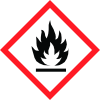
Hazard pictograms
GHS02, GHS07, GHS08
Hazard statements
H226 Flammable liquid and vapor. H304 May be fatal if swallowed and enters airways. H315 Causes skin irritation. H336 May cause drowsiness or dizziness. H340 May cause genetic defects. H350 May cause cancer. H373 May cause damage to organs through prolonged or repeated exposure.
Prevention
Obtain special instructions before use. Keep away from heat, hot surfaces, sparks, open flames and other ignition sources. No smoking. Do not breathe dust/fume/gas/mist/vapors/spray.
Response
IF SWALLOWED: immediately call a POISON CENTER or doctor/physician. Do NOT induce vomiting. In case of fire: Use sand, carbon dioxide or powder extinguisher to extinguish.
Storage
Store in a well-ventilated place. Keep container tightly closed. Store in a well-ventilated place. Keep cool.
Hazardous Ingredients
Stoddard Solvent, odorless mineral spirits
2.3 Other hazards
Repeated exposure may cause skin dryness or cracking.
2.1 Classification of the substance or mixture
Classification acc. to OSHA "Hazard Communication Standard" (29 CFR 1910.1200) Annex - Hazard class and category - Hazard statement code(s) B.6 flammable liquids Cat. 3 (Flam. Liq. 3) H226 A.2 skin corrosion/irritation Cat. 2 (Skin Irrit. 2) H315 A.5 germ cell mutagenicity Cat. 1B (Muta. 1B) H340 A.6 carcinogenicity Cat. 1B (Carc. 1B) H350 A.8D specific target organ toxicity - single exposure Cat. 3 (STOT SE 3) H336 (narcotic effects, drowsiness) A.9 specific target organ toxicity - repeated Cat. 2 (STOT RE 2) H373 exposure A.10 aspiration hazard Cat. 1 (Asp. Tox. 1) H304 Remarks For full text of H-phrases: see SECTION 16. Hazards not otherwise classified Harmful to aquatic life with long lasting effects (GHS category 3: aquatic toxicity - acute and chronic). May be harmful in contact with skin (GHS category 5: acutely toxic - dermal). The most important adverse physicochemical, human health and environmental effects Delayed or immediate effects can be expected after short or long-term exposure. The product is combustible and can be ignited by potential ignition sources.



