



Note: Ingredients listed on restricted chemical lists
EC/CAS
64742-95-6
Name of the chemical
Solvent naphtha (petroleum), light arom
Concentration
>=70-<90
EC/CAS
127087-87-0
Name of the chemical
Nonylphenolethoxylates (NPEO)
Concentration
>=5-<10
General Information
Version
7.0
Revision date
2025-12-06
Product name
Permethrin Formulation
1.2.1 Relevant identified uses
Veterinary product
Emergency telephone
+1-908-423-6000
Icons in SDS


Company Information
company name
MSD
e-mail address of the competent person responsible for the Safety Data Sheet
EHSDATASTEWARD@msd.com
GHS Information
Signal word
Danger
Hazard Codes
Hazard statements (CLP)
H226, H303, H304, H315+H319, H317, H336, H340, H350, H361, H373, H410
Hazard statements
Code
Statements
H226
Flammable liquid and vapour
Section 2
SECTION 2: Hazards identification
Manufacture, Storage and Import of Hazardous Chemicals Rules 1989
2.1 Classification of the substance or mixture
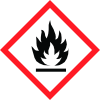
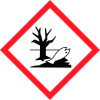
Highly flammable liquids GHS Classification Flammable liquids : Category 3 Acute toxicity (Oral) : Category 5 Skin corrosion/irritation : Category 2 Serious eye damage/eye irri- : Category 2A tation Skin sensitisation : Category 1 Germ cell mutagenicity : Category 1B Carcinogenicity : Category 1B Reproductive toxicity : Category 2 Specific target organ toxicity - : Category 3 single exposure Specific target organ toxicity - : Category 2 (Auditory system) repeated exposure Aspiration hazard : Category 1 Short-term (acute) aquatic : Category 1 hazard Long-term (chronic) aquatic : Category 1 hazard
Aspiration hazard
Category 1 Short-term (acute) aquatic Category 1 hazard Long-term (chronic) aquatic Category 1 hazard
Signal word
Danger
Hazard statements
H226 Flammable liquid and vapour. H303 May be harmful if swallowed. H304 May be fatal if swallowed and enters airways. H315 + H319 Causes skin irritation and serious eye irritation. H317 May cause an allergic skin reaction. H336 May cause drowsiness or dizziness. H340 May cause genetic defects. H350 May cause cancer. H361 Suspected of damaging fertility or the unborn child. H373 May cause damage to organs (Auditory system) through prolonged or repeated exposure. H410 Very toxic to aquatic life with long lasting effects.
Prevention
P203 Obtain, read and follow all safety instructions before use. P210 Keep away from heat, hot surfaces, sparks, open flames and other ignition sources. No smoking. P260 Do not breathe mist or vapours. P264 + P265 Wash hands thoroughly after handling. Do not touch eyes. P271 Use only outdoors or with adequate ventilation. P272 Contaminated work clothing should not be allowed out of the workplace. P273 Avoid release to the environment. P280 Wear protective gloves/ protective clothing/ eye protec- tion/ face protection.
Response
P301 + P316 IF SWALLOWED: Get emergency medical help immediately. P303 + P361 + P353 IF ON SKIN (or hair): Take off immediate- ly all contaminated clothing. Rinse affected areas with water. P304 + P340 + P319 IF INHALED: Remove person to fresh air and keep comfortable for breathing. Get medical help if you feel unwell. P305 + P351 + P338 IF IN EYES: Rinse cautiously with water for several minutes. Remove contact lenses, if present and easy to do. Continue rinsing. P318 IF exposed or concerned, get medical advice. P331 Do NOT induce vomiting. P333 + P317 If skin irritation or rash occurs: Get medical help. P337 + P317 If eye irritation persists: Get medical help. P362 + P364 Take off contaminated clothing and wash it before reuse. P391 Collect spillage.
Storage
P405 Store locked up.
Disposal
P501 Dispose of contents/ container to an approved waste disposal plant.
Other hazards which do not result in classification
Cutaneous sensations may occur, such as burning or stinging on the face and mucosae. Howev- er, these sensations cause no lesions and are of a transitory nature (max. 24 hours). Vapours may form explosive mixture with air.



