



Note: Ingredients listed on restricted chemical lists
EC/CAS
9016-45-9
Name of the chemical
Nonylphenolethoxylates (NPEO)
Concentration
>=3-<10
EC/CAS
258-256-6/52918-63-5
Name of the chemical
Deltamethrin; (S)-a-cyano-3-phenoxybenzyl (1R, 3R)-3-(2,2-dibromovinyl)-2,2-dimethylcyclopropanecarboxylate
Concentration
>=2.5-<3 607-319-
EC/CAS
203-234-3/104-76-7
Name of the chemical
2-ethyl-1-hexanol
Concentration
>=1-<2.5
General Information
Version
1.1
Revision date
2025-09-29
Product name
Ethion / Deltamethrin Formulation
1.2.1 Relevant identified uses
Veterinary product
Emergency telephone
+1-908-740-4000, +1-908-423-6000
Icons in SDS


Company Information
company name
MSD
e-mail address of the competent person responsible for the Safety Data Sheet
EHSDATASTEWARD@msd.com
GHS Information
Signal word
Danger
Hazard Codes
Hazard statements (CLP)
H301, H301+H311, H304, H311, H317, H318, H332, H336, H370, H372, H400, H410
Hazard statements
Code
Statements
H301
Toxic if swallowed
Section 2
SECTION 2: Hazards identification
Regulation (EC) No. 1272/2008 Classification of the substance or mixture
Signal word
Danger
Hazard statements
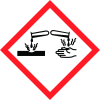
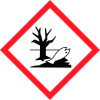
H301 + H311 Toxic if swallowed or in contact with skin. H304 May be fatal if swallowed and enters airways. H317 May cause an allergic skin reaction. H318 Causes serious eye damage. H332 Harmful if inhaled. H336 May cause drowsiness or dizziness. H370 Causes damage to organs. H372 Causes damage to organs through prolonged or repeated exposure. H410 Very toxic to aquatic life with long lasting effects. cracking.
Supplemental label elements
EUH066 Repeated exposure may cause skin dryness or
Prevention
P273 Avoid release to the environment. P280 Wear protective gloves/ protective clothing/ eye protection/ face protection.
Response
P301 + P310 + P330 IF SWALLOWED: Immediately call a POISON CENTER/ doctor. Rinse mouth. P305 + P351 + P338 + P310 IF IN EYES: Rinse cautiously with water for several minutes. Remove contact lenses, if present and easy to do. Continue rins- ing. Immediately call a POISON CENTER/ doctor. P308 + P311 IF exposed or concerned: Call a POISON CENTER/ doctor. P391 Collect spillage.
Hazardous Ingredients
Hydrocarbons, C10, aromatics, <1% naphthalene Ethion Nonylphenol, ethoxylated deltamethrin (ISO)
2.3 Other hazards
This substance/mixture contains no components considered to be either persistent, bioaccumula- tive and toxic (PBT), or very persistent and very bioaccumulative (vPvB) at levels of 0.1% or higher. Cutaneous sensations may occur, such as burning or stinging on the face and mucosae. Howev- er, these sensations cause no lesions and are of a transitory nature (max. 24 hours).
2.1 Classification of the substance or mixture
Classification (REGULATION (EC) No 1272/2008) as amended by GB-CLP Regulation, UK SI 2019/720, and UK SI 2020/1567) Acute toxicity, Category 3 H301: Toxic if swallowed. Acute toxicity, Category 4 H332: Harmful if inhaled. Acute toxicity, Category 3 H311: Toxic in contact with skin. Serious eye damage, Category 1 H318: Causes serious eye damage. Skin sensitisation, Category 1 H317: May cause an allergic skin reaction. Specific target organ toxicity - single ex- H370: Causes damage to organs. posure, Category 1 Specific target organ toxicity - single ex- H336: May cause drowsiness or dizziness. posure, Category 3 Specific target organ toxicity - repeated H372: Causes damage to organs through pro- exposure, Category 1 longed or repeated exposure. Aspiration hazard, Category 1 H304: May be fatal if swallowed and enters air- ways. Short-term (acute) aquatic hazard, Cate- H400: Very toxic to aquatic life. gory 1 Long-term (chronic) aquatic hazard, Cat- H410: Very toxic to aquatic life with long lasting egory 1 effects.



