



Note: Ingredients listed on restricted chemical lists
EC/CAS
872-50-4
Name of the chemical
N-Methyl-2-Pyrrolidone; 1-methyl-2-pyrrolidone (NMP)
Concentration
>=30-<50
General Information
Version
2.1
Revision date
2026-01-21
Product name
Diflubenzuron (2%) Formulation
1.2.1 Relevant identified uses
Veterinary product
Emergency telephone
86-571-87268110
Icons in SDS


Company Information
company name
MSD
e-mail address of the competent person responsible for the Safety Data Sheet
EHSDATASTEWARD@msd.com
GHS Information
Signal word
Danger
Hazard Codes
Hazard statements (CLP)
H315, H319, H335, H360D, H410
Hazard statements
Code
Statements
H315
Causes skin irritation
Section 2
SECTION 2: Hazards identification
Emergency Overview Appearance : liquid Colour : yellow Odour : No data available Causes skin irritation. Causes serious eye irritation. May cause respiratory irritation. May damage the unborn child. Very toxic to aquatic life with long lasting effects. GHS Classification Skin corrosion/irritation Category 2 Serious eye damage/eye irri- tation Category 2A Reproductive toxicity Category 1B Specific target organ toxicity - Category 3 single exposure Short-term (acute) aquatic Category 1 hazard Long-term (chronic) aquatic Category 1 hazard
Signal word
Danger
Hazard statements
H315 Causes skin irritation. H319 Causes serious eye irritation. H335 May cause respiratory irritation. H360D May damage the unborn child. H410 Very toxic to aquatic life with long lasting effects.
Prevention
P203 Obtain, read and follow all safety instructions before use. P261 Avoid breathing mist or vapours. P264 Wash skin thoroughly after handling. P271 Use only outdoors or in a well-ventilated area. P273 Avoid release to the environment. P280 Wear protective gloves/ protective clothing/ eye protec- tion/ face protection/ hearing protection.
Response
P302 + P352 IF ON SKIN: Wash with plenty of water. P304 + P340 + P319 IF INHALED: Remove person to fresh air and keep comfortable for breathing. Get medical help if you feel unwell. P305 + P351 + P338 IF IN EYES: Rinse cautiously with water for several minutes. Remove contact lenses, if present and easy to do. Continue rinsing. P318 IF exposed or concerned, get medical advice. P332 + P317 If skin irritation occurs: Get medical help. P337 + P317 If eye irritation persists: Get medical help. P362 + P364 Take off contaminated clothing and wash it before reuse. P391 Collect spillage.
Storage
P405 Store locked up.
Disposal
P501 Dispose of contents/ container to an approved waste disposal plant.
Other physicochemical hazards
Not classified based on available information.
Health hazards
Causes skin irritation. Causes serious eye irritation. May damage the unborn child. May cause respiratory irritation
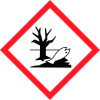
Environmental hazards
Very toxic to aquatic life. Very toxic to aquatic life with long lasting effects
Other hazards which do not result in classification
None known.
2.1 Classification of the substance or mixture
Skin corrosion/irritation : Category 2 Serious eye damage/eye irri- : Category 2A tation Reproductive toxicity : Category 1B Specific target organ toxicity - : Category 3 single exposure Short-term (acute) aquatic : Category 1 hazard Long-term (chronic) aquatic : Category 1 hazard



