


Note: Ingredients listed on restricted chemical lists
EC/CAS
14807-96-6
Name of the chemical
Talc
Concentration
N/A
EC/CAS
13463-67-7
Name of the chemical
Reaction mass of titanium dioxide and silver chloride
Concentration
N/A
General Information
Revision date
2020-10-02
Product name
Desloratadine Solid Formulation
Emergency telephone
86-571-87268110
Icons in SDS
Company Information
company name
MSD
e-mail address of the competent person responsible for the Safety Data Sheet
EHSDATASTEWARD@msd.com
GHS Information
Signal word
Danger
Hazard Codes
Hazard statements (CLP)
H318, H351, H361fd, H412
Hazard statements
Code
Statements
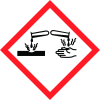
H318
Causes serious eye damage
Section 2
SECTION 2: Hazards identification
GHS Classification Emergency Overview Appearance powder Colour : white Odour : No data available Causes serious eye damage. Suspected of causing cancer if inhaled. Suspected of damaging fertility. Suspected of damaging the unborn child. Harmful to aquatic life with long lasting effects.
2.1 Classification of the substance or mixture
Serious eye damage/eye irri- Category 1 tation Carcinogenicity (Inhalation) Category 2 Reproductive toxicity Category 2 Short-term (acute) aquatic Category 3 Long-term (chronic) aquatic Category 3
Signal word
Danger
Hazard statements
H318 Causes serious eye damage. H351 Suspected of causing cancer if inhaled. H361fd Suspected of damaging fertility. Suspected of damag- ing the unborn child. H412 Harmful to aquatic life with long lasting effects.
Prevention
P201 Obtain special instructions before use. P202 Do not handle until all safety precautions have been read and understood. P273 Avoid release to the environment. P280 Wear protective gloves/ protective clothing/ eye protec- tion/ face protection.
Response
P305 + P351 + P338 + P310 IF IN EYES: Rinse cautiously with water for several minutes. Remove contact lenses, if present and easy to do. Continue rinsing. Immediately call a POISON CENTER/ doctor. P308 + P313 IF exposed or concerned: Get medical advice/ attention.
Storage
P405 Store locked up.
Disposal
P501 Dispose of contents/ container to an approved waste disposal plant.
Other physicochemical hazards
Not classified based on available information.
Health hazards
Causes serious eye damage. Suspected of causing cancer if inhaled. Suspected of damaging fer- tility. Suspected of damaging the unborn child.
Environmental hazards
Harmful to aquatic life. Harmful to aquatic life with long lasting effects.
Other hazards which do not result in classification
Contact with dust can cause mechanical irritation or drying of the skin. May form explosive dust-air mixture during processing, handling or other means.



