


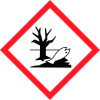
Note: Ingredients listed on restricted chemical lists
EC/CAS
200-334-9/57-50-1
Name of the chemical
Sucrose, pure C12H22O11
Concentration
>=30-<50
EC/CAS
232-674-9/9004-34-6
Name of the chemical
cellulose
Concentration
>=10-<20
General Information
Version
5.1
Revision date
2023-03-20
Product name
Aprepitant Formulation
1.2.1 Relevant identified uses
Pharmaceutical
Emergency telephone
353-51-601000, 1-908-423-6000
Icons in SDS


Company Information
company name
MSD
e-mail address of the competent person responsible for the Safety Data Sheet
EHSDATASTEWARD@msd.com
GHS Information
Signal word
Warning
Hazard Codes
Hazard statements (CLP)
H373, H410
Hazard statements
Code
Statements
H373
May cause damage to organs through prolonged or repeated exposure
Section 2
SECTION 2: Hazards identification
Classification of the substance or mixture Classification T.R. SEA No 28848 and subsequent amendments Specific target organ toxicity - repeated H373: May cause damage to organs through pro- exposure, Category 2 longed or repeated exposure Long-term (chronic) aquatic hazard, Cat- H410: Very toxic to aquatic life with long lasting egory 1 effects
2.2 Label elements
T.R. SEA No 28848 and subsequent amendments
Signal word
Warning
Hazard statements
H373 May cause damage to organs through prolonged or repeated exposure. H410 Very toxic to aquatic life with long lasting effects.
Prevention
P260 Do not breathe dust. P273 Avoid release to the environment.
Response
P314 Get medical advice/ attention if you feel unwell. P391 Collect spillage.
Hazardous Ingredients
Aprepitant
2.3 Other hazards
Dust contact with the eyes can lead to mechanical irritation. Contact with dust can cause mechanical irritation or drying of the skin. May form explosive dust-air mixture during processing, handling or other means.
2.1 Classification of the substance or mixture
Classification T.R. SEA No 28848 and subsequent amendments Specific target organ toxicity - repeated H373: May cause damage to organs through pro- exposure, Category 2 longed or repeated exposure. Long-term (chronic) aquatic hazard, Cat- H410: Very toxic to aquatic life with long lasting egory 1 effects.



