




Note: Ingredients listed on restricted chemical lists
EC/CAS
88-12-0
Name of the chemical
1-vinyl-2-pyrrolidone
Concentration
35-40
EC/CAS
72869-86-4
Name of the chemical
11,14-Dioxa-2,9-diazaheptadec-16-enoic Acid, 4,4,6,16-tetramethyl-10,15-dioxo, 2-[(2-methyl-1-oxo-2-propenyl)oxy]ethyl ester (31)
Concentration
1-4
EC/CAS
75980-60-8
Name of the chemical
Diphenyl(2,4,6-trimethylbenzoyl)phosphinoxid
Concentration
0-1
EC/CAS
1333-86-4
Name of the chemical
carbon black
Concentration
0-1
General Information
Revision date
2017-10-23
Product name
Photoreactive Material
1.2.1 Relevant identified uses
For use in Stereolithography
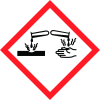
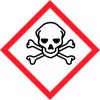
Icons in SDS


Company Information
company name
Molecule CORP
GHS Information
Signal word
Danger
Hazard Codes
Hazard statements (CLP)
H301, H311, H315, H317, H318, H332, H335, H351, H361, H372, H401, H411
Hazard statements
Code
Statements
H301
Toxic if swallowed
Section 2
SECTION 2: Hazards identification
in Accordance with EC
2.1 Classification of the substance or mixture
Acute Toxicity - Oral Category 3 Acute Toxicity - Dermal Category 3 Acute Toxicity - Inhalation Category 4 Corrosion/irritation - Skin Category 2 (Corrosion)Damage/irritation - Eye Category 1 Sensitization - Skin Category 1 Carcinogenicity - Category 2 Toxic to Reproduction - Category 2 STOT-respiratory irritation - Single exposure Category 3 STOT - Repeated exposure Category 1 Aquatic - Acute Category 2 Aquatic - Chronic Category 2 *For the full text of the H-Statements mentioned in this Section, see Section 16. GHS/CLP LABELLING
Hazard pictograms
GHS06 GHS07 GHS05 GHS08 GHS09
Signal word
Danger
Hazard statements
H301 Toxic if swallowed H311 Toxic in contact with skin H332 Harmful if inhaled H315 Causes skin irritation H318 Causes serious eye damage H317 May cause an allergic skin reaction H351 Suspected of causing cancer H361 Suspected of damaging fertility or the unborn child H335 May cause respiratory irritation H372 Causes damage to organs through prolonged or repeated exposure H401 Toxic to aquatic life H411 Toxic to aquatic life with long lasting effects
Prevention
P201 Obtain special instructions before use. P202 Do not handle until all safety precautions have been read and understood. P260 Do not breathe dust/fume/gas/mist/vapours/spray. P261 Avoid breathing dust/fume/gas/mist/vapours/spray. P264 Wash ... thoroughly after handling. P270 Do not eat, drink or smoke when using this product. P271 Use only outdoors or in a well-ventilated area. P272 Contaminated work clothing should not be allowed out of the workplace. P273 Avoid release to the environment. P280 Wear protective gloves/protective clothing/eye protection/face protection. P281 Use personal protective equipment as required.
Response
P301+P310 IF SWALLOWED: Immediately call a POISON CENTER/doctor/… P302+P352 IF ON SKIN: Wash with plenty of water/... P304+P340 IF INHALED: Remove person to fresh air and keep comfortable for breathing. P305+P351+P338 IF IN EYES: Rinse cautiously with water for several minutes. Remove contact lenses, if present and easy to do. Continue rinsing. P308+P313 IF exposed or concerned: Get medical advice/ attention. P310 Immediately call a POISON CENTER/doctor/… P312 Call a POISON CENTRE/doctor/… if you feel unwell. P314 Get medical advice/attention if you feel unwell. P321 Specific treatment (see ... on this label). P322 Specific measures (see ... on this label). P330 Rinse mouth. P332+P313 If skin irritation occurs: Get medical advice/attention. P333+P313 If skin irritation or rash occurs: Get medical advice/attention. P361 Take off immediately all contaminated clothing. P362 Take off contaminated clothing. P363 Wash contaminated clothing before reuse. P391 Collect spillage. SUPPLEMENTAL HEALTH INFORMATION
Potential health effects
Effects due to processing releases: Irritating to eyes, respiratory system and skin. Prolonged or repeated exposure may cause: headache, drowsiness, nausea weakness (severity of effects depends on extent of exposure). Other: This product may release fume and/or vapor of variable composition depending on processing time and temperature. Possible cross sensitization with other acrylates and methacrylates or any other source of free radical such as high heat.



