

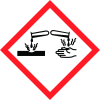


General Information
Version
17/05/2024
Revision date
2024-05-17
Product name
OptiYield BioZest
1.2.1 Relevant identified uses
Use descriptors (UK REACH)
supplier name
Emerald Research Ltd
Icons in SDS


Company Information
company name
Microferm Ltd
e-mail address of the competent person responsible for the Safety Data Sheet
sds@microferm.co.uk, info@emeraldresearchltd.com
GHS Information
Signal word
Danger
Section 2
SECTION 2: Hazards identification
Note Sodium benzoate CAS No.: 532-32-1 1-3% Eye Irrit. 2, H319 EC No.: 208-534-8 UK-REACH: Index No.: 1,2-benzisothiazol-3(2H)- CAS No.: 2634-33-5 <0.05% Acute Tox. 4, H302 one;1,2-benzisothiazolin- 3- EC No.: 220-120-9 Skin Irrit. 2, H315 one UK-REACH: Skin Sens. 1, H317 Index No.: 613-088-00-6 Eye Dam. 1, H318 Aquatic Acute 1, H400 (M=10) See full text of H-phrases in section 16. Occupational exposure limits are listed in section 8, if these are available.
Further information
4.1 Description of first aid measures General information: In the case of accident: Contact a doctor or casualty department – take the label or this safety data sheet. Contact a doctor if in doubt about the injured person’s condition or if the symptoms persist. Never give an unconscious person water or other drink. Inhalation: Upon breathing difficulties or irritation of the respiratory tract: Bring the person into fresh air and stay with him/her. Skin contact: Upon irritation: rinse with water. In the event of continued irritation, seek medical assistance. Eye contact: If in eyes: Flush eyes with water or saline water (20-30 °C) for at least 5 minutes. Remove contact lenses. Seek medical assistance and continue flushing during transport. Ingestion: If the person is conscious, rinse the mouth with water and stay with the person. Never give the person anything to drink. In case of malaise, seek medical advice immediately and bring the safety data sheet or label from the product. Do not induce vomiting, unless recommended by the doctor. Have the person lean forward with head down to avoid inhalation of or choking on vomited material. Burns: Not applicable. 4.2 Most important symptoms and effects, both acute and delayed None known. 4.3 Indication of any immediate medical attention and special treatment needed Treat symptomatically. Information to medics Bring this safety data sheet or the label from this product. 5.1 Extinguishing media Not applicable. 5.2 Special hazards arising from the substance or mixture Fire will result in dense smoke. Exposure to combustion products may harm your health. Closed containers, which are exposed to fire, should be cooled with water. Do not allow fire- extinguishing water to enter the sewage system and nearby surface waters. If the product is exposed to high temperatures, e.g. in the event of fire, dangerous decomposition compounds are produced. These are: Carbon oxides (CO / CO2) Some metal oxides 5.3 Advice for firefighters Fire fighters should wear appropriate personal protective equipment. 6.1 Personal precautions, protective equipment and emergency procedures Contaminated areas may be slippery. 6.2 Environmental precautions Avoid discharge to lakes, streams, sewers, etc. Keep unauthorized persons away from the spill 6.3 Methods and material for containment and cleaning up Contain and collect spillage with non-combustible, absorbent material e.g. sand, earth, vermiculite or diatomaceous earth and place in container for disposal according to local regulations. Wherever possible cleaning should be performed with normal cleaning agents. Avoid use of solvents. 6.4 Reference to other sections See section 13 “Disposal considerations” on handling of waste. See section 8 "Exposure controls/personal protection" for protective measures. 7.1 Precautions for safe handling Smoking, drinking and consumption of food is not allowed in the work area. See section 8 "Exposure controls/personal protection" for information on personal protection. 7.2 Conditions for safe storage, including any incompatibilities Containers that have been opened must be carefully resealed and kept upright to prevent leakage. Recommended storage material: Keep only in original packaging. Storage temperature: Dry, cool and well ventilated Incompatible materials: Acids 7.3 Specific end use(s) This product should only be used for applications quoted in section 1.2. 8.1 Control parameters No substances are listed in the national list of substances with an occupational exposure limit. DNEL 1,2-benzisothiazol-3(2H)-one;1,2-benzisothiazolin-3-one Duration: Oxidizing properties: Other physical and chemical parameters: 10.1 Reactivity No data available. OptiyYield BioZest_GB_V1 Liquid Brown Mild Testing not relevant or not possible due to the nature of the product. 1.24-1.26 Testing not relevant or not possible due to the nature of the product. Not applicable - product is a liquid Testing not relevant or not possible due to the nature of the product. Does not apply to liquids. Testing not relevant or not possible due to the nature of the product. Testing not relevant or not possible due to the nature of the product. Testing not relevant or not possible due to the nature of the product. Testing not relevant or not possible due to the nature of the product Testing not relevant or not possible due to the nature of the product. Testing not relevant or not possible due to the nature of the product. Testing not relevant or not possible due to the nature of the product. Testing not relevant or not possible due to the nature of the product. 10.2 Chemical stability The product is stable under the conditions, noted in section 7 “Handling and storage”. 10.3 Possibility of hazardous reactions None known. 10.4 Conditions to avoid None known. 10.5 Incompatible materials Acids 10.6 Hazardous decomposition products The product is not degraded when used as specified in section 1. 11.1 Information on hazard classes as defined in Regulation (EC) No 1272/2008 as retained and amended in UK law Acute toxicity Product/substance Sodium benzoate Species: Rat Route of exposure: Oral Test: LD50 Result: 2100 mg/kg Skin corrosion/irritation Product/substance Sodium benzoate Test method: OECD 404 Result: No adverse effect observed (Not irritating) Serious eye damage/irritation Based on available data, the classification criteria are not met. Respiratory sensitisation Based on available data, the classification criteria are not met. Skin sensitization Product/substance Sodium benzoate Test method: OECD 429 Species: Mouse Result: No adverse effect observed (not sensitising) Germ cell mutagenicity Product/substance Sodium benzoate Test method: OECD 471 Conclusion: No adverse effect observed Product/substance Sodium benzoate Test method: OECD 475 Conclusion: No adverse effect observed Carcinogenicity Product/substance Sodium benzoate Species: Rat Route of exposure: Oral Test: NOAEL Result: 175 mg/kg bw/day Reproductive toxicity Based on available data, the classification criteria are not met. STOT-single exposure Based on available data, the classification criteria are not met. STOT-repeated exposure Product/substance Sodium benzoate Species: Rat Route of exposure: Oral Test: NOAEL Result: 1000 mg/kg bw/day Aspiration hazard Based on available data, the classification criteria are not met. 11.2 Information on other hazards Long term effects None known. Endocrine disrupting properties This mixture/product does not contain any substances known to have hormone-disrupting properties in relation to health. Other information None known. 12.1 Toxicity Product/substance Sodium benzoate Species: Fish, Pimephales promelas Duration: 96 hours Test: LC50 Result: 484 mg/L Product/substance Sodium benzoate Species: Daphnia, Daphnia magna Duration: 96 hours Test: EC50 Result: >100 mg/L Product/substance Sodium benzoate Species: Algae, Pseudokirchneriella subcapitata Test method: OECD 201 Duration: 72 hours Test: EC50 Result: 30 mg/L Product/substance Sodium benzoate Species: Fish, Brachydanio rerio Test: NOEC Result: 10 mg/L 12.2 Persistence and degradability Based on available data, the classification criteria are not met. 12.3 Bioaccumulative potential Product/substance Sodium benzoate LogKow: 1.88 Conclusion: - 12.4 Mobility in soil No data available. 12.5 Results of PBT and vPvB assessment This mixture/product does not contain any substances known to fulfil the criteria for PBT and vPvB classification. 12.6 Endocrine disrupting properties This mixture/product does not contain any substances considered to have endocrine-disrupting properties in relation to the environment. 12.7 Other adverse effects None known. Waste treatment methods Product is not covered by regulations on dangerous waste. Regulation (EU) No 1357/2014 of 18 December 2014 on waste as retained and amended in UK law. EWC code Not applicable. Specific labelling Contaminated packing Packaging containing residues of the product must be disposed of similarly to the product. 14.1 14.2 14.3 14.4
Principle Routes of Exposure
DNEL: Long term – Systemic effects - General population Dermal 345 µg/kgbw/day Long term – Systemic effects - Workers Dermal 966 µg/kgbw/day Long term – Systemic effects - General population Inhalation 1.2 mg/m³ Long term – Systemic effects - Workers Inhalation 6.81 mg/m³ Sodium benzoate Duration: Long term – Systemic effects - General population Long term – Systemic effects - Workers Long term – Local effects - General population Long term – Local effects - Workers Long term – Systemic effects - General population Long term – Systemic effects - Workers Long term – Systemic effects - General population PNEC 1,2- 1,2-benzisothiazol-3(2H)-one;1,2-benzisothiazolin-3-one Freshwater Freshwater sediment Intermittent release (freshwater) Intermittent release (marine water) water Marine water sediment Sewage treatment plant Soil Sodium benzoat Freshwater Freshwater sediment Intermittent release (freshwater) Intermittent release (marine water) Marine water Marine water sediment Predators Sewage treatment plant Soil OptiyYield BioZest_GB_V1 PNEC: Exposure: 4.03 µg/L 49.9 µg/kg 1.1 µg/L 110 ng/L 403 ng/L 4.99 µg/kg 1.03 mg/L 3 mg/kg Duration of Exposure: PNEC: 581 µg/L 2.5 mg/kg 58.1 µg/L 5.81 ng/L 58.1 µg/L 250 µg/kg 300 mg/kg 10 mg/L 8.2 Exposure controls Apply general control to prevent unnecessary exposure General recommendations: Smoking, drinking and consumption of food is not allowed in the work area. Exposure scenarios: There are no exposure scenarios implemented for this product. Exposure limits: Occupational exposure limits have not been defined for the substances in this product. Appropriate technical measures: Apply standard precautions during use of the product. Avoid inhalation of vapours. Hygiene measures: In between use of the product and at the end of the working day all exposed areas of the body must be washed thoroughly. Pay special attention to hands, forearms and face. Measures to avoid environmental exposure: No specific requirements. Individual protection measures, such as personal protective equipment Generally: Use only UKCA marked protective equipment. Respiratory Equipment: Type Class Colour Standards SL P3 White EN149 Skin protection: Recommended Type/Category Standards Dedicated work clothing should be worn. Hand protection: Material Glove thickness Breakthrough time Standards (mm) (min.) Cotton/Nitril > 240 EN374-2, EN374-3, EN388 Eye protection: No specific requirements. 9.1 Information on basic physical and chemical properties Physical state: Colour: Odour / Odour threshold: pH: Density (g/cm³): Kinematic viscosity: Particle characteristics: Phase changes Melting point/Freezing point (°C): Softening point/range (waxes and pastes) (°C): Boiling point (°C): Vapour pressure: Relative vapour density: Decomposition temperature (°C): Solubility Solubility in water: n-octanol/water coefficient (LogKow): Solubility in fat (g/L)



