

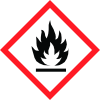
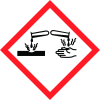


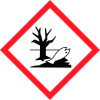
General Information
Revision date
2022-05-17
Product name
MQuant
Icons in SDS


Company Information
company name
Merck Sdn. Bhd
GHS Information
Signal word
Danger
Hazard Codes
Hazard statements (CLP)
H225, H290, H302, H302+H332, H314, H317, H318, H332, H336, H341, H350, H360FD, H373, H400, H411
Hazard statements
Code
Statements
H225
Highly Flammable liquid and vapour
Section 2
EU Classification
CLASS regulations 2013 Flammable liquids (Category 2), H225 Corrosive to Metals (Category 1), H290 Acute toxicity, Oral (Category 4), H302 Acute toxicity, Inhalation (Category 4), H332 Skin corrosion/irritation (Category 1A), H314 Serious eye damage/eye irritation (Category 1), H318 Skin sensitization (Category 1), H317 Germ cell mutagenicity (Category 2), H341 Carcinogenicity (Category 1B), H350 Reproductive toxicity (Category 1B), H360FD Specific target organ toxicity - single exposure (Category 3), Central nervous system, H336 Specific target organ toxicity - repeated exposure (Category 2), H373 Specific target organ toxicity - repeated exposure, Oral (Category 2), Thyroid, H373 Hazardous to the aquatic environment - acute hazard (Category 1), H400 Hazardous to the aquatic environment - chronic hazard (Category 2), H411 For the full text of the H-Statements mentioned in this Section, see Section 16.
2.2 Label elements
Labelling according to CLASS regulations 2013
Signal word
Danger Danger
Hazard statements
H225 Highly flammable liquid and vapor. H290 May be corrosive to metals. H302 + H332 Harmful if swallowed or if inhaled. H314 Causes severe skin burns and eye damage. H317 May cause an allergic skin reaction. H336 May cause drowsiness or dizziness. H341 Suspected of causing genetic defects. H350 May cause cancer. H360FD May damage fertility. May damage the unborn child. H373 May cause damage to organs through prolonged or repeated exposure. H373 May cause damage to organs (Thyroid) through prolonged or repeated exposure if swallowed. H400 Very toxic to aquatic life. H411 Toxic to aquatic life with long lasting effects. none
Prevention
P201 Obtain special instructions before use. P210 Keep away from heat/ sparks/ open flames/ hot surfaces. No smoking. P260 Do not breathe mist or vapors. P264 Wash skin thoroughly after handling. P273 Avoid release to the environment. P280 Wear protective gloves/ protective clothing/ eye protection/ face protection. P281 Use personal protective equipment as required.
Response
P303 + P361 + P353 IF ON SKIN (or hair): Remove/ Take off immediately all contaminated clothing. Rinse skin with water/ shower. P304 + P340 + P310 IF INHALED: Remove victim to fresh air and keep at rest in a position comfortable for breathing. Immediately call a POISON CENTER or doctor/ physician. P305 + P351 + P338 + IF IN EYES: Rinse cautiously with water for several minutes. P310 Remove contact lenses, if present and easy to do. Continue rinsing. Immediately call a POISON CENTER or doctor/ physician. P308 + P313 IF exposed or concerned: Get medical advice/ attention. P370 + P378 In case of fire: Use dry sand, dry chemical or alcohol-resistant foam for extinction. P391 Collect spillage. Reduced Labeling (<= 125 ml)
Precautionary statements
none Refer to the Safety Data Sheet before use.
Other hazards
none SECTION 3: Composition and information of the ingredients of the hazardous chemical Refer to component MSDS



