


Note: Ingredients listed on restricted chemical lists
EC/CAS
200-484-5/60-57-1
Name of the chemical
Dieldrin (ISO)
Concentration
<= 100 %
General Information
Version
8.2
Revision date
2025-06-25
Product name
Dieldrin
CAS No.
60-57-1
REACH No
A
Emergency telephone
+56 2 2581 4934
Icons in SDS


Company Information
company name
Merck S.A
e-mail address of the competent person responsible for the Safety Data Sheet
atencionclientes@merckgroup.com
GHS Information
Signal word
Danger
Hazard Codes
Hazard statements (CLP)
H300, H300+H310, H310, H351, H372, H400, H410
Hazard statements
Code
Statements
H300
Fatal if swallowed
Section 2
SECTION 2: Hazards identification
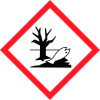
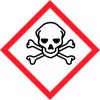
Regulation (EC) No. 1272/2008 Classification of the substance or mixture Acute toxicity, (Category 2) H300: Fatal if swallowed Acute toxicity, (Category 1) H310: Fatal in contact with skin Carcinogenicity, (Category 2) H351: Suspected of causing cancer Short-term (acute) aquatic H400: Very toxic to aquatic life hazard, (Category 1) Long-term (chronic) aquatic H410: Very toxic to aquatic life with long hazard, (Category 1) lasting effects. Specific target organ toxicity - H372: Causes damage to organs through repeated exposure, (Category 1) prolonged or repeated exposure.
Signal word
Danger Danger
Hazard statements
H300 + H310 Fatal if swallowed or in contact with skin. H351 Suspected of causing cancer. H372 Causes damage to organs through prolonged or repeated exposure. H410 Very toxic to aquatic life with long lasting effects. H351 Suspected of causing cancer. H372 Causes damage to organs through prolonged or repeated exposure. H300 + H310 Fatal if swallowed or in contact with skin.
Precautionary statements
P202 Do not handle until all safety precautions have been read and understood. P264 Wash skin thoroughly after handling. P273 Avoid release to the environment. P280 Wear protective gloves/ protective clothing/ eye protection/ face protection. P301 + P310 IF SWALLOWED: Immediately call a POISON CENTER/ doctor. P302 + P352 + P310 IF ON SKIN: Wash with plenty of water. Immediately call a POISON CENTER/ doctor. P202 Do not handle until all safety precautions have been read and understood. P264 Wash skin thoroughly after handling. P280 Wear protective gloves/ protective clothing/ eye protection/ face protection. P301 + P310 IF SWALLOWED: Immediately call a POISON CENTER/ doctor. P302 + P352 + P310 IF ON SKIN: Wash with plenty of water. Immediately call a POISON CENTER/ doctor.
Supplemental label elements
none Reduced Labelling (<= 125 ml) none
Other hazards
This substance/mixture contains no components considered to be either persistent, bioaccumulative and toxic (PBT), or very persistent and very bioaccumulative (vPvB) at levels of 0.1% or higher
ECOLOGICAL INFORMATION
The substance/mixture does not contain components considered to have endocrine disrupting properties according to REACH Article 57(f) or Commission Delegated regulation (EU) 2017/2100 or Commission Regulation (EU) 2018/605 at levels of 0.1% or higher.
TOXICOLOGICAL INFORMATION
The substance/mixture does not contain components considered to have endocrine disrupting properties according to REACH Article 57(f) or Commission Delegated regulation (EU) 2017/2100 or Commission Regulation (EU) 2018/605 at levels of 0.1% or higher.
2.1 Classification of the substance or mixture
Acute toxicity, (Category 2) H300: Fatal if swallowed. Acute toxicity, (Category 1) H310: Fatal in contact with skin. Carcinogenicity, (Category 2) H351: Suspected of causing cancer. Short-term (acute) aquatic H400: Very toxic to aquatic life. hazard, (Category 1) Long-term (chronic) aquatic H410: Very toxic to aquatic life with long hazard, (Category 1) lasting effects. Specific target organ toxicity - H372: Causes damage to organs through repeated exposure, (Category 1) prolonged or repeated exposure.



