

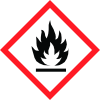
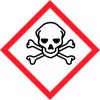

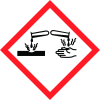

Note: Ingredients listed on restricted chemical lists
EC/CAS
108-88-3
Name of the chemical
Toluene
Concentration
>=70-<90
EC/CAS
75-44-5
Name of the chemical
carbonyl chloride
Concentration
>=10-<20
General Information
Version
6.19
Revision date
2026-01-07
Product name
Phosgene solution
1.2.1 Relevant identified uses
Laboratory chemicals, Synthesis of substances
1.2.2. Uses advised against
The product is being supplied under the TSCA R&D Exemption
Emergency telephone
800-424-9300, +1-703- 527-3887
Icons in SDS


Company Information
company name
Sigma-Aldrich Inc
GHS Information
Signal word
Danger
Hazard Codes
Hazard statements (CLP)
H225, H304, H314, H330, H336, H361, H373, H401, H412
Hazard statements
Code
Statements
H225
Highly Flammable liquid and vapour
Section 2
SECTION 2: Hazards identification
Aspiration hazard
Category 1 Short-term (acute) Category 2 aquatic hazard Long-term (chronic) Category 3 aquatic hazard Other hazards None known
Signal word
Danger
Hazard statements
H225 Highly flammable liquid and vapour. H304 May be fatal if swallowed and enters airways. H314 Causes severe skin burns and eye damage. H330 Fatal if inhaled. H336 May cause drowsiness or dizziness. H361 Suspected of damaging fertility or the unborn child. H373 May cause damage to organs (Central nervous system) through prolonged or repeated exposure. H401 Toxic to aquatic life. H412 Harmful to aquatic life with long lasting effects.
Prevention
P201 Obtain special instructions before use. P202 Do not handle until all safety precautions have been read and understood. P210 Keep away from heat/ sparks/ open flames/ hot surfaces. No smoking. P233 Keep container tightly closed. P240 Ground/bond container and receiving equipment. P241 Use explosion-proof electrical/ ventilating/ lighting equipment. P242 Use only non-sparking tools. P243 Take precautionary measures against static discharge. P260 Do not breathe mist or vapours. P264 Wash skin thoroughly after handling. P271 Use only outdoors or in a well-ventilated area. P273 Avoid release to the environment. P280 Wear protective gloves/ protective clothing/ eye protection/ face protection. P284 Wear respiratory protection.
Response
P301 + P310 IF SWALLOWED: Immediately call a POISON CENTER/ doctor. P301 + P330 + P331 IF SWALLOWED: Rinse mouth. Do NOT induce vomiting. P303 + P361 + P353 IF ON SKIN (or hair): Take off immediately all contaminated clothing. Rinse skin with water/ shower. P304 + P340 + P310 IF INHALED: Remove person to fresh air and keep comfortable for breathing. Immediately call a POISON CENTER/ doctor. P305 + P351 + P338 + P310 IF IN EYES: Rinse cautiously with water for several minutes. Remove contact lenses, if present and easy to do. Continue rinsing. Immediately call a POISON CENTER/ doctor. P308 + P313 IF exposed or concerned: Get medical advice/ attention. P363 Wash contaminated clothing before reuse. P370 + P378 In case of fire: Use dry sand, dry chemical or alcohol-resistant foam to extinguish.
Storage
P403 + P233 Store in a well-ventilated place. Keep container tightly closed. P403 + P235 Store in a well-ventilated place. Keep cool. P405 Store locked up.
Disposal
P501 Dispose of contents/ container to an approved waste disposal plant.
2.1 Classification of the substance or mixture
(29 CFR 1910.1200) Hazards for the product as supplied Flammable liquids : Category 2 Acute toxicity : Category 1 (Inhalation) Skin corrosion : Category 1B Serious eye damage : Category 1 Reproductive toxicity : Category 2 Specific target organ : Category 3 (Central nervous system) toxicity - single exposure Specific target organ : Category 2 (Central nervous system) toxicity - repeated exposure Aspiration hazard : Category 1 Short-term (acute) : Category 2 aquatic hazard Long-term (chronic) : Category 3 aquatic hazard Other hazards



