

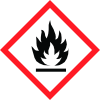

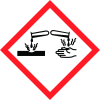


Note: Ingredients listed on restricted chemical lists
EC/CAS
232-259-2/7803-49-8
Name of the chemical
Hydroxylamin (790/2009)
Concentration
>=50-<70
General Information
Version
7.4
Revision date
2025-12-23
Product name
Hydroxylamine solution
CAS No.
7803-49-8
1.2.2. Uses advised against
For R&D use only. Not for pharmaceutical, household or other uses
Icons in SDS


Company Information
company name
Sigma-Aldrich Chemical Pvt Limited
GHS Information
Signal word
Danger
Hazard Codes
Hazard statements (CLP)
H208, H290, H302, H315, H317, H318, H335, H351, H373, H400
Hazard statements
Code
Statements
H208
Fire hazard; increased risk of explosion if desensitizing agent is reduced
Section 2
SECTION 2: Hazards identification
Regulation (EC) No. 1272/2008 Classification of the substance or mixture
Signal word
Danger Danger
Hazard statements
H208 Fire hazard; increased risk of explosion if desensitising agent is reduced. H290 May be corrosive to metals. H302 Harmful if swallowed. H315 Causes skin irritation. H317 May cause an allergic skin reaction. H318 Causes serious eye damage. H335 May cause respiratory irritation. H351 Suspected of causing cancer. H373 May cause damage to organs (Blood) through prolonged or repeated exposure. H400 Very toxic to aquatic life. H208 Fire hazard; increased risk of explosion if desensitising agent is reduced. H317 May cause an allergic skin reaction. H351 Suspected of causing cancer. H318 Causes serious eye damage.
Precautionary statements
P210 Keep away from heat, hot surfaces, sparks, open flames and other ignition sources. No smoking. P212 Avoid heating under confinement or reduction of the desensitising agent. P230 Keep wetted with water. P233 Keep container tightly closed. P280 Wear protective gloves/ protective clothing/ eye protection/ face protection. P210 Keep away from heat, hot surfaces, sparks, open flames and other ignition sources. No smoking. P212 Avoid heating under confinement or reduction of the desensitising agent. P230 Keep wetted with water. P233 Keep container tightly closed. P280 Wear protective gloves/ protective clothing/ eye protection/ face protection. P305 + P351 + P338 IF IN EYES: Rinse cautiously with water for several minutes. Remove contact lenses, if present and easy to do. Continue rinsing. P371 + P380 + P375 In case of major fire and large quantities: Evacuate area. Fight fire remotely due to the risk of explosion. P501 Dispose of contents/ container to an approved waste disposal plant.
Response
P305 + P351 + P338 IF IN EYES: Rinse cautiously with water for several minutes. Remove contact lenses, if present and easy to do. Continue rinsing. P371 + P380 + P375 In case of major fire and large quantities: Evacuate area. Fight fire remotely due to the risk of explosion.
Disposal
P501 Dispose of contents/ container to an approved waste disposal plant.
Hazardous Ingredients
hydroxylamine Reduced Labelling (<= 125 ml)
Supplemental label elements
none
2.3 Other hazards
This substance/mixture contains no components considered to be either persistent, bioaccumulative and toxic (PBT), or very persistent and very bioaccumulative (vPvB) at levels of 0.1% or higher.
ECOLOGICAL INFORMATION
The substance/mixture does not contain components considered to have endocrine disrupting properties according to REACH Article 57(f) or Commission Delegated regulation (EU) 2017/2100 or Commission Regulation (EU) 2018/605 at levels of 0.1% or higher.
TOXICOLOGICAL INFORMATION
The substance/mixture does not contain components considered to have endocrine disrupting properties according to REACH Article 57(f) or Commission Delegated regulation (EU) 2017/2100 or Commission Regulation (EU) 2018/605 at levels of 0.1% or higher.
2.1 Classification of the substance or mixture
Classification (REGULATION (EC) No 1272/2008) Desensitised explosives, Category 4 H208: Fire hazard; increased risk of explosion if desensitising agent is reduced. Corrosive to metals, Category 1 H290: May be corrosive to metals. Acute toxicity, Category 4 H302: Harmful if swallowed. Skin irritation, Category 2 H315: Causes skin irritation. Serious eye damage, Category 1 H318: Causes serious eye damage. Skin sensitisation, Category 1 H317: May cause an allergic skin reaction. Carcinogenicity, Category 2 H351: Suspected of causing cancer. Specific target organ toxicity - H335: May cause respiratory irritation. single exposure, Category 3, Respiratory system Specific target organ toxicity - H373: May cause damage to organs through repeated exposure, Category 2, prolonged or repeated exposure. Blood Short-term (acute) aquatic hazard, H400: Very toxic to aquatic life.



