


General Information
Version
6.12
Revision date
2026-07-15
Product name
1,4-Dioxane solution
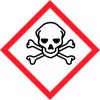
Icons in SDS


Company Information
company name
Sigma-Aldrich Chemical Pvt Limited
GHS Information
Signal word
Danger
Hazard Codes
Hazard statements (CLP)
H302, H315, H319, H331, H336, H351, H361d, H372
Hazard statements
Code
Statements
H302
Harmful if swallowed
Section 2
SECTION 2: Hazards identification
Regulation (EC) No. 1272/2008 Classification of the substance or mixture
Signal word
Danger Danger
Hazard statements
H302 Harmful if swallowed. H315 Causes skin irritation. H319 Causes serious eye irritation. H331 Toxic if inhaled. H336 May cause drowsiness or dizziness. H351 Suspected of causing cancer. H361d Suspected of damaging the unborn child. H372 Causes damage to organs (Liver, Kidney) through prolonged or repeated exposure. H331 Toxic if inhaled. H351 Suspected of causing cancer. H372 Causes damage to organs through prolonged or repeated exposure. H361d Suspected of damaging the unborn child.
Precautionary statements
P202 Do not handle until all safety precautions have been read and understood. P202 Do not handle until all safety precautions have been read and understood. P304 + P340 + P311 IF INHALED: Remove person to fresh air and keep comfortable for breathing. Call a POISON CENTER/ doctor. P308 + P313 IF exposed or concerned: Get medical advice/ attention.
Response
P301 + P312 IF SWALLOWED: Call a POISON CENTER/ doctor if you feel unwell. P302 + P352 IF ON SKIN: Wash with plenty of water. P304 + P340 + P311 IF INHALED: Remove person to fresh air and keep comfortable for breathing. Call a POISON CENTER/ doctor. P305 + P351 + P338 IF IN EYES: Rinse cautiously with water for several minutes. Remove contact lenses, if present and easy to do. Continue rinsing. P308 + P313 IF exposed or concerned: Get medical advice/ attention.
Hazardous Ingredients
Chloroform-D1-Deuteration
Additional information
For use in industrial installations only. Reduced Labelling (<= 125 ml)
Supplemental label elements
none
2.3 Other hazards
This substance/mixture contains no components considered to be either persistent, bioaccumulative and toxic (PBT), or very persistent and very bioaccumulative (vPvB) at levels of 0.1% or higher.
ECOLOGICAL INFORMATION
The substance/mixture does not contain components considered to have endocrine disrupting properties according to REACH Article 57(f) or Commission Delegated regulation (EU) 2017/2100 or Commission Regulation (EU) 2018/605 at levels of 0.1% or higher.
TOXICOLOGICAL INFORMATION
The substance/mixture does not contain components considered to have endocrine disrupting properties according to REACH Article 57(f) or Commission Delegated regulation (EU) 2017/2100 or Commission Regulation (EU) 2018/605 at levels of 0.1% or higher.
2.1 Classification of the substance or mixture
Classification (REGULATION (EC) No 1272/2008) Acute toxicity, Category 4 H302: Harmful if swallowed. Acute toxicity, Category 3 H331: Toxic if inhaled. Skin irritation, Category 2 H315: Causes skin irritation. Eye irritation, Category 2 H319: Causes serious eye irritation. Carcinogenicity, Category 2 H351: Suspected of causing cancer. Reproductive toxicity, Category 2 H361d: Suspected of damaging the unborn child. Specific target organ toxicity - H336: May cause drowsiness or dizziness. single exposure, Category 3, Central nervous system Specific target organ toxicity - H372: Causes damage to organs through repeated exposure, Category 1, prolonged or repeated exposure. Liver, Kidney



