

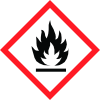
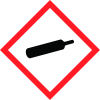
Note: Ingredients listed on restricted chemical lists
EC/CAS
75-37-6
Name of the chemical
1,1-Difluoroethane
Concentration
N/A
General Information
Revision date
2022-08-23
Product name
AOS
Product name
AOS
Identification on the label/Trade name
Super Blast Horns
CAS No.
75-37-6
Icons in SDS


Company Information
company name
Max Pro
GHS Information
Signal word
Danger
Hazard Codes
Hazard statements (CLP)
H221, H223, H280
Hazard statements
Code
Statements
H221
Flammable gas
Section 2
2.2 Label elements
Danger Flammable gas Contains gas under pressure; may explode if heated Keep away from heat, hot surfaces, sparks, open flames and other ignition sources. No smoking. Leaking gas fire: Do not extinguish, unless leak can be stopped safely. In case of leakage, eliminate all ignition sources. Protect from sunlight. Store in a well-ventilated place. Do not expose to temperatures exceeding 50 °C/ 122 °F. Date of preparation August 23, 2022 Revision: 2022.08 Page 1 of 8
Other hazards which do not result in classification
N/A Note: This product is a consumer product and is labeled in accordance with the US Consumer Product Safety Commission
HMIS® ratings
PERSONAL PROTECTION . (Personal Protection Information To Be Supplied By The User) Personal precautions, protective equipment and emergency procedures Extremely flammable. Spillages of liquid product will create a fire hazard and may form an explosive atmosphere. Keep all sources of ignition and hot metal surfaces away from spill/release if safe to do so. The use of explosion-proof electrical equipment is recommended. Beware of accumulation of gas in low areas or contained areas, where explosive concentrations may occur. Prevent from entering drains or any place where accumulation may occur. Ventilate area and allow to evaporate. Stay upwind and away from spill/release. Avoid direct contact with material. For large spillages, notify persons downwind of the spill/release, isolate immediate hazard area and keep unauthorized personnel out. Wear appropriate protective equipment, including respiratory protection, as conditions warrant (see Section 8). See Sections 2 and 7 for additional information on hazards and precautionary measures. Environmental precautions Stop spill/release if it can be done safely. Water spray may be useful in minimizing or dispersing vapors. If spill occurs on water notify appropriate authorities and advise shipping of any hazard. Methods and materials for containment and cleaning up Steps To Be Taken If Material Is Released or Spilled Avoid sources of ignition - ventilate area. Use water fog to evaporate or ventilate. Protect body against contact with liquid. If confined space - use self contained breathing apparatus. Consult local fire authorities. Methods for Containment and Clean-Up Notify relevant authorities in accordance with all applicable regulations. Recommended measures are based on the most likely spillage scenarios for this material; however local conditions and regulations may influence or limit the choice of appropriate actions to be taken. Date of preparation August 23, 2022 Revision: 2022.08 Page 3 of 8 Precautions for safe handling Comply with state and local regulations. Avoid contact with skin, eyes and clothing. Avoid breathing vapors. Keep away from heat or sources of ignition. Prohibit smoking in areas of storage or use. Take precautionary measures against static discharge. Use good personal hygiene practices and wear appropriate personal protective equipment (see section 8). Contents are under pressure. Gases can accumulate in confined spaces and limit oxygen available for breathing. Use only with adequate ventilation. The use of explosion-proof electrical equipment is recommended and may be required (see appropriate fire codes). Refer to NFPA-70 and/or API RP 2003 for specific bonding/grounding requirements. Electrostatic charge may accumulate and create a hazardous condition when handling or processing this material. To avoid fire or explosion, dissipate static electricity during transfer by grounding and bonding containers and equipment before transferring material. Do not enter confined spaces such as tanks or pits without following proper entry procedures such as ASTM D-4276 and 29CFR 1910.146. Conditions for safe storage, including any incompatibilities Keep container(s) tightly closed and properly labeled. Use and store this material in cool, dry, well ventilated areas away from heat, direct sunlight, hot metal surfaces, and all sources of ignition. Store only in approved containers. Post area "No Smoking or Open Flame." Keep away from any incompatible material (see Section 10). Protect container(s) against
Appearance/Odor
Clear, colorless liquefied gas with a slight ethereal odor. Odor Threshold: No Data pH: Not Applicable Melting / Freezing Point: No Data Initial Boiling Point / Range: -13 °F Flash Point (Method): -58 °F (Estimated) Evaporation Rate: > 1 (Ethyl Ether = 1.0) Lower Expolsion Limit: 3.9% (vol.) Gas in air Upper Explosion Limit: 16.6% (vol.) Gas in air Vapor Pressure @ 70 °F: 62.5 PSIG Vapor Density (air = 1.00): 2.4 Specific Gravity (H2O = 1.00): 0.909 Solubility in Water @ 70 °F: 0.28% Percent Volatile by Volume: 100% Auto-ignition temperature: 849 °F Decomposition Data: No Data Viscosity: No Data Chemical stability Stable Possibility of hazardous reactions Can not occur Conditions to avoid High heat, spark, and open flames Incompatible materials Alkali or Alkaline Earth Metals. Powdered Metal. Powdered Metal Salts. Hazardous decomposition products Carbon oxides, Hydrogen fluoride, Carbonyl fluoride, Fluorocarbons. Toxicological (health) effects Effects of Over Exposure
2.1 Classification of the substance or mixture
Flammable Gases, 1, H223 Gases Under Pressure - Liquefied Gas, H280



