


Note: Ingredients listed on restricted chemical lists
EC/CAS
7440-44-0
Name of the chemical
Carbon black
Concentration
32%-38% 0.5%-2.0%
EC/CAS
7440-50-8
Name of the chemical
Copper
Concentration
5%-10%
EC/CAS
7429-90-5
Name of the chemical
Aluminium
Concentration
10%-15%
EC/CAS
96-49-1
Name of the chemical
ethylene carbonate
Concentration
15%-20%
General Information
Revision date
2022-05-23
Product name
14.3
Product Synonyms
Li-ion
1.2.1 Relevant identified uses
5
1.2.2. Uses advised against
5
supplier name
material data sheet ...................................................... 5
Emergency telephone
+48 22 758 68 65
Icons in SDS


Company Information
company name
material data sheet ...................................................... 5
GHS Information
Signal word
Danger
Hazard Codes
Hazard statements (CLP)
H226, H302, H314, H317, H318, H372, H412
Hazard statements
Code
Statements
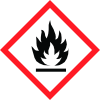
H226
Flammable liquid and vapour
Section 2
SECTION 2: Hazards identification
No 1272/2008 2.1. Summary of danger Warning, do not open or remove, do not expose to flame or open fire. Do not mix batteries with different models, different chemical properties or different types. There is a danger of explosions and burns under the conditions of fire. Do not short-circuit, squeeze, burn or disassemble the battery. Classification of the substance or mixture [REGULATION (EC)
Other physicochemical hazards
At temperatures over 70 °C risk of bursting and withdrawal of electrolyte liquid exists. When a cell is exposed to an external short- circuit, it will cause heat generation and ignition. Reactions of the electrolyte and the electrodes with water and humidity are possible.
Health hazards
The contained dangerous materials are not freely available for foreseeable use
Other hazards
none
2.1 Classification of the substance or mixture
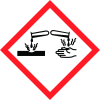
No 1272/2008] Flam. Liq. 3: H226 Flammable liquid and vapour. Skin Corr. 1: H314 Causes severe skin burns and eye damage. Eye Dam. 1: H318 Causes serious eye damage. Acute Tox. 4: H302 Harmful if swallowed. STOT RE 1: H372 Causes damage to organs through prolonged or repeated exposure. Aquatic Chronic 3: H412 Harmful to aquatic life with long lasting effects. Skin Sens. 1: H317 May cause an allergic skin reaction. 2.3. Label elements Please observe all warning labels and notifications on the battery package and enclosure. Exemplary data plate containing the set of basic battery pack parameters, as required by law. Crossed out wheelie bin symbol explains that after use batteries should be taken to separate collection for recycling. Do not dispose of them as unsorted municipal waste. Refer to chapter “Used batteries” for details on the recycling procedure. Li “Li-ion” is the description of electrochemical system of battery pack Black universal recycling symbol U+267B Warning against electric shock. Exercise caution when connecting the battery pack to the system. Mind the stickers at each connector on the battery pack front panel. Please follow all safety symbols on battery enclosure/package. 2.4. Other hazards Physico-chemical hazards At temperatures over 70 °C risk of bursting and withdrawal of electrolyte liquid exists. When a cell is exposed to an external short- circuit, it will cause heat generation and ignition. Reactions of the electrolyte and the electrodes with water and humidity are possible. Human health dangers



