


Note: Ingredients listed on restricted chemical lists
EC/CAS
7732-18-5
Name of the chemical
Water, distilled, conductivity or of similar purity H2O
Concentration
50-<75
EC/CAS
1310-58-3
Name of the chemical
potassium hydroxide
Concentration
<1
General Information
Revision date
2015-01-06
Product name
MasterClean Liquid
1.2.2. Uses advised against
do not use for squirting or spraying
Icons in SDS


Company Information
company name
MasterBlend • 5285 Fox Street • CO 80216 Denver • United States •
e-mail address of the competent person responsible for the Safety Data Sheet
info@masterblend.net, info@bennettdirect.com.au
GHS Information
Signal word
DANGER
Hazard Codes
Hazard statements (CLP)
H227, H314, H318, H351
Hazard statements
Code
Statements
H227
Combustible liquid
Section 2
SECTION 2: Hazards identification
(29 CFR 1910.1200) Classification of the substance or mixture
Hazard categories
Hazard statement code(s) B.6 flammable liquid Cat. 4 Flam. Liq. 4) H227 A.2 skin corrosion/irritation Cat. 1B Skin Corr. 1B) H314 A.3 serious eye damage/eye irritation Cat. 1 Eye Dam. 1) H318 A.6 carcinogenicity Cat. 2 Carc. 2) H351 Remarks For full text of H-phrases: see SECTION 16
Most important adverse effects
Skin corrosion produces an irreversible damage to the skin; namely, visible necrosis through the epidermis and into the dermis. The product is combustible and can be ignited by potential ignition sources
Signal word
DANGER
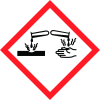
Hazard pictograms
GHS05, GHS08
Hazard statements
H227 Combustible liquid. H314 Causes severe skin burns and eye damage. H351 Suspected of causing cancer.
Prevention
Keep away from heat, hot surfaces, sparks, open flames and other ignition sources. No smoking. Do not breathe dust/fume/gas/mist/vapors/spray. Wear protective gloves/eye protection/face protection.
Response
IF ON SKIN (or hair): Take off immediately all contaminated clothing. Rinse skin with water/shower. IF IN EYES: Rinse cautiously with water for several minutes. Remove contact lenses, if present and easy to do. Continue rinsing. In case of fire: Use sand, carbon dioxide or powder extinguisher to extinguish.
Precautionary statements
- disposal Dispose of contents/container to industrial combustion plant.
2.3 Other hazards
This material is combustible, but will not ignite readily.
2.1 Classification of the substance or mixture
Classification acc. to OSHA "Hazard Communication Standard" (29 CFR 1910.1200) Annex - Hazard class and category - Hazard statement code(s) B.6 flammable liquid Cat. 4 (Flam. Liq. 4) H227 A.2 skin corrosion/irritation Cat. 1B (Skin Corr. 1B) H314 A.3 serious eye damage/eye irritation Cat. 1 (Eye Dam. 1) H318 A.6 carcinogenicity Cat. 2 (Carc. 2) H351 Remarks For full text of H-phrases: see SECTION 16. The most important adverse physicochemical, human health and environmental effects Skin corrosion produces an irreversible damage to the skin; namely, visible necrosis through the epidermis and into the dermis. The product is combustible and can be ignited by potential ignition sources.



