




Note: Ingredients listed on restricted chemical lists
EC/CAS
21645-51-2
Name of the chemical
Aluminium hydroxide
Concentration
26.0%
EC/CAS
9046-10-0
Name of the chemical
Poly(propyleneglycol)diamine
Concentration
19.0%
EC/CAS
68333-79-9
Name of the chemical
Polyphosphoric acids, ammonium salts
Concentration
19.0%
EC/CAS
12767-90-7
Name of the chemical
Hexaboron dizinc undecaoxide
Concentration
N/A
EC/CAS
1333-86-4
Name of the chemical
carbon black
Concentration
0.5%
General Information
Version
5.00
Revision date
2025-12-09
Product name
834FX-B
Emergency telephone
+1-866-519-4752, +1-760-476-3962, +1-613-996-6666
Icons in SDS


Company Information
company name
Masline
e-mail address of the competent person responsible for the Safety Data Sheet
info@mgchemicals.com, sds@mgchemicals.com
GHS Information
Signal word
Danger
Hazard Codes
Hazard statements (CLP)
H314, H317, H351, H361, H373, H400, H410
Hazard statements
Code
Statements
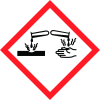
H314
Causes severe skin burns and eye damage
Section 2
SECTION 2: Hazards identification
Classification of the substance or mixture Skin Corrosion - Category 1B H314 Causes severe skin burns and eye damage Sensitization - skin – Category 1 H317 May cause an allergic skin reaction Carcinogenicity – Category 2 H351 Suspected of causing cancer. Route of exposure Inhalation Reproductive Toxicity - Category 2 H361 Suspected of damaging fertility or the unborn child Specific target organ toxicity (repeated exposure) – Category H373 May cause damage to the liver, the immune system and the gastro-intestinal tract through prolonged or repeated exposure Aquatic Acute 1 H400 Very toxic to aquatic life Aquatic Chronic 1 H410 Very toxic to aquatic life with long lasting effects
2.2 Label elements
The product is classified and labeled according to the Globally Harmonized System (GHS) (Contd. of page 1)
Hazard pictograms
GHS05 GHS07 GHS08 GHS09
Signal word
Danger
Hazardous Ingredients
polyoxypropylene diamine boron zinc hydroxide oxide phenol, styrenated trimethylhexane-1,6-diamine
Hazard statements
H314 Causes severe skin burns and eye damage. H317 May cause an allergic skin reaction. H351 Suspected of causing cancer. Route of exposure: Inhalation. H361 Suspected of damaging fertility or the unborn child. H373 May cause damage to the liver, the immune system and the gastro-intestinal tract through prolonged or repeated exposure. H410 Very toxic to aquatic life with long lasting effects.
Precautionary statements
P102 Keep out of reach of children. P260 Do not breathe vapors or fumes. P280 Wear protective gloves, protective clothing, and eye protection. P303+P361+P353 IF ON SKIN (or hair): Take off immediately all contaminated clothing. Rinse skin with water. P305+P351+P338 IF IN EYES: Rinse cautiously with water for several minutes. Remove contact lenses, if present and easy to do. Continue rinsing. P501 Dispose of contents and container in accordance with local, regional, and national regulations.
Other hazards
Not available
2.1 Classification of the substance or mixture
Skin Corrosion - Category 1B H314 Causes severe skin burns and eye damage. Sensitization - skin – Category 1 H317 May cause an allergic skin reaction. Carcinogenicity – Category 2 H351 Suspected of causing cancer. Route of exposure: Inhalation. Reproductive Toxicity - Category 2 H361 Suspected of damaging fertility or the unborn child. Specific target organ toxicity (repeated exposure) – Category H373 May cause damage to the liver, the immune system 2 and the gastro-intestinal tract through prolonged or repeated exposure. Aquatic Acute 1 H400 Very toxic to aquatic life. Aquatic Chronic 1 H410 Very toxic to aquatic life with long lasting effects.



