



Note: Ingredients listed on restricted chemical lists
EC/CAS
14808-60-7
Name of the chemical
Silica, crystalline
Concentration
40-60%
EC/CAS
1305-78-8
Name of the chemical
Calcium oxide
Concentration
1-5%
EC/CAS
13463-67-7
Name of the chemical
Reaction mass of titanium dioxide and silver chloride
Concentration
<1.0%
General Information
Revision date
2015-02-06
Product name
CastPatch
1.2.1 Relevant identified uses
Concrete surfacer
1.2.2. Uses advised against
No further relevant information available
Emergency telephone
(800)255-3924, +1 (813)248-0585
Icons in SDS


Company Information
company name
Lyons Manufacturing, Inc
GHS Information
Signal word
Danger
Hazard Codes
Hazard statements (CLP)
H315, H317, H318, H335, H350
Hazard statements
Code
Statements
H315
Causes skin irritation
Section 2
SECTION 2: Hazards identification
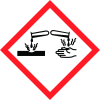
NFPA Rating Classification of the substance or mixture GHS08 Health hazard Carc. 1A H350 May cause cancer. Route of exposure: Inhalative GHS05 Corrosion Eye Dam. 1 H318 Causes serious eye damage GHS07 Skin Irrit. 2 H315 Causes skin irritation Skin Sens. 1 H317 May cause an allergic skin reaction STOT SE 3 H335 May cause respiratory irritation Additional information There are no other hazards not otherwise classified that have been identified percent of the mixture consists of ingredient(s) of unknown toxicity
2.2 Label elements
The product is classified and labeled according to the Globally Harmonized System (GHS). (Contd. of page 1)
Hazard pictograms
GHS05 GHS07 GHS08
Signal word
Danger
Hazardous Ingredients
Cement, portland, chemicals Quartz (SiO2) calcium oxide aluminium sulphate
Hazard statements
H315 Causes skin irritation. H318 Causes serious eye damage. H317 May cause an allergic skin reaction. H350 May cause cancer. Route of exposure: Inhalative. H335 May cause respiratory irritation. · WHMIS-symbols: As of 11 February 2015, the current WHMIS system is being replaced by the GHS system. This is the classifcation under the older system. D2B - Toxic material causing other toxic effects
Precautionary statements
P261 Avoid breathing dust. P264 Wash thoroughly after handling. P280 Wear protective gloves/protective clothing/eye protection. P271 Use only outdoors or in a well-ventilated area. P305+P351+P338 If in eyes: Rinse cautiously with water for several minutes. Remove contact lenses, if present and easy to do. Continue rinsing. P362 Take off contaminated clothing and wash before reuse. P304+P340 IF INHALED: Remove victim to fresh air and keep at rest in a position comfortable for breathing. P312 Call a poison center/doctor if you feel unwell. P302+P352 If on skin: Wash with plenty of water. P403+P233 Store in a well-ventilated place. Keep container tightly closed. P501 Dispose of contents/container in accordance with local/regional/national/international regulations.
Classification system
· NFPA ratings (scale 0 - 4) Health = 2 0 Fire = 0 2 0 Reactivity = 0 (Contd. of page 2) · HMIS-ratings (scale 0 - 4) HEALTH *2 Health = *2 FIRE 0 Fire = 0 Reactivity = 0 REACTIVITY 0
PBT Substances
Not applicable
vPvB Substances
Not applicable
2.1 Classification of the substance or mixture
GHS08 Health hazard Carc. 1A H350 May cause cancer. Route of exposure: Inhalative. GHS05 Corrosion Eye Dam. 1 H318 Causes serious eye damage. GHS07 Skin Irrit. 2 H315 Causes skin irritation. Skin Sens. 1 H317 May cause an allergic skin reaction. STOT SE 3 H335 May cause respiratory irritation. · Additional information: There are no other hazards not otherwise classified that have been identified. 0 percent of the mixture consists of ingredient(s) of unknown toxicity.



