

Note: Ingredients listed on restricted chemical lists
EC/CAS
111-76-2
Name of the chemical
Ethylene glycol monobutyl ether (EGBE)
Concentration
N/A
General Information
Revision date
2015-06-01
Product name
APC-10
Emergency telephone
For SDS Information
Icons in SDS
Company Information
company name
Lyn Distributing
GHS Information
Signal word
Danger
Hazard Codes
Hazard statements (CLP)
H314
Hazard statements
Code
Statements
H314
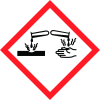
Causes severe skin burns and eye damage
Section 2
SECTION 2: Hazards identification
OSHA Emergency Overview Appearance liquid Color Green, clear Odor mild lemon
2.1 Classification of the substance or mixture
Skin corrosion : Category 1A Serious eye damage : Category 1
Signal word
Danger
Hazard statements
H314 Causes severe skin burns and eye damage.
Prevention
P264 Wash skin thoroughly after handling. P280 Wear protective gloves/ protective clothing/ eye protection/ face protection.
Response
P301 + P330 + P331 IF SWALLOWED: Rinse mouth. Do NOT induce vomiting. P303 + P361 + P353 IF ON SKIN (or hair): Remove/ Take off immediately all contaminated clothing. Rinse skin with water/ shower. P304 + P340 + P310 IF INHALED: Remove victim to fresh air and keep at rest in a position comfortable for breathing. Immediately call a POISON CENTER or doctor/ physician. P305 + P351 + P338 + P310 IF IN EYES: Rinse cautiously with water for several minutes. Remove contact lenses, if present and easy to do. Continue rinsing. Immediately call a POISON CENTER or doctor/ physician. P363 Wash contaminated clothing before reuse.
Storage
P405 Store locked up.
Disposal
P501 Dispose of contents/container in accordance with local regulation.
Potential health effects
Carcinogenicity: IARC No component of this product present at levels greater than or equal to 0.1% is identified as probable, possible or confirmed human carcinogen by IARC. ACGIH Confirmed animal carcinogen with unknown relevance to humans 2-butoxyethanol 111-76-2 OSHA No component of this product present at levels greater than or equal to 0.1% is identified as a carcinogen or potential carcinogen by OSHA. NTP No component of this product present at levels greater than or equal to 0.1% is identified as a known or anticipated carcinogen by NTP.



