


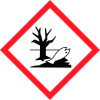
Note: Ingredients listed on restricted chemical lists
EC/CAS
219-363-3/2425-06-1
Name of the chemical
Captafol (ISO); 1,2,3,6-Tetrahydro-N-(1,1,2,2-tetrachlorethylthio)phthalimid
Concentration
45-
General Information
Product name
Captafol
CAS No.
2425-06-1
Icons in SDS


Company Information
company name
LookChem
GHS Information
Signal word
Danger
Hazard Codes
Hazard statements (CLP)
H317, H350, H410
Hazard statements
Code
Statements
H317
May cause an allergic skin reaction
Section 2
SECTION 2: Hazards identification
According to European Directive 67/548/EEC as amended Classification of the substance or mixture
Signal word
Danger
Hazard statements
H317 May cause an allergic skin reaction. H350 May cause cancer. H410 Very toxic to aquatic life with long lasting effects.
Precautionary statements
P201 Obtain special instructions before use. P273 Avoid release to the environment. P280 Wear protective gloves. P308 + P313 IF exposed or concerned: Get medical advice/attention. P501 Dispose of contents/container to an approved waste disposal plant. Hazard symbol(s) T N Toxic Dangerous for the environment
R-phrase(s)
R45 R43 R50/53 May cause cancer. May cause sensitization by skin contact. Very toxic to aquatic organisms, may cause long-term adverse effects in the aquatic environment.
S-phrase(s)
S53 S45 Avoid exposure - obtain special instructions before use. In case of accident or if you feel unwell, seek medical advice immediately (show the label where possible). S60 S61 This material and its container must be disposed of as hazardous waste. Avoid release to the environment. Refer to special instructions/ Safety data sheets. Restricted to professional users.
Other hazards
- none
2.1 Classification of the substance or mixture
According to Regulation (EC) No1272/2008 Carcinogenicity (Category 1B) Skin sensitization (Category 1) Acute aquatic toxicity (Category 1) Chronic aquatic toxicity (Category 1) According to European Directive 67/548/EEC as amended. May cause cancer. May cause sensitization by skin contact. Very toxic to aquatic organisms, may cause long- term adverse effects in the aquatic environment.



