


Note: Ingredients listed on restricted chemical lists
General Information
Revision date
2024-08-22
Product name
Acetone
Product Synonyms
Dimethyl Ketone; Dimethylformaldehyde; Methyl Ketone; PE100 Polyester Thinners; Pyroacetic acid
Chemical name
2-Propanone
CAS No.
67-64-1
1.2.1 Relevant identified uses
As a solvent and manufacturing other chemicals
Emergency telephone
+64-4-9179888, 1-800-424-9300...
Icons in SDS


Company Information
company name
Location
GHS Information
Signal word
Danger
Hazard Codes
Hazard statements (CLP)
H225, H319, H336
Hazard statements
Code
Statements
H225
Highly Flammable liquid and vapour
Section 2
SECTION 2: Hazards identification
Poisons Schedule (Aust) Schedule 5 Globally Harmonised System Hazard Classification Hazardous according to the criteria of the Globally Harmonised System of Classification and Labelling of Chemicals (GHS)
Hazard categories
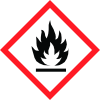
Flammable Liquids - Category 2 Serious Eye Damage/Irritation - Category 2A Specific Target Organ Toxicity (Single Exposure) - Category 3 Pictograms
Signal word
Danger Hazard Statements AUH066 Repeated exposure may cause skin dryness or cracking H225 Highly flammable liquid and vapour H319 Causes serious eye irritation H336 May cause drowsiness or dizziness
Prevention
P210 Keep away from heat/sparks/open flames/hot surfaces. No smoking. P233 Keep container tightly closed. P280 Wear protective gloves/eye protection/face protection. P261 Avoid breathing fumes/mists/vapours/spray. P240 Ground and bond container and receiving equipment. P241 Use explosion-proof electrical/ventilating/lighting and all other equipment. P242 Use non-sparking tools. P243 Take action to prevent static discharges. P235 Keep cool. P271 Use only outdoors or in a well-ventilated area.
Response
P370 + P378 In case of fire: Alcohol resistant foam is the preferred fire-fighting medium. However, if it is not available, fine water spray or water fog can be used to extinguish. P337 + P313 If eye irritation persists: Get medical advice/attention. P312 Call a POISON CENTER or doctor if you feel unwell. P303 + P361 + P353 IF ON SKIN (or hair): Take off immediately all contaminated clothing. Rinse skin with water [or shower]. P305 + P351 + P338 IF IN EYES: Rinse cautiously with water for several minutes. Remove contact lenses, if present and easy to do. Continue rinsing. P304 + P340 IF INHALED: Remove victim to fresh air and keep comfortable for breathing.
Storage
P403 + P233 Store in a well-ventilated place. Keep container tightly closed. P405 Store locked up.
Disposal
P501 Dispose of contents/container in accordance with local / regional / national / international regulations. National Transport Commission (Australia) Australian Code for the Transport of Dangerous Goods by Road & Rail (ADG Code)
Classifications
Dangerous Goods according to the criteria of the Australian Code for the Transport of Dangerous Goods by Road & Rail (ADG Code) Environmental Protection Authority (New Zealand) Hazardous Substances and New Organisms Amendment Act 2015
HSNO Classifications
Physical 3.1B Flammable liquid - high hazard Health 6.4A Substances that are irritating to the eye
2.1 Classification of the substance or mixture
Hazardous according to the criteria of the Globally Harmonised System of Classification and Labelling of Chemicals (GHS) Hazard Categories Flammable Liquids - Category 2 Serious Eye Damage/Irritation - Category 2A Specific Target Organ Toxicity (Single Exposure) - Category 3 Pictograms Signal Word Danger Hazard Statements AUH066 Repeated exposure may cause skin dryness or cracking H225 Highly flammable liquid and vapour. H319 Causes serious eye irritation. H336 May cause drowsiness or dizziness.



