



Note: Ingredients listed on restricted chemical lists
EC/CAS
13463-67-7
Name of the chemical
Reaction mass of titanium dioxide and silver chloride
Concentration
N/A
EC/CAS
50-00-0
Name of the chemical
Formaldehyde
Concentration
N/A
EC/CAS
108-88-3
Name of the chemical
Toluene
Concentration
N/A
General Information
Revision date
2016-01-29
Product name
Fluropon
1.2.1 Relevant identified uses
Paint 4,3
Emergency telephone
1-800-535-5053
Icons in SDS


Company Information
company name
Linetec
GHS Information
Signal word
Danger
Hazard Codes
Hazard statements (CLP)
H225, H226, H312, H312+H332, H315, H317, H319, H332, H336, H350, H361, H373
Hazard statements
Code
Statements
H225
Highly Flammable liquid and vapour
Section 2
SECTION 2: Hazards identification
OSHA Hazards 24° Classification of the substance or mixture Classification (GHS-US) Flam. Lig. 2 H225 Acute Tox. 4 (Dermal) H312 Acute Tox. 4 (Inhalation) H332 Skin irrit. 2 H315 Eye Irrit. 24 H319 Skin Sens H317 Care. 1A H350 H361 STOT SE 3 H336 STOT RE 2 H373 220°
2.2 Label elements
GHS-US labeling
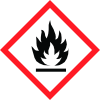
Hazard pictograms
GHS02 GHSO07 GHS08
Signal word
Danger
Contains
Toluene; Ethyl alcohol; Formaldehyde
Hazard statements
H226 - Highly flammable liquid and vapor H312+H332 - Harmful in contact with skin or if inhaled H315 - Causes skin irritation H317 - May cause an allergie skin reaction H319 - Causes serious eye irritation H336 - May cause drowsiness or dizziness. H350 - May cause cancer H361 - Suspected of damaging fertility or the unborn child H373 - May cause damage to organs through prolonged or repeated exposure see section 16 SECTION rst aid measures 44. Description of first.aid measures... First-aid measures after inhalation Get medical attention immediately if symptoms occur. Move exposed person to fresh air. If not breathing, if breathing is irregular or if respiratory arrest occurs, provide artificial respiration or oxygen by trained personnel. Loosen tight clothing such as a collar, tie, belt or waistband. First-aid measures after skin contact Get medical attention immediately if symptoms occur. In case of contact, immediately flush skin with plenty of water for at least 15 minutes while removing contaminated clothing and shoes. Wash clothing before reuse. Clean shoes thoroughly before reuse. First-aid measures after eye contact Get medical attention immediately if symptoms occur. Check for and remove any contact lenses. Immediately flush eyes with plenty of water for at least 15 minutes, occasionally lifting the upper and lower eyelids. First-aid measures after ingestion Get medical attention immediately. Wash out mouth with water. If material has been swallowed and the exposed person is conscious, give small quantities of water to drink. Stop if the exposed person feels sick as vomiting may be dangerous. Do not induce vomiting unless directed to do so by medical personnel. Never give anything by mouth to an unconscious person. 4.2, Most important symptoms and effects, both actite and delayed o Symptoms/injuries after inhalation Toxic by inhalation. irritating to respiratory system. Other effects of Inhalation may include: anesthesia, blood effects, CNS effects, confusion, depression, diarrhea, dizziness, drowsiness, excitation, fatigue, headache, incoordination, irregular heartbeat, kidney damage, liver damage, narcosis, nausea, pulmonary edema, vomiting, and weakness. Symptoms/injuries after skin contact Severe irritation to the skin. Other effects of skin contact may include: dehydration, dermatitis, discoloration. Effects due to absorption through skin may include: blood effects, CNS effects, diarrhea, dizziness, drowsiness, fatigue, headache, incoordination, kidney damage, narcosis, nausea, vomiting, and weakness. Symptoms/injuries after eye contact Severe irritation to eyes. Causes eye damage, redness, swelling or tearing. , Svmptomsfinjuries after ingestion Toxic if swallowed. Other effects of ingestion may include: blood effects, cardiovascular effects, i CNS effects, diarrhea, dizziness, drowsiness, fatigue, gastric disturbances, gastroenteritis, headache, irritation, kidney damage, liver damage, nausea, vomiting, and weakness. 4.3. Indication of any immediate medical attention and special treatment needed. No additional information available SECTION irefighting measures BA. Extinguishing media Suitable extinguishing media Use dry chemical, CO2, water spray (fog) or foam. Unsuitable extinguishing media None. 5.2, Special hazards arising from the substance or mixture Fire hazard Highly flammable liquid and vapor. Explosion hazard Ina fire or if heated, a pressure increase will occur and the container may burst, with the risk of a subsequent explosion. Runoff to sewer may create fire or explosion hazard. 5:3. Advice for firefighters Protection during firefighting Firefighters should wear full protective gear. SECTION €: Accidental release measures 6.1. Personal precautions, protective equipment and emergency procedures 6.1.1. For non-emergency personnel No additional information available 6.1.2. For emergency responders No additional information available 6.2. Environmental precautions Avoid dispersal of spilled material and runoff and contact with soil, waterways, drains and sewers. aan Methods and material for containment and cleaning up containment Isolate area. Keep unnecessary personne! away. Stop leak if without risk. Move containers from spill area. Use spark-proof tools and explosion-proof equipment. Methods for cleaning up Dispose of via a licensed waste disposal contractor. 01/29/2016 EN (English US) 36 i .thylbenzene (100-41-4)
Precautionary statements
P201 - Obtain special instructions before use P202 - Do not handle until all safety precautions have been read and understood P210 - Keep away from heat/sparks/open flames/hot surfaces. - No smoking P233 - Keep container tightly closed P240 - Ground/bond container and receiving equipment P241 - Use explosion-proof electrical/ventilating/lighting equipment P242 - Use only non-sparking tools P243 - Take precautionary measures against static discharge P260 - Do not breathe dust/fume/gas/mist/vapors/spray P264 - Wash thoroughly after handling 01/29/2016 EN (English US) Page 1 \
Further information
VOC content No data available SECTION 10: Sta 10.1. © » Reactivity No additional information available ‘10.2. Chemical stability The product is stable at normal handling and storage conditions. 10.3. Possibility of hazardous reactions Will not occur. 10.4, Conditions to avoid Avoid all possible sources of ignition (spark or flame). 10.5. Incompatible materials: ao Reactive or incompatible with strong oxidizing materials. 10.6.. ‘Hazardous decomposition products Decomposition products may include the following materials: carbon dioxide, carbon monoxide, nitrogen oxides, halogenated compounds, metal oxide/oxides. No supplementary information available. 01/29/2016 EN (English US) WAS ~ormaldehyde (50-00-0) Listed on the United States TSCA (Toxic Substances Con tral Act) inventory Listed on the United States SAI RA Section 302
TOXICOLOGICAL INFORMATION
11.4. Information on toxicological effécts Acute toxicity Dermal Harmful in contact with skin. Inhalation Harmful if inhaled Fluropon ATE US (dermal) 1100.000 mg/kg body weight ATE US (gases) 4500.000 ppmV/4h ATE US (vapors) 11.000 mg//4h ATE US (dust, mist) 1.500 mg//4h Propylene glycol monomethyl ether acetate (108-65-6) LD50 oral rat 8532 mg/kg LD50 dermal rabbit > 5 alkg ATE US (oral) 8532.000 mg/kg Toluene (108-88-3) LD50 oral rat 2600 mg/kg LD50 dermat rabbit 12000 mg/kg LC50 inhatation rat (mg/l) 12.5 mg/l/4h ATE US (oral) 636.000 mg/kg ATE US (dermal) 8390.000 mg/kg Xylenes (0-, m-, 'p- isomers) (1330-20-7} LD50 oral rat 3500 mg/kg LD50 dermal rabbit > 4350 mg/kg LC50 inhalation rat (mg/l) 29.08 mgi/4h ATE US (oral} 4300.000 mg/kg ATE US (dermal) 1100.000 mg/kg Methyl ethyl ketone (78-93-3) 'D50 oral rat 2483 mgfkg 50 dermal rabbit 5000 mg/kg “LC50 inhalation rat (ppm) 11700 ppm/4h 04/29/2016 EN (English US) TAS «itanium dioxide (13463-67-7) JARC group 2B - Possibly carcinogenic to humans
Aspiration hazard
Not classified TION 12
ECOLOGICAL INFORMATION
Toxicity Propylene glycol monomethyl ether acetate (108-65-6) LCS50 fish 1 161 mg/l (Exposure time 96 h - Species Pimephales promelas [static]) ECS0 Daphnia 1 500 mg/l (Exposure time 48 h - Species Daphnia magna) Toluene (108-88-3) LC50 fish 1 15.22 19.05 mg/l (Exposure time 96 h - Species Pimephales promelas [flow-through]) EC50 Daphnia 1 5.46 - 9.83 mg/l (Exposure time: 48 h - Species: Daphnia magna [Static]} LC50 fish 2 mg/ (Exposure time 96 h - Species Pimephales promelas [static]) ECS50 Daphnia 2 mg/l (Exposure time 48 h - Species Daphnia magna) Xylenes (0-,.m-, pz isomers) (1330-20-7) LC50 fish 1 mg/l (Exposure time 96 h - Species Pimephales promelas [flow-through]) ECS80 Daphnia 1 3.82 mg/l (Exposure time 48 h - Species water flea) LC50 fish 2 2.661 4.093 mg/l (Exposure time 96 h - Species Oncorhynchus mykiss [static]) EC50 Daphnia 2 mg/t (Exposure time 48 h - Species Gammarus lacustris) Methyl ethyl ketone (78-93-3} LC50 fish 4 3130 3320 mg/l (Exposure time 96 h - Species Pimephales promelas [flow-through]) EC50 Daphnia 1 520 mg/l (Exposure time 48 h - Species Daphnia magna) EC50 Daphnia 2 5091 mg/l (Exposure time 48 h - Species Daphnia magna) Ethyibenzene (100-41-4) LC50 fish 1 11.0 18.0 mg/l (Exposure time 96 h - Species Oncorhynchus mykiss jstatic}) EC50 Daphnia 1 1.8 mg/l (Exposure time 48 h - Species Daphnia magna) LC50 fish 2 mg/l (Exposure time 96 h - Species Oncorhynchus mykiss [semi-static]) 2-Butoxyethanol (111-76-2) LC50 fish 1 1490 mg/l (Exposure time 96 h - Species Lepomis macrochirus [static]) “S50 Daphnia 1 1000 mgd (Exposure time 48 h - Species Daphnia magna) 750 fish 2 2950 mg/l (Exposure time 96 h - Species Lepomis macrochirus) Dimethyl phthalate (131-11-3) LC50 fish 1 l 49.5 mg/l (Exposure time 96 h - Species Lepomis macrochirus) 01/29/2016 EN (English US) ONS CTION 13: Disposal considerations 13.4". Waste treatment meéthods © Waste disposal recommendations Dispose of contents/container in accordance with tocal/regional/national/international regulations. SECTION 14: Transport information Department of Transportation (DOT) In accordance with DOT Transport dacument description UN1263 Paint (including paint, lacquer, enamel, stain, shellac solutions, varnish, polish, liquid filler, and liquid lacquer base), 3, II _ UN-No.(DOT) UN1263 Proper Shipping Name (DOT) Paint including paint, lacquer, enamel, stain, shellac solutions, varnish, polish, liquid filler, and liquid lacquer base Class (DOT) 3-Class 3 - Flammable and combustible liquid 49 CFR 173.120 Hazard labels (DOT) 3- Flammable liquid Packing group (DOT) I-Medium Danger DOT Packaging Non Bulk (49 CFR 173.xxx) 173 DOT Packaging Bulk (49 CFR 173.xxx) 242
Special Provisions
(49 CFR 172.102) 149 - When transported as a limited quantity or a consumer commodity, the maximum net capacity specified in 173.150(b)(2) of this subchapter for inner packaging may be increased to 5L (1.3 gallons) BS2 - Notwithstanding the provisions of 173.24b of this subchapter, non-reclosing pressure relief devices are authorized on DOT 57 portable tanks IB2 - Authorized IBCs: Metal (31A, 31B and 31N); Rigid plastics (31H1 and 31H2); Composite (31HZ1). Additional Requirement: Only liquids with a vapor pressure less than or equal to 110 kPa at 50 C (1.1 bar at 122 F), or 130 kPa at 55 C (1.3 bar at 131 F) are authorized T4 - 2.65 178.274(d)(2) Normal 178.275(d)(3) TP1 - The maximum degree of filling must not exceed the degree of filling determined by the following Degree of filling = 97 / 1 + a (tr - tf) Where tr is the maximum mean bulk temperature during transport, and tf is the temperature in degrees celsius of the liquid during filling TP8 - A portable tank having a minimum test pressure of 1.5 bar (150 kPa) may be used when the flash point of the hazardous material transported is greater than 0 C (32 F) TP28 - A portable tank having a minimum test pressure of 2.65 bar {265 kPa) may be used provided the calculated test pressure is 2.65 bar or less based on the MAWP of the hazardous material, as defined in 178.275 of this subchapter, where the test pressure is 1.5 times the MAWP DOT Packaging Exceptions (49 CFR 173.xxx) 150 DOT Quantity Limitations Passenger aircraftrall 5L (49 CFR 173.27) DOT Quantity Limitations Cargo aircraft only (49 60L CFR 175.75) DOT Vessel Stowage Location B-()) The material may be stowed “on deck” or “under deck" on a Cargo vessel and ona Passenger vessel carrying a number of passengers limited to not more than the larger of 25 passengers, or one passenger per each 3 m of overall vessel length; and (ii) “On deck only” on passenger vessels in which the number of passengers specified in paragraph (k)(2)(i) of this section is exceeded Emergency Response Guide (ERG) Number 2 128
2.1 Classification of the substance or mixture
Classification (GHS-US) Flam. Lig. 2 H225 Acute Tox. 4 (Dermal) H312 Acute Tox. 4 (Inhalation) H332 Skin irrit. 2 H315 Eye Irrit. 24 H319 Skin Sens. 4 H317 Care. 1A H350 {2 H361 STOT SE 3 H336 STOT RE 2 H373 220°



