



General Information
Version
2.1
Revision date
2022-12-01
Product name
Nitrous oxide, compressed
Substance name
Nitrous oxide, compressed
Product Synonyms
Dinitrogen Monoxide; Laughing Gas; Factitious Air; Hyponitrous Acid Anhydride; Dinitrogen Monoxide; Laughing Gas; Factitious Air; Hyponitrous Acid Anhydride;Nitrogen(I) Oxide
CAS No.
10024-97-2
1.2.1 Relevant identified uses
Medical Industrial and professional use
Emergency telephone
1-800-645-4633, 1-800-424-9300, 001-703-527-3887
Icons in SDS


Company Information
company name
Linde Inc
GHS Information
Signal word
Danger
Hazard Codes
Hazard statements (CLP)
H270, H280, H336
Hazard statements
Code
Statements
H270
May cause or intensify fire; oxidiser
Section 2
SECTION 2: Hazards identification
GHS US classification Classification of the substance or mixture GHS-US classification Simple asphyxiant SIAS Ox. Gas 1 H270 Press. Gas (Liq.) H280 STOT SE 3 H336
2.2 Label elements
GHS US labelling
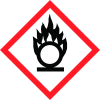
Hazard pictograms
GHS03 GHS04 GHS07
Signal word
Danger
Hazard statements
H270 - MAY CAUSE OR INTENSIFY FIRE; OXIDIZER H280 - CONTAINS GAS UNDER PRESSURE; MAY EXPLODE IF HEATED H336 - MAY CAUSE DROWSINESS OR DIZZINESS OSHA-H01 - MAY DISPLACE OXYGEN AND CAUSE RAPID SUFFOCATION. CGA-HG01 - MAY CAUSE FROSTBITE.
Precautionary statements
P202 - Do not handle until all safety precautions have been read and understood. P220 - Keep/Store away from combustible materials, clothing. P244 - Keep reduction valves/valves and fittings free from oil and grease. P261 - Avoid breathing gas EN (English) SDS ID: LIND-P090 1/10 P262 - Do not get in eyes, on skin, or on clothing. P271+P403 - Use and store only outdoors or in a well-ventilated place. P280 - Wear protective gloves/protective clothing/eye protection/face protection. P370+P376 - IN CASE OF FIRE: Stop leak if safe to do so P304-P340-P312 - IF INHALED: remove victim to fresh air and keep at rest in a position comfortable for breathing. Call a POISON CENTER/doctor if you feel unwell. P302, P336, P315 - IF ON SKIN: Thaw frosted parts with lukewarm water. Do not rub affected area. Get immediate medical advice/attention. P405 - Store locked up. P501 - Dispose of contents/container in accordance with container Supplier/owner instructions CGA-PG05 - Use a back flow preventive device in the piping. CGA-PG20+CGA-PG10 - Use only with equipment of compatible materials of construction and rated for cylinder pressure. CGA-PG12 - Do not open valve until connected to equipment prepared for use. CGA-PG22 - Use only with equipment cleaned for oxygen service. CGA-PG21 - Open valve slowly. CGA-PG06 - Close valve after each use and when empty. CGA-PG02 - Protect from sunlight when ambient temperature exceeds 52°C (125°F).
Other hazards which do not result in classification
Asphyxiant in high concentrations. Contact with liquid may cause cold burns/frostbite. Intentional misuse by deliberately concentrating and inhaling contents may be harmful or fatal.
Ingredient(s) with unknown acute toxicity
Not applicable
2.1 Classification of the substance or mixture
GHS-US classification Simple asphyxiant SIAS Ox. Gas 1 H270 Press. Gas (Liq.) H280 STOT SE 3 H336



