


General Information
Revision date
2020-11-25
Product name
Cyclopentynafil
CAS No.
1173706-34-7
1.2.1 Relevant identified uses
Reference material for laboratory use only
Emergency telephone
department
Icons in SDS


Company Information
company name
LGC Standards
e-mail address of the competent person responsible for the Safety Data Sheet
lgcusa@lgcgroup.com, sds-request@lgcgroup.com
GHS Information
Signal word
Danger
Hazard Codes
Hazard statements (CLP)
H302, H302+H332, H315, H317, H319, H332, H334, H336, H362, H402, H412
Hazard statements
Code
Statements
H302
Harmful if swallowed
Section 2
2.1 Classification of the substance or mixture
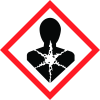
GHS08 Health hazard Resp. Sens. 1 H334 May cause allergy or asthma symptoms or breathing difficulties if inhaled. GHS07 Acute Tox. 4 H302 Harmful if swallowed. Acute Tox. 4 H332 Harmful if inhaled. Skin Irrit. 2 H315 Causes skin irritation. Eye Irrit. 2A H319 Causes serious eye irritation. Skin Sens. 1 H317 May cause an allergic skin reaction. STOT SE 3 H336 May cause drowsiness or dizziness. Lact. H362 May cause harm to breast-fed children. Aquatic Acute 3 H402 Harmful to aquatic life. (Contd. on page 2) US (Contd. of page 1) Aquatic Chronic 3 H412 Harmful to aquatic life with long lasting effects.
2.2 Label elements
The substance is classified and labeled according to the Globally Harmonized System (GHS).
Hazard pictograms
GHS07 GHS08
Signal word
Danger
Hazard statements
H302+H332 Harmful if swallowed or if inhaled. H315 Causes skin irritation. H319 Causes serious eye irritation. H334 May cause allergy or asthma symptoms or breathing difficulties if inhaled. H317 May cause an allergic skin reaction. H362 May cause harm to breast-fed children. H336 May cause drowsiness or dizziness. H402 Harmful to aquatic life. H412 Harmful to aquatic life with long lasting effects.
Precautionary statements
P260 Do not breathe dusts or mists. P263 Avoid contact during pregnancy/while nursing. P284 [In case of inadequate ventilation] wear respiratory protection. P305+P351+P338 If in eyes: Rinse cautiously with water for several minutes. Remove contact lenses, if present and easy to do. Continue rinsing. P405 Store locked up. P501 Dispose of contents/container in accordance with local/regional/national/international regulations.
Classification system
NFPA ratings (scale 0 - 4) Health = 2 0 Fire = 0 2 0 Reactivity = 0 · HMIS-ratings (scale 0 - 4) HEALTH *2 Health = 2 FIRE 0 Fire = 0 REACTIVITY 0 Reactivity = 0
PBT Substances
Not applicable (Contd. on page 3) US (Contd. of page 2)
vPvB Substances
Not applicable



