




Note: Ingredients listed on restricted chemical lists
EC/CAS
6484-52-2
Name of the chemical
Ammonium Nitrate (AN)
Concentration
>50%
EC/CAS
68476-34-6
Name of the chemical
Fuels, diesel, no. 2
Concentration
<10%
EC/CAS
64742-65-0
Name of the chemical
Distillates (petroleum), solvent-dewaxed heavy paraffinic
Concentration
<1%
EC/CAS
7732-18-5
Name of the chemical
Water, distilled, conductivity or of similar purity H2O
Concentration
<25% <1.0%
General Information
Revision date
2023-10-30
Product name
HydraForce product series, Hydra and Titan 2000 Emulsion based
Manufacturer Name
Level 12, 500 Queen St
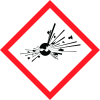
Icons in SDS


Company Information
company name
Level 12, 500 Queen St
GHS Information
Signal word
Danger
Hazard Codes
Hazard statements (CLP)
H201, H272, H304, H315, H319, H350, H361
Hazard statements
Code
Statements
H201
Explosive; mass explosion hazard
Section 2
SECTION 2: Hazards identification
Based on the components of HydraForce product series (S2 Hydra emulsion and ANFO), the series are classified as hazardous GHS and DG classification of chemical according to Safe Work Australia [1]. the HydraForce product HydraForce product series is classified as Dangerous Goods by the criteria of the Australian Code for the Transport of Explosives series by Road and Rail (7.7th ed.)[2]. Explosive Oxidising Liquid Category 2 Eye Irritation Category 2A
2.1 Classification of the substance or mixture
Carcinogenicity – category 1B S2 Hydra product
Aspiration hazard
category 1 Skin irritation – category 2 Reproductive toxicity – category 2 AUH044: Risk of explosion if heated under confinement
Signal word
Danger
Hazard statements
H201 Explosive; mass explosion hazard H272 May intensify fire; oxidiser H319 Causes serious eye irritation H304 May be fatal if swallowed and enters airways H315 Causes Skin irritation H350 May cause cancer H361 Suspected of damaging fertility or the unborn child AUH044 Risk of explosion if heated under confinement
Prevention
P201 Obtain special instructions before use. P202 Do not handle until all safety precautions have been read and understood P210 Keep away from heat, sparks, open flames or hot surfaces. - No smoking P220 Keep away from clothing and other combustible materials. Do not subject to grinding, shock, friction, impact, electrical energy from extraneous source (lighting, P250 static electricity, stray currents, galvanic electricity or electromagnetic radiation) or any form of heating. P264 Wash hands thoroughly after handling P280 Wear protective gloves, protective clothing and eye protection.
Response
P301 + P310 IF SWALLOWED: Immediately call a POISON CENTER P308 + P313 IF exposed or concerned: Get medical advice/attention P331 Do NOT induce vomiting P370 + P372 + In case of fire: Explosion risk. Evacuate area. DO NOT fight fire when fire reaches explosives. P380 + P373 IF IN EYES: Rinse cautiously with water for several minutes. Remove contact lenses, if present and easy P305+P351+P338 to do. Continue rinsing P337+P313 If eye irritation persists, seek medical advice/attention P362+P364 Take off contaminated clothing and wash it before reuse. P302+P352 IF ON SKIN: Wash with plenty of soap and water P333+P313 If skin irritation or occurs - seek medical advice/attention.
Storage
This product must be stored fit for purpose silos / tanks approved by Platinum Blasting Services. P401 Alternative storage approach might be used if a risk assessment is conducted and reviewed by Platinum Blasting Services
Disposal
P503 Refer to Platinum Blasting Services disposal instructions in Section 13


