

Note: Ingredients listed on restricted chemical lists
EC/CAS
231-072-3/7429-90-5
Name of the chemical
Aluminium
Concentration
N/A
EC/CAS
202-049-5/91-20-3
Name of the chemical
Naphthalene,3
Concentration
7439-54-
EC/CAS
231-912-9/9005-25-8
Name of the chemical
Starch
Concentration
7778-47- 232-679
General Information
Product name
SIMULATION EFFECTS (Napalm, Shellburst, Giant Fireball, Goldstar, Mortar Hit, Thunderflash)
1.2.1 Relevant identified uses
Articles pyrotechnic for technical purposes
supplier name
Le Maitre Ltd
Emergency telephone
+44 (0)151 951 3317
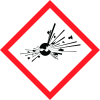
Icons in SDS


Company Information
company name
Le Maitre Ltd
e-mail address of the competent person responsible for the Safety Data Sheet
info@lemaitreltd.com
GHS Information
Signal word
Warning
Hazard Codes
Hazard statements (CLP)
H204
Hazard statements
Code
Statements
H204
Fire or projection hazard
Section 2
SECTION 2: Hazards identification
According to Regulation (EC) No. 1272/2008 (CLP) Classification of the substance or mixture H204: Fire or projection hazard
Hazard categories
Division 1.4
Hazard statements
H204 Fire or projection hazard
Prevention
P210, P234
Response
P370 + P372 + P380 + P373
Storage
P401
Disposal
P501
2.3 Other hazards
There are no chronic effects from handling the product appropriately When used in the correct manner, any fallout does not pose a risk to personal health. 1
2.1 Classification of the substance or mixture
H204: Fire or projection hazard 2.2 Label elements Labelling according to Regulation (EC) No. 1272/2008 (CLP) Hazard category: Division 1.4 Hazard pictograms: Signal word: Warning Hazard statement: H204 Fire or projection hazard Precautionary Statements Prevention: P210, P234 Precautionary Statements Response: P370 + P372 + P380 + P373 Precautionary Statements Storage: P401 Precautionary Statements Disposal: P501 2.3 Other hazards There are no chronic effects from handling the product appropriately When used in the correct manner, any fallout does not pose a risk to personal health. 1 SECTION 3 – COMPOSITION / INFORMATION ON INGREDIENTS 3.1 Substances Name CAS No. EC No. Aluminium powder 7429-90-5 231-072-3 Charcoal 16291-96-6 240-383-3 Lycopodium powder 8023-70-9 282-002-3 Magnesium powder 7439-54-4 231-104-6 Naphthalene 91-20-3 202-049-5 Potassium Nitrate 7757-79-1 231-818-8 Potassium Perchlorate 7778-47-7 231-912-9 Starch 9005-25-8 232-679 Strontium Oxalate 814-95-9 212-415-6 Sulphur 7704-34-9 231-722-6 List above covers all products within the Simulation effect families SECTION 4 – FIRST AID MEASURES 4.1 Description of first aid measures General notes: In the case of accident or sickness, seek medical advice immediately. Following inhalation: Remove casualty to fresh air and keep warm and at rest. Following skin contact: Wash immediately with soap and water Following eye contact: Immediately flush with water Following ingestion: If accidently swallowed, rinse the mouth with plenty of water (only if the person is conscious) and obtain medical attention Self protection of the first aider: Pay attention to self protection! 4.2 Most important symptoms and effects, both acute and delayed Irritation to the eyes and irritation to the skin 4.3 Indication of any immediate medical attention and special treatment needed First aid, decontamination, treatment of symptoms SECTION 5 – FIREFIGHTING MEASURES 5.1 Extinguishing media Suitable extinguishing media: If there is a small flame persisting from the effect itself (or from the surrounding area) this can be extinguished with a dry powder or Carbon Dioxide Fire Extinguisher if trained to do so. For larger fires do not attempt to extinguish any fire unless specifically trained to do so. Evacuate area and contact emergency services Unsuitable extinguishing media: N/A 5.2 Special hazards arising from the substance or mixture Hazardous combustion products may be produced. Pyrotechnic devices can burn violently and the state of the fire will be dependent on composition, packaging and containment. 5.3 Advice for firefighters Exercise extreme caution. Special protective equipment for firefighters: wear self-contained breathing apparatus and chemical protective clothing 2 SECTION 6 – ACCIDENTAL RELEASE MEASURES 6.1 Personal precautions, protective equipment and emergency procedures 6.1.1 For non-emergency personnel: Suitable personal protective equipment. Remove ignition sources. 6.1.2 For emergency responders: Remove persons to safety. Isolate hazard area and deny entry. Ventilate closed spaces before entering. 6.2 Environmental precautions Prevent large spillages from entering surface water or drains. 6.3 Methods and material for containment and cleaning up Dispose of as special waste in compliance with local and national regulations. 6.4 Reference to other sections See sections 8 and 13 SECTION 7 – HANDLING AND STORAGE 7.1 Precautions for safe handling Protective measures: Handle with caution. Measures to prevent fire: No smoking and no naked flames. Measures to prevent aerosol and dust generation: Do not tamper with the item. Advice on general occupational hygiene: Do not eat, drink or smoke in work areas. Wash hands after use. 7.2 Conditions for safe storage, including any incompatibilities Technical measures and storage conditions: Store in cool, dry place. Requirments for storage rooms and vessels: Always store in original packaging with appropriate marking and labelling. Stores should be adequately secured and identified. 7.3 Specific end use(s) The identified use for this product is detailed in section 1.2. 8.1 SECTION 8 – EXPOSURE CONTROLS / PERSONAL PROTECTION Control parameters Workplace exposure limits. 8.2 Exposure controls 8.2.1 Appropriate engineering controls: Provide adequate ventilation. 8.2.2 Personal protection equipment: Appropriate Safety goggles. 8.2.3 Environmental exposure controls: No specific measures. 3 SECTION 9 – PHYSICAL AND CHEMICAL PROPERTIES 9.1 Information on basic physical and chemical properties Appearance: Solid sealed tube As this is a sealed unit chemical properties are not applicable 9.2 Other information No additional information relevant to safe use. SECTION 10 – STABILITY AND REACTIVITY 10.1 Reactivity No specific data related to reactivity available. 10.2 Chemical stability Stable under recommended conditions of storage and use. 10.3 Possibility of hazardous reactions No hazardous reaction when handled and stored according to provisions. 10.4 Conditions to avoid Avoid high temperatures, shock, static discharge, vibrations or other physical stresses that might result in a hazardous situation. 10.5 Incompatible materials As this is a sealed unit incompatible materials are not applicable. 10.6 Hazardous decomposition products Decomposition does not occur during normal circumstances of storage, transport and handling. Upon functioning various gases may be emitted including oxides. SECTION 11 – TOXILOGICAL INFORMATION 11.1 Information on toxilogical effects As this is a sealed unit this only applies to spillages. May cause eye and skin irritation. Inhalation or ingestion may cause discomfort. SECTION 12 – ECOLOGICAL INFORMATION 12.1 Toxicity Not classified as dangerous for the environment/aquatic toxicant 12.2 Persistance and degradability N/A 12.3 Bioaccumulative potential N/A 12.4 Mobility in soil N/A 12.5 Results of PBT and vPvB assessment N/A 4 12.6 Other adverse effects N/A SECTION 13 – DISPOSAL CONSIDERATIONS 13.1 Waste treatment methods No specific regulations apply to packagings or spent devices. Unused devices should be returned to the manufacturer, functioned in a safe manner or soaked in a vessel of water for 48 hours. If soaked in water review local and national requirements prior to disposal. SECTION 14 – TRANSPORT INFORMATION 14.1 UN number UN0431 or UN0432 14.2 UN proper shipping name Articles pyrotechnic for technical purposes 14.3 Transport hazard class(es) 1.4G (UN0431) or 1.4S (UN0432) 14.4 Packing group N/A 14.5 Environmental hazards None 14.6 Special precautions for user No smoking or naked flames 14.7 Transport in bulk according to Annex II of MARPOL and the IBC Code N/A SECTION 15 – REGULATORY INFORMATION 15.1 Safety, health and environmental regulations/legislation specific for the substance or mixture Explosives Regulations 2014 and all orders of council, HSG 36, Local Authorities and the Health and Safety Executive. Pyrotechnic Articles European Directive 2013/29/EU 15.2 Chemical Safety Assessment N/A SECTION 16 – OTHER INFORMATION Information for this safety data sheet was obtained from sources considered technically accurate and reliable. Whilst every effort has been made to ensure full disclosure of product hazards, in some cases data is not available and is so stated. No warranty, expressed or implied, is made and supplier will not be liable for any losses, injuries or consequential damages which may result from the use of, or reliance on, any information contained in this form. 5 GERBS, JETS, CASCADES, WATERFALLS & ROCKETS 1.1 Product identifier Product Name: GERBS, JETS, CASCADES, WATERFALLS & ROCKETS 1.2 Relevant identified uses of the substance or mixture and uses advised against Relevant identified uses: Articles pyrotechnic for technical purposes 1.3 Details of the Supplier of the Safety Data Sheet Supplier: Le Maitre Ltd Street/P.O. Box: 6 Forval Close Postcode/City: CR4 4NE, Mitcham Country: England Telephone number: +44 (0)20 8646 2222 Email: info@lemaitreltd.com 1.4 Emergency telephone number Please contact: +44 (0)151 951 3317 Health and Safety Executive (HSE) Chemicals Regulation Directorate Other comments: Only available during office hours SECTION 2 – HAZARDS IDENTIFICATION 2.1 Classification of the substance or mixture H204: Fire or projection hazard 2.2 Label elements Labelling according to Regulation (EC) No. 1272/2008 (CLP) Hazard category: Division 1.4 Hazard pictograms: Signal word: Warning Hazard statement: H204 Fire or projection hazard Precautionary Statements Prevention: P210, P234 Precautionary Statements Response: P370 + P372 + P380 + P373 Precautionary Statements Storage: P401 Precautionary Statements Disposal: P501 2.3 Other hazards There are no chronic effects from handling the product appropriately. When used in the correct manner, any fallout does not pose a risk to personal health. 1 GERBS, JETS, CASCADES, WATERFALLS & ROCKETS SECTION 3 – COMPOSITION / INFORMATION ON INGREDIENTS 3.1 Substances Name CAS No. EC No. Acaroid Resin 93164-80-8 298-861-7 Aluminium powder 7429-90-5 231-072-3 Antimony Sulphide 1345-04-6 215-713-4 Barium Carbonate 513-77-9 208-167-3 Charcoal 16291-96-6 240-383-3 Dextrin 9004-53-9 232-675-4 Graphite 7782-42-5 231-955-3 Iron 7439-89-6 231-096-4 Magnesium powder 7439-54-4 231-104-6 Potassium Benzoate 582-25-2 209-481-3 Sodium Bicarbonate 144-58-8 205-633-8 Potassium Nitrate 7757-79-1 231-818-8 Potassium Perchlorate 7778-47-7 231-912-9 Talc 14087-96-6 238-877-9 Sulphur 7704-34-9 231-722-6 Titanium powder 7440-32-6 231-142-3 List above covers all products within the Gerb, Jet, Cascade, Waterfall & Rocket families SECTION 4 – FIRST AID MEASURES 4.1 Description of first aid measures General notes: In the case of accident or sickness, seek medical advice immediately. Following inhalation: Remove casualty to fresh air and keep warm and at rest. Following skin contact: Wash immediately with soap and water Following eye contact: Immediately flush with water Following ingestion: If accidently swallowed, rinse the mouth with plenty of water (only if the person is conscious) and obtain medical attention Self protection of the first aider: Pay attention to self protection! 4.2 Most important symptoms and effects, both acute and delayed Irritation to the eyes and irritation to the skin 4.3 Indication of any immediate medical attention and special treatment needed First aid, decontamination, treatment of symptoms SECTION 5 – FIREFIGHTING MEASURES 5.1 Extinguishing media Suitable extinguishing media: If there is a small flame persisting from the effect itself (or from the surrounding area) this can be extinguished with a dry powder or Carbon Dioxide Fire Extinguisher if trained to do so. For larger fires do not attempt to extinguish any fire unless specifically trained to do so. Evacuate area and contact emergency services Unsuitable extinguishing media: N/A 5.2 Special hazards arising from the substance or mixture Hazardous combustion products may be produced. Pyrotechnic devices can burn violently and the state of the fire will be dependent on composition, packaging and containment. 2 GERBS, JETS, CASCADES, WATERFALLS & ROCKETS 5.3 Advice for firefighters Exercise extreme caution. Special protective equipment for firefighters: wear self-contained breathing apparatus and chemical protective clothing SECTION 6 – ACCIDENTAL RELEASE MEASURES 6.1 Personal precautions, protective equipment and emergency procedures 6.1.1 For non-emergency personnel: Suitable personal protective equipment. Remove ignition sources. 6.1.2 For emergency responders: Remove persons to safety. Isolate hazard area and deny entry. Ventilate closed spaces before entering. 6.2 Environmental precautions Prevent large spillages from entering surface water or drains. 6.3 Methods and material for containment and cleaning up Dispose of as special waste in compliance with local and national regulations. 6.4 Reference to other sections See sections 8 and 13 SECTION 7 – HANDLING AND STORAGE 7.1 Precautions for safe handling Protective measures: Handle with caution. Measures to prevent fire: No smoking and no naked flames. Measures to prevent aerosol and dust generation: Do not tamper with the item. Advice on general occupational hygiene: Do not eat, drink or smoke in work areas. Wash hands after use. 7.2 Conditions for safe storage, including any incompatibilities Technical measures and storage conditions: Store in cool, dry place. Requirments for storage rooms and vessels: Always store in original packaging with appropriate marking and labelling. Stores should be adequately secured and identified. 7.3 Specific end use(s) The identified use for this product is detailed in section 1.2. SECTION 8 – EXPOSURE CONTROLS / PERSONAL PROTECTION 8.1 Control parameters Workplace exposure limits. 8.2 Exposure controls 8.2.1 Appropriate engineering controls: Provide adequate ventilation. 8.2.2 Personal protection equipment: Appropriate Safety goggles. 8.2.3 Environmental exposure controls: No specific measures. 3 GERBS, JETS, CASCADES, WATERFALLS & ROCKETS SECTION 9 – PHYSICAL AND CHEMICAL PROPERTIES 9.1 Information on basic physical and chemical properties Appearance: Solid tube containing pressed composition As this is essentially a sealed unit chemical properties are not applicable 9.2 Other information No additional information relevant to safe use. SECTION 10 – STABILITY AND REACTIVITY 10.1 Reactivity No specific data related to reactivity available. 10.2 Chemical stability Stable under recommended conditions of storage and use. 10.3 Possibility of hazardous reactions No hazardous reaction when handled and stored according to provisions. 10.4 Conditions to avoid Avoid high temperatures, shock, static discharge, vibrations or other physical stresses that might result in a hazardous situation. 10.5 Incompatible materials As this is a sealed unit incompatible materials are not applicable. 10.6 Hazardous decomposition products Decomposition does not occur during normal circumstances of storage, transport and handling. Upon functioning various gases may be emitted including oxides. SECTION 11 – TOXILOGICAL INFORMATION 11.1 Information on toxilogical effects As this is a sealed unit this only applies to spillages. May cause eye and skin irritation. Inhalation or ingestion may cause discomfort. SECTION 12 – ECOLOGICAL INFORMATION 12.1 Toxicity Not classified as dangerous for the environment/aquatic toxicant 12.2 Persistance and degradability N/A 12.3 Bioaccumulative potential N/A 12.4 Mobility in soil N/A 12.5 Results of PBT and vPvB assessment N/A 12.6 Other adverse effects N/A 4 GERBS, JETS, CASCADES, WATERFALLS & ROCKETS SECTION 13 – DISPOSAL CONSIDERATIONS 13.1 Waste treatment methods No specific regulations apply to packagings or spent devices. Unused devices should be returned to the manufacturer, functioned in a safe manner or soaked in a vessel of water for 48 hours. If soaked in water review local and national requirements prior to disposal. SECTION 14 – TRANSPORT INFORMATION 14.1 UN number UN0431 or UN0432 14.2 UN proper shipping name Articles pyrotechnic for technical purposes 14.3 Transport hazard class(es) 1.4G (UN0431) or 1.4S (UN0432) 14.4 Packing group N/A 14.5 Environmental hazards None 14.6 Special precautions for user No smoking or naked flames 14.7 Transport in bulk according to Annex II of MARPOL and the IBC Code N/A SECTION 15 – REGULATORY INFORMATION 15.1 Safety, health and environmental regulations/legislation specific for the substance or mixture Explosives Regulations 2014 and all orders of council, HSG 36, Local Authorities and the Health and Safety Executive. Pyrotechnic Articles European Directive 2013/29/EU 15.2 Chemical Safety Assessment N/A SECTION 16 – OTHER INFORMATION Information for this safety data sheet was obtained from sources considered technically accurate and reliable. Whilst every effort has been made to ensure full disclosure of product hazards, in some cases data is not available and is so stated. No warranty, expressed or implied, is made and supplier will not be liable for any losses, injuries or consequential damages which may result from the use of, or reliance on, any information contained in this form. 5 FLAMES 1.1 Product identifier Product Name: FLAMES 1.2 Relevant identified uses of the substance or mixture and uses advised against Relevant identified uses: Articles pyrotechnic for technical purposes For indoor use 1.3 Details of the Supplier of the Safety Data Sheet Supplier: Le Maitre Ltd Street/P.O. Box: 6 Forval Close Postcode/City: CR4 4NE, Mitcham Country: England Telephone number: +44 (0)20 8646 2222 Email: info@lemaitreltd.com 1.4 Emergency telephone number Please contact: +44 (0)151 951 3317 Health and Safety Executive (HSE) Chemicals Regulation Directorate Other comments: Only available during office hours SECTION 2 – HAZARDS IDENTIFICATION 2.1 Classification of the substance or mixture H204: Fire or projection hazard 2.2 Label elements Labelling according to Regulation (EC) No. 1272/2008 (CLP) Hazard category: Division 1.4 Hazard pictograms: Signal word: Warning Hazard statement: H204 Fire or projection hazard Precautionary Statements Prevention: P210, P234 Precautionary Statements Response: P370 + P372 + P380 + P373 Precautionary Statements Storage: P401 Precautionary Statements Disposal: P501 2.3 Other hazards There are no chronic effects from handling the product appropriately. When used in the correct manner, any fallout does not pose a risk to personal health. 1 FLAMES SECTION 3 – COMPOSITION / INFORMATION ON INGREDIENTS 3.1 Substances Name CAS No. EC No. Ammonium Perchlorate 7798-98-9 232-235-1 Diphenylamine 122-39-4 204-539-4 Iron Oxide 1309-37-1 215-168-2 Nitrocellulose 9004-70-0 603-037-0 Nitroguanadine 556-88-7 209-143-5 Titanium Powder 7440-32-6 231-142-3 Barium Nitrate 10022-31-8 233-020-5 Copper Carbonate 1184-64-1 214-671-4 Sodium Nitrate 7631-99-4 231-554-3 Strontium Nitrate 10042-76-9 233-131-9 List above covers all products within the Flame family SECTION 4 – FIRST AID MEASURES 4.1 Description of first aid measures General notes: In the case of accident or sickness, seek medical advice immediately. Following inhalation: Remove casualty to fresh air and keep warm and at rest. Following skin contact: Wash immediately with soap and water Following eye contact: Immediately flush with water Following ingestion: If accidently swallowed, rinse the mouth with plenty of water (only if the person is conscious) and obtain medical attention Self protection of the first aider: Pay attention to self protection! 4.2 Most important symptoms and effects, both acute and delayed Irritation to the eyes and irritation to the skin 4.3 Indication of any immediate medical attention and special treatment needed First aid, decontamination, treatment of symptoms SECTION 5 – FIREFIGHTING MEASURES 5.1 Extinguishing media Suitable extinguishing media: If there is a small flame persisting from the effect itself (or from the surrounding area) this can be extinguished with a dry powder or Carbon Dioxide Fire Extinguisher if trained to do so. For larger fires do not attempt to extinguish any fire unless specifically trained to do so. Evacuate area and contact emergency services Unsuitable extinguishing media: N/A 5.2 Special hazards arising from the substance or mixture Hazardous combustion products may be produced. Pyrotechnic devices can burn violently and the state of the fire will be dependent on composition, packaging and containment. 5.3 Advice for firefighters Exercise extreme caution. Special protective equipment for firefighters: wear self-contained breathing apparatus and chemical protective clothing 2 FLAMES SECTION 6 – ACCIDENTAL RELEASE MEASURES 6.1 Personal precautions, protective equipment and emergency procedures 6.1.1 For non-emergency personnel: Suitable personal protective equipment. Remove ignition sources. 6.1.2 For emergency responders: Remove persons to safety. Isolate hazard area and deny entry. Ventilate closed spaces before entering. 6.2 Environmental precautions Prevent large spillages from entering surface water or drains. 6.3 Methods and material for containment and cleaning up Dispose of as special waste in compliance with local and national regulations. 6.4 Reference to other sections See sections 8 and 13 SECTION 7 – HANDLING AND STORAGE 7.1 Precautions for safe handling Protective measures: Handle with caution. Measures to prevent fire: No smoking and no naked flames. Measures to prevent aerosol and dust generation: Do not tamper with the item. Advice on general occupational hygiene: Do not eat, drink or smoke in work areas. Wash hands after use. 7.2 Conditions for safe storage, including any incompatibilities Technical measures and storage conditions: Store in cool, dry place. Requirments for storage rooms and vessels: Always store in original packaging with appropriate marking and labelling. Stores should be adequately secured and identified. 7.3 Specific end use(s) The identified use for this product is detailed in section 1.2. SECTION 8 – EXPOSURE CONTROLS / PERSONAL PROTECTION 8.1 Control parameters Workplace exposure limits. 8.2 Exposure controls 8.2.1 Appropriate engineering controls: Provide adequate ventilation. 8.2.2 Personal protection equipment: No specific measures. 8.2.3 Environmental exposure controls: No specific measures. 3 FLAMES SECTION 9 – PHYSICAL AND CHEMICAL PROPERTIES 9.1 Information on basic physical and chemical properties Appearance: Solid tube containing loose composition 9.2 Other information No additional information relevant to safe use. SECTION 10 – STABILITY AND REACTIVITY 10.1 Reactivity No specific data related to reactivity available. 10.2 Chemical stability Stable under recommended conditions of storage and use. 10.3 Possibility of hazardous reactions No hazardous reaction when handled and stored according to provisions. 10.4 Conditions to avoid Avoid high temperatures, shock, static discharge, vibrations or other physical stresses that might result in a hazardous situation. 10.5 Incompatible materials As this is a sealed unit incompatible materials are not applicable. 10.6 Hazardous decomposition products Decomposition does not occur during normal circumstances of storage, transport and handling. Upon functioning various gases may be emitted including oxides. SECTION 11 – TOXILOGICAL INFORMATION


