


Note: Ingredients listed on restricted chemical lists
EC/CAS
203-448-7/106-97-8
Name of the chemical
n-Butan, enthält 0,1% Butadien
Concentration
10-<25%
EC/CAS
64742-48-9
Name of the chemical
Naphtha (petroleum), hydrotreated heavy
Concentration
N/A
EC/CAS
7779-90-0
Name of the chemical
Trizinc bis(orthophosphate)
Concentration
1-<2.5%
EC/CAS
1314-13-2
Name of the chemical
Zinc oxide; C.I. 77947
Concentration
N/A
EC/CAS
918-668-5/64742-95-6
Name of the chemical
Solvent naphtha (petroleum), light arom
Concentration
0.1-<0.3%
EC/CAS
202-496-6/96-29-7
Name of the chemical
2-Butanonoxim (2020/1182)
Concentration
0.1-<0.3%
EC/CAS
265-150-3
Name of the chemical
Naphtha (petroleum), hydrotreated heavy
Concentration
1-<2.5%
General Information
Revision date
2014-06-26
Product name
Kramp Primer Spray
1.2.1 Relevant identified uses
Priming
1.2.2. Uses advised against
No further relevant information available
Icons in SDS


Company Information
company name
Kramp
e-mail address of the competent person responsible for the Safety Data Sheet
verkoop.nl@kramp.com
GHS Information
Signal word
Danger
Hazard Codes
Hazard statements (CLP)
H222, H229, H319, H336
Hazard statements
Code
Statements
H222
Extremely flammable aerosol
Section 2
CLP CLASSIFICATION
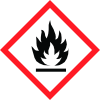
GHS02 flame Flam. Aerosol 1 H222-H229 Extremely flammable aerosol. Pressurised container: May burst if heated. GHS07 Eye Irrit. 2 H319 Causes serious eye irritation. STOT SE 3 H336 May cause drowsiness or dizziness.
EU Classification
Directive 67/548/EEC or Directive 1999/45/EC Xi; Irritant R36: Irritating to eyes. F+; Extremely flammable R12: Extremely flammable. R66-67: Repeated exposure may cause skin dryness or cracking. Vapours may cause drowsiness and dizziness. · Information concerning particular hazards for human and environment: The product has to be labelled due to the calculation procedure of the "General Classification guideline for preparations of the EU" in the latest valid version. At long or repeated contact with skin it may cause dermatitis due to the degreasing effect of the solvent. Warning! Pressurized container. Has a narcotizing effect.
Classification system
The classification is according to the latest editions of the EU-lists, and extended by company and literature data.
2.2 Label elements
Labelling according to Regulation (EC) No 1272/2008 The product is classified and labelled according to the CLP regulation.
Hazard pictograms
GHS02, GHS07
Signal word
Danger
Hazardous Ingredients
acetone
Hazard statements
H222-H229 Extremely flammable aerosol. Pressurised container: May burst if heated. H319 Causes serious eye irritation. H336 May cause drowsiness or dizziness.
Precautionary statements
P101 If medical advice is needed, have product container or label at hand. P102 Keep out of reach of children. P103 Read label before use. P210 Keep away from heat/sparks/open flames/hot surfaces. - No smoking. P251 Pressurized container: Do not pierce or burn, even after use. P305+P351+P338 IF IN EYES: Rinse cautiously with water for several minutes. Remove contact lenses, if present and easy to do. Continue rinsing. P405 Store locked up. P410+P412 Protect from sunlight. Do not expose to temperatures exceeding 50 °C/122 °F. P501 Dispose of contents/container in accordance with local/regional/national/international regulations.
Additional information
EUH066 Repeated exposure may cause skin dryness or cracking.
Contains
2-butanone oxime. May produce an allergic reaction Pressurized container: protect from sunlight and do not expose to temperatures exceeding 50°C. Do not pierce or burn, even after use. Do not spray on a naked flame or any incandescent material. Keep away from sources of ignition - No smoking. Buildup of explosive mixtures possible without sufficient ventilation.
PBT Substances
Not applicable
vPvB Substances
Not applicable *



