



Note: Ingredients listed on restricted chemical lists
EC/CAS
1314-41-6
Name of the chemical
Orange lead (lead tetroxide)
Concentration
≤50%
EC/CAS
84-74-2
Name of the chemical
Dibutyl phthalate
Concentration
≤10%
EC/CAS
122-39-4
Name of the chemical
Diphenylamine
Concentration
≤5%
General Information
Revision date
2022-03-25
Product name
FAST FUSE Z - 18, FAST FUSE Z - 19; FAST FUSE Z - 22
Product Synonyms
IGNITION CORD
1.2.1 Relevant identified uses
covering. The handling temperature range of the FAST FUSE is from 0°C up to 35°C Provider Information
Emergency telephone
(+51 1) 613-9800
Icons in SDS


Company Information
company name
Km 28 Autopista Ancón
e-mail address of the competent person responsible for the Safety Data Sheet
famesa@famesa.com.pe
GHS Information
Signal word
Danger
Hazard Codes
Hazard statements (CLP)
H401
Hazard statements
Code
Statements
H401
Toxic to aquatic life
Section 2
SECTION 2: Hazards identification
Substance or Mixture GHS Classification Fast burning fuse
UN Number
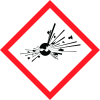
0066 Class or Division 1.4G Description Hazard Identification Physical Explosives 1.4 H204 Fire or projection hazard Acute Ingestion Toxicity, Cat. 4 H302 Toxic if swallowed. Skin irritation, Cat. 3 H316 Causes mild skin irritation. Eye irritation, Cat. 2B H320 Causes eye irritation. Health Respiratory sensitization, Cat. 2B H334 May cause allergy or asthma symptoms or breathing difficulties if inhaled. Carcinogenicity, Cat 2 H351 Suspected of causing cancer Specific Target Organ Systemic Toxicity – H372 May cause damage to organs through prolonged or Repeated Exposures, Cat 1 repeated exposure. Environm ental Hazard to the aquatic environment H401 Toxic to aquatic life. Risks Signal Word: Danger, Caution
2.2 Label elements
Cautionary Advice In terms of prevention P203 Be sure to read and follow all safety instructions before use. P210 Keep away from heat, hot surfaces, sparks, open flames and other ignition sources. Do not smoke. P234 Keep only in original packaging. P250 Avoid abrasion, shocks or friction P261 Do not breathe gases produced by combustion. P264 Wash hands thoroughly after handling. P270 Do not eat, drink or smoke when using this product. P280 In the event of interference Wear protective gloves, protective clothing and eye protection. P318 IN CASE OF PROVEN or SUSPECTED EXPOSURE: Get medical advice/attention. P330 Rinse mouth. P301 + P317 IF SWALLOWED: seek medical attention. P304 + P340 IF INHALED: Remove victim to fresh air and keep at rest in a position comfortable for breathing. P342 + P316 If experiencing respiratory symptoms: Call a poison center or doctor/physician. P332 + P317 In case of skin irritation: seek medical advice. P305 + P351 + P338 IF IN EYES: Rinse continuously with water for several minutes. Remove contact lenses if present and easy to do. Continue rinsing. P337 + P313 If eye irritation persists: Get medical advice. P370 + P372 + P380 + P373 In case of fire: Risk of explosion. Evacuate area. DO NOT fight fire when fire reaches explosives. For storage P401 Store in accordance with local and manufacturer's regulations. For disposal P501 Dispose of contents in accordance with local regulations. P503 Ask the manufacturer for information on disposal.
Other hazards
No information is available
2.1 Classification of the substance or mixture
Fast burning fuse UN Number 0066 Class or Division 1.4G Description Hazard Identification Physical Explosives 1.4 H204 Fire or projection hazard Hazards Acute Ingestion Toxicity, Cat. 4 H302 Toxic if swallowed. Skin irritation, Cat. 3 H316 Causes mild skin irritation. Eye irritation, Cat. 2B H320 Causes eye irritation. Health Respiratory sensitization, Cat. 2B H334 May cause allergy or asthma symptoms or breathing Hazards difficulties if inhaled. Carcinogenicity, Cat 2 H351 Suspected of causing cancer Specific Target Organ Systemic Toxicity – H372 May cause damage to organs through prolonged or Repeated Exposures, Cat 1 repeated exposure. Environm ental Hazard to the aquatic environment H401 Toxic to aquatic life. Risks Signal Word: Danger, Caution.


