





Note: Ingredients listed on restricted chemical lists
EC/CAS
6484-52-2
Name of the chemical
Ammonium Nitrate (AN)
Concentration
0 to 90 %
EC/CAS
9004-70-0
Name of the chemical
Nitrocellulose
Concentration
0.5 to 5 %
EC/CAS
55-63-0
Name of the chemical
Nitroglycerin; Propane-1,2,3-triyl trinitrate
Concentration
10 to 30 %
General Information
Revision date
2022-03-25
Product name
DYNAMITE; FAMESA SEMIGELATIN DYNAMITE; FAMESA
Product Synonyms
DYNAMITE
1.2.1 Relevant identified uses
operations in surface and underground mining, as well as civil
Emergency telephone
(+51 1) 613-9800
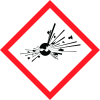
Icons in SDS


Company Information
company name
Km 28 Autopista Ancón
e-mail address of the competent person responsible for the Safety Data Sheet
famesa@famesa.com.pe
GHS Information
Signal word
Hazard
Section 2
SECTION 2: Hazards identification
Substance or Mixture GHS Classification Blasting explosive, Type A
UN Number
0081 Class or Division 1.1D Description Hazard Identification Physical Explosives 1.1 Hazards H201 Explosive: mass explosion hazard Acute Ingestion Toxicity, Cat. 3 H301 Toxic in case of ingestion Acute Dermal Toxicity, Cat. 2 H310 Fatal in case of skin contact Health Acute Inhalation Toxicity, Cat. 2 H330 Fatal if inhaled Hazards Serious Eye Damage / Eye Irritation. H319 May cause serious eye irritation Specific Target Organ Systemic Toxicity – H373 May cause damage to organs through prolonged or Repeated Exposures, Cat. 2 repeated exposure. Short-term (acute) hazard to the aquatic H401 Toxic to aquatic life. Environm environment, Acute. 2 ental Long-term (chronic) hazard to the aquatic H411 Toxic to aquatic life with long lasting effects. Risks environment, chronic 2
Signal word
Hazard
2.2 Label elements
Cautionary Advice In terms of prevention P210 Keep away from heat, hot surfaces, sparks, open flames and other ignition sources. Do not smoke. P230 Keep humidified. P234 Keep only in original packaging. P250 Avoid abrasion, shock and friction. P260 Do not breathe vapors. P262 Avoid all contact with eyes, skin, or clothing. P264 Wash hands thoroughly after handling. P270 Do not eat, drink or smoke when using this product. P271 Use only outdoors or in a well-ventilated area. P273 Avoid release to the environment. P280 Wear protective gloves/protective clothing/eye protection/face protection. P284 In the event of interference In case of inadequate ventilation wear respiratory protection. P301 + P316 IF SWALLOWED: seek immediate emergency medical attention. P304 + P340 IF INHALED: Remove victim to fresh air and keep at rest in a position comfortable for breathing. P319 Seek medical advice if the person is unwell. P316 Get immediate medical attention. P330 Rinse mouth. P302 + P352 IF ON SKIN: Wash with plenty of water. P361 + P364 Immediately remove all contaminated clothing and wash before reuse. P305 + P351 + P338 IF IN EYES: Rinse continuously with water for several minutes. Remove contact lenses if present and easy to do. Continue rinsing. P337 + P317 If eye irritation persists: Get medical attention. P370 + P372 + P380 + P373 In case of fire: Risk of explosion. Evacuate area. DO NOT fight fire when fire reaches explosives. P391 Collect spillage. For storage P401 Store according to local regulations. P403 + P233 Store in a well-ventilated place. Keep the container hermetically sealed. P405 Store locked up. For disposal P501 Dispose of contents and container in accordance with local regulations. P503 Ask the manufacturer or supplier for information on disposal, recovery and recycling.
Other hazards
None
2.1 Classification of the substance or mixture
Blasting explosive, Type A UN Number 0081 Class or Division 1.1D Description Hazard Identification Physical Explosives 1.1 H201 Explosive: mass explosion hazard Hazards Acute Ingestion Toxicity, Cat. 3 H301 Toxic in case of ingestion Acute Dermal Toxicity, Cat. 2 H310 Fatal in case of skin contact Health Acute Inhalation Toxicity, Cat. 2 H330 Fatal if inhaled Hazards Serious Eye Damage / Eye Irritation. H319 May cause serious eye irritation Specific Target Organ Systemic Toxicity – H373 May cause damage to organs through prolonged or Repeated Exposures, Cat. 2 repeated exposure. Short-term (acute) hazard to the aquatic H401 Toxic to aquatic life. Environm environment, Acute. 2 ental Long-term (chronic) hazard to the aquatic H411 Toxic to aquatic life with long lasting effects. Risks environment, chronic 2 Signal Word: Hazard.


