


Note: Ingredients listed on restricted chemical lists
EC/CAS
1477-55-0
Name of the chemical
1,3-benzenedimethanamine
Concentration
N/A
EC/CAS
100-51-6
Name of the chemical
Benzyl Alcohol
Concentration
N/A
EC/CAS
1761-71-3
Name of the chemical
bis(4-aminocyclohexyl)methane
Concentration
N/A
General Information
Revision date
2017-12-21
Product name
Devcon Brushable Ceramic Hardener
Product name
Devcon Brushable Ceramic Hardener
Identification on the label/Trade name
AMINES LIQUID, CORROSIVE, N.O.S. or POLYAMINES, LIQUID, CORROSIVE, N.O.S. (contains benzene-1,3-dimethanamine)
Product Synonyms
PART: D11760, D11765
Emergency telephone
0800 2436 2255
Icons in SDS
Company Information
company name
itw polymers & fluids
GHS Information
Signal word
Danger
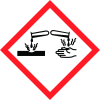
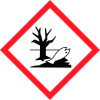
Hazard Codes
Hazard statements (CLP)
H290, H302, H312, H314, H317, H332, H411
Hazard statements
Code
Statements
H290
May be corrosive to metals
Section 2
2.1 Classification of the substance or mixture
Considered a Hazardous Substance according to the criteria of the New Zealand Hazardous Substances New Organisms legislation. Classified as Dangerous Goods for transport purposes. Metal Corrosion Category 1, Acute Toxicity (Oral) Category 4, Acute Toxicity (Dermal) Category 4, Acute Toxicity (Inhalation) Category 4, Skin [1] Corrosion/Irritation Category 1B, Serious Eye Damage Category 1, Skin Sensitizer Category 1, Acute Aquatic Hazard Category 2, Chronic Aquatic
Hazard categories
2 Legend: 1. Classified by Chemwatch; 2. Classification drawn from CCID EPA NZ ; 3. Classification drawn from EC Directive 1272/2008 - Annex VI Determined by Chemwatch 6.1D (dermal), 6.1D (inhalation), 6.1D (oral), 6.5B (contact), 8.1A, 8.2B, 8.3A, 9.1B, 9.1D using GHS/HSNO criteria
Signal word
DANGER
Hazard statements
H290 May be corrosive to metals. H302 Harmful if swallowed. H312 Harmful in contact with skin. H332 Harmful if inhaled. H314 Causes severe skin burns and eye damage. H317 May cause an allergic skin reaction. H411 Toxic to aquatic life with long lasting effects.
Prevention
P260 Do not breathe dust/fume/gas/mist/vapours/spray. P271 Use only outdoors or in a well-ventilated area. P280 Wear protective gloves/protective clothing/eye protection/face protection. P234 Keep only in original container.
Response
P301+P330+P331 IF SWALLOWED: Rinse mouth. Do NOT induce vomiting. P303+P361+P353 IF ON SKIN (or hair): Remove/Take off immediately all contaminated clothing. Rinse skin with water/shower. P305+P351+P338 IF IN EYES: Rinse cautiously with water for several minutes. Remove contact lenses, if present and easy to do. Continue rinsing. P310 Immediately call a POISON CENTER or doctor/physician.
Storage
P405 Store locked up.
Disposal
P501 Dispose of contents/container in accordance with local regulations.



